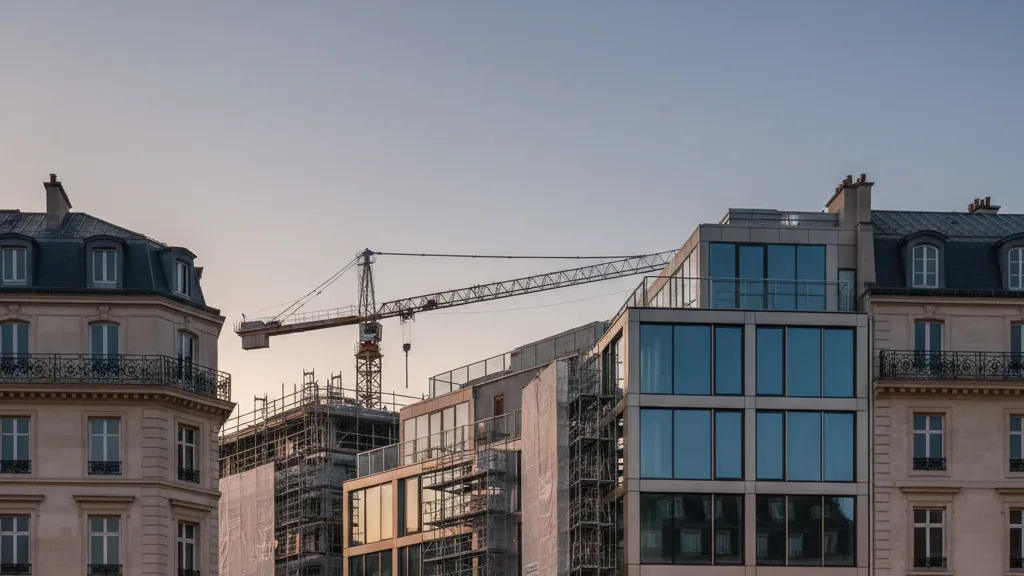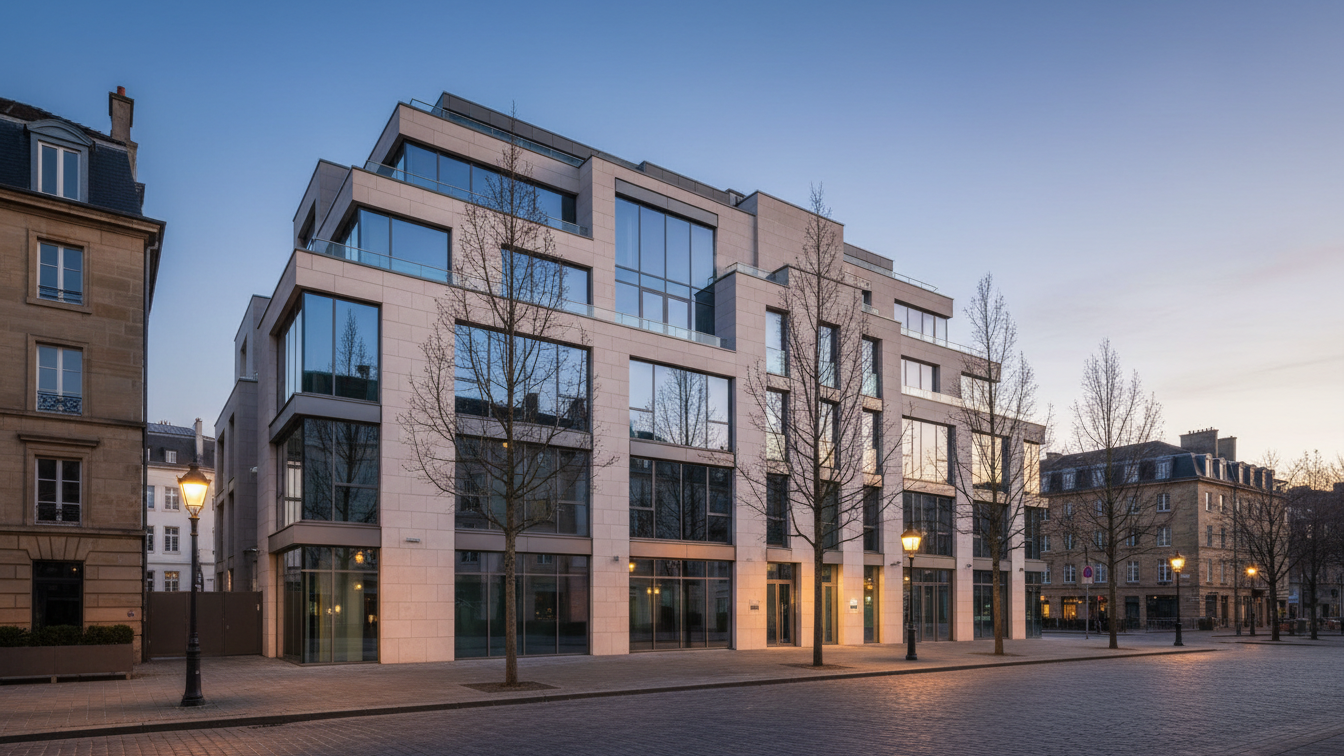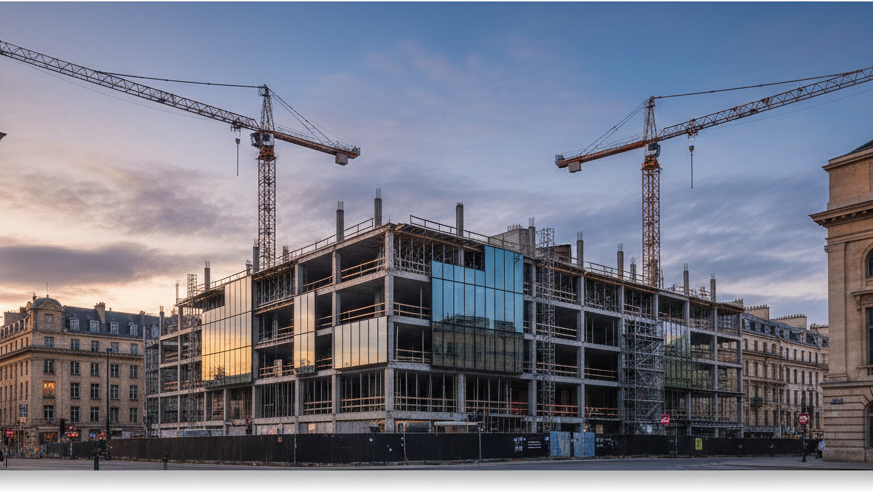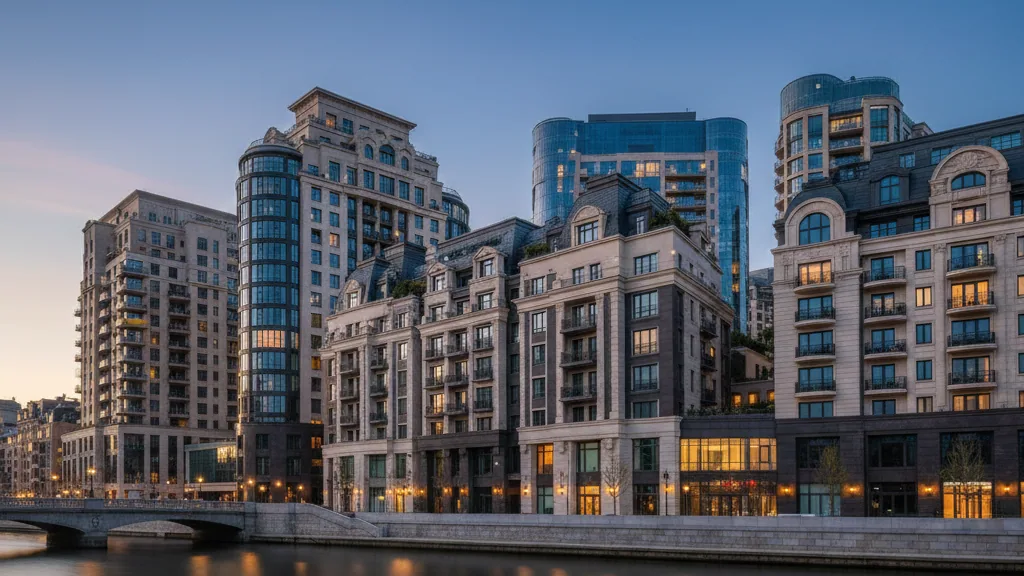
The Institute for Federal Real Estate (BImA) has held a site celebration for an extensive residential scheme in Berlin's Steglitz-Zehlendorf district. In the Düppel locality, eleven four-storey residential buildings are currently under construction on a former site of the US armed forces. The project comprises a total of 170 residential units, delivered by way of urban infill.
The building plot is situated between Potsdamer Chaussee, Lindenthaler Allee and Königsweg, immediately adjacent to the Düppel garden city. The new buildings complement the established residential layout, which is largely characterised by open linear housing blocks of three to seven storeys. In addition to the eleven detached point blocks, BImA is prospectively planning the creation of around 50 further residential units by adding storeys to existing buildings.
Participatory planning process since 2019
The planning framework for the site has been developed since 2019 in coordination with the relevant district authority. Initial structured public participation took place in 2022; since then, local residents and tenants have been continuously involved through information events and a digital project portal. According to Axel Kolfenbach, Head of the Portfolio Management division at BImA, the design intentionally does not exhaust the maximum allowable under planning law, in order to preserve existing mature trees and protect the character of the residential surroundings.
Construction is being carried out across three phases using volumetric modular construction. The delivery partner is ALHO Systembau GmbH, which prefabricates the individual spatial modules in a factory environment and transports them to the site by low loader, where final assembly takes place.
Key facts and schedule
- —170 new-build flats in eleven four-storey point blocks
- —Prospective addition of around 50 units by adding storeys to existing buildings
- —Delivery across three consecutive construction phases
- —Targeted completion of the first construction phase in spring 2027
Christoph Zielinski, Head of Multi-Storey Residential Construction at ALHO Systembau, points to the advantages of the method: factory prefabrication enables precisely plannable workflows and significantly reduces disruption to the neighbourhood caused by noise and dirt during the construction phase. Production of the building modules began in early 2026 at the Coswig factory near Dresden. Completion of the first construction phase is scheduled for spring 2027.