A
cross the United States, a deep‑seated housing crisis is unfolding. The country is short about four million homes, and the deficit is most acute for starter houses, modest apartments in low‑rise buildings, and family‑friendly dwellings. Rising mortgage rates have stifled new construction and pushed up the cost of borrowing, so more Americans are renting and roughly half of those renters spend more than a third of their income on shelter.
The problem is not a single fault line but a web of interlocking factors. Zoning codes that restrict density, labyrinthine permitting processes, and an overabundance of community input all slow development. Construction productivity has slipped, labor costs have climbed, and lumber prices have surged. A growing chorus of critics points to the aggressive entry of private‑equity firms into the housing market. Since the onset of the pandemic, institutional investors have purchased hundreds of thousands of homes, outbidding families and inflating rents—a trend that has drawn the ire of politicians from Alexandria Ocasio‑Cortez to J. D. Vance.
It is tempting to paint private equity as the villain of the real‑estate tragedy. In a bidding war for a three‑bedroom house in a Cincinnati suburb, a single‑income family with a 10 % down payment would be dwarfed by a Wall Street LLC offering cash. Yet housing economists and policy analysts argue that institutional investors have played at most a minor role. Supply constraints began to surface on the coasts a generation ago, if not earlier, while Wall Street’s large‑scale purchases only accelerated after the Great Recession and especially after the pandemic. Even when big investors buy thousands of homes, their holdings still pale compared with those of small‑scale landlords and individual owners.
Nevertheless, a new study by the Lincoln Institute of Land Policy and the Center for Geospatial Solutions shows that in the 500 most populous urban counties, corporations own roughly one in eleven residential parcels—over 20 % in some communities. These firms are not simply buying vacation rentals in Colorado or luxury apartments in the Bay Area; they are pouring capital into “buy low, rent high” neighborhoods, many of them in the South and the Rust Belt, where large shares of families cannot afford a mortgage.
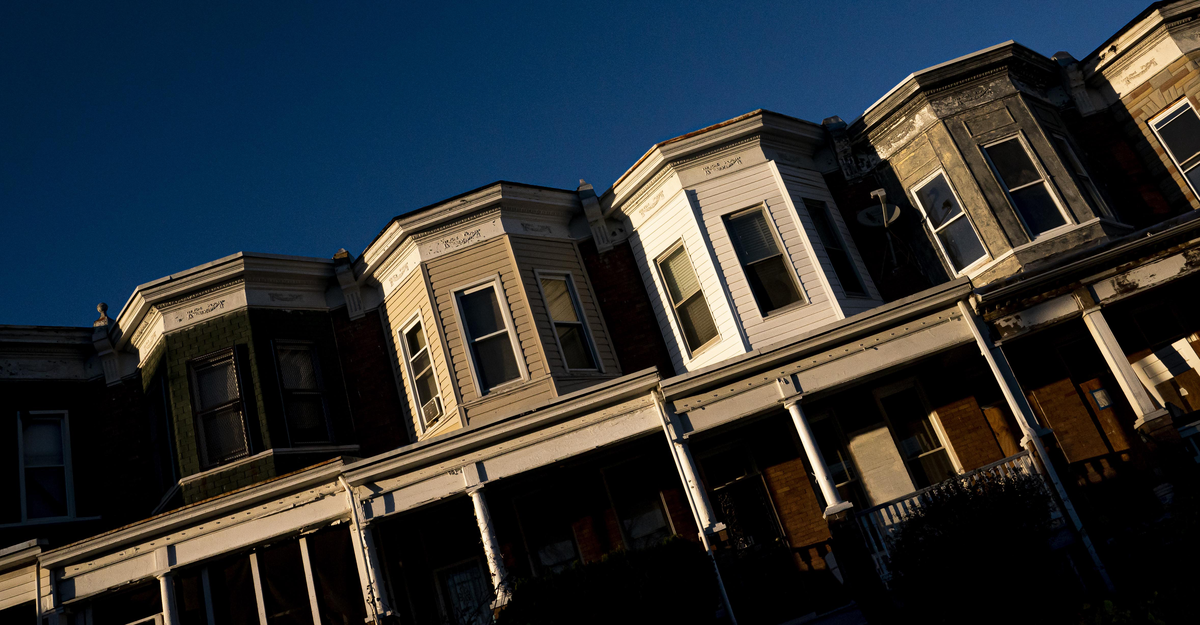
“They’re pulling all the starter homes off the market in low‑income, high‑minority‑density neighborhoods,” says George McCarthy, president of the Lincoln Institute. This trend is widening the country’s already vast racial wealth and home‑ownership gaps. In Cleveland, corporate ownership stands at 17.5 %. On the city’s East Side—a predominantly Black area—only one in five homebuyers in 2021 secured a mortgage; the rest paid cash or used non‑traditional lenders. In Baltimore’s majority‑Black McElderry Park and Ellwood Park/Monument, owner‑occupants made just 13 % of purchases in 2022. By contrast, a nearby majority‑white neighborhood saw owner‑occupants buy more than 80 % of homes that same year, while out‑of‑state corporations owned less than 1 % of parcels.
These findings shift the lens through which we view the housing crisis. Private‑equity firms are not the cause of Seattle’s and Boston’s unaffordability; those cities have long suffered from supply shortages that have intensified over decades. Nor are they the reason for the soaring home values and rising homelessness in the Mountain West, where white‑collar migrants from big cities outbid locals. In those communities, the market dynamics are driven by demographic shifts rather than corporate investment. However, in low‑wage areas with a decent supply of housing, corporate money is distorting the market, pushing thousands of Black and Latino families off the property ladder. Tenants who would otherwise invest in a home are forced to rent, facing the uncertainty and instability that come with it.
Corporate landlords are not uniformly bad, but they are more likely to threaten eviction and to follow through on it. They also tend to skimp on maintenance and upkeep. “When more than half of the properties in a neighborhood are owned by outside investors, the neighborhood shifts from being homeowner‑driven to investor‑driven,” McCarthy explains. Homeowners, who are more likely to plant shade trees, maintain sidewalks, and engage in community affairs, are replaced by entities that prioritize profit over stewardship.
In response to the rise in corporate ownership, politicians across the country are proposing policy fixes. In New York, Governor Kathy Hochul has introduced legislation that would bar firms from bidding on single‑family or two‑family homes for the first 75 days they are on the market. Washington State is considering capping the number of units that corporations can own. Other legislators have suggested revoking tax benefits from large‑scale owners. McCarthy cautions that caps may not be effective; corporations could simply create multiple entities to circumvent the rules and continue purchasing properties. Instead, he supports treating firms that own more than ten properties in a given jurisdiction as commercial owners rather than residential owners, subjecting them to higher property‑tax rates and higher taxes on capital gains.
If no action is taken, the pattern seen in majority‑Black communities in Ohio, Virginia, Georgia, and Michigan could spread nationwide. Private equity may not be the root cause of the housing crisis, but corporate owners could exacerbate it for everyone. The challenge is to balance the need for investment with the imperative to preserve affordable, stable housing for all Americans.