A
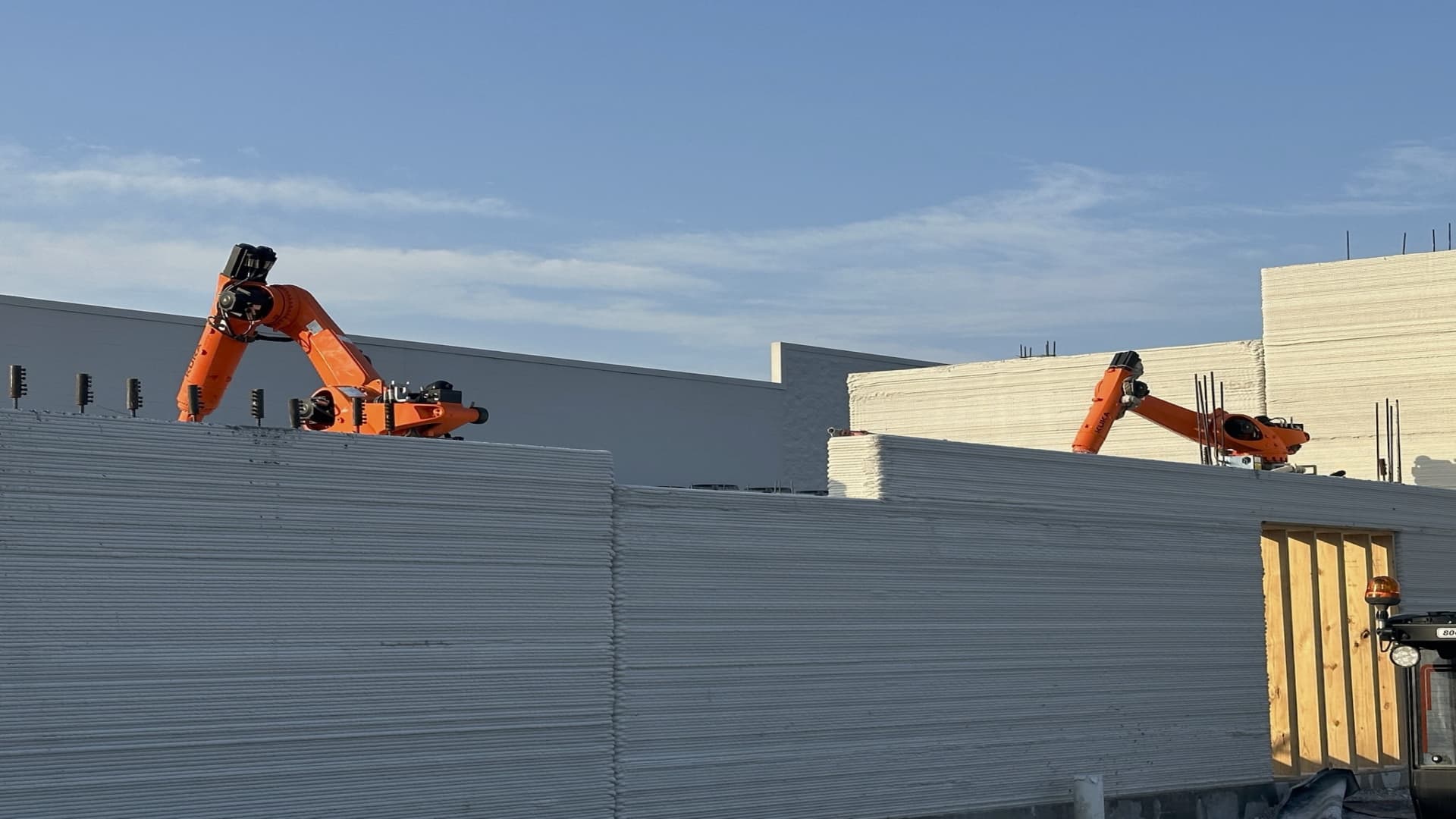
lquist 3D, a Colorado‑based firm that designs and operates large‑scale 3D printers, partnered with Walmart last year to construct an almost 8,000‑square‑foot addition to the retailer’s Athens, Tennessee store. The structure, built for online order pickup and delivery, became the largest 3D‑printed commercial building in the United States and proved the technology’s commercial viability despite a rocky start.
The Athens project marked a milestone for Alquist, which began in the residential sector and has now begun to scale its technology nationwide. The company has announced plans to print more than a dozen new Walmart facilities, as well as projects for other commercial retailers, positioning it at the forefront of a potentially large‑scale deployment of 3D printing in commercial real estate—a field that has largely lagged behind residential construction due to the size of the printers required.
To support this expansion, Alquist has secured a partnership with Sika, one of the world’s largest construction materials companies. Sika will supply materials for all future Alquist 3D‑printed projects and licensees, streamlining the national pipeline, reducing material and freight costs, and accelerating the development of more sustainable concrete mixes. “This collaboration places Sika at the cutting edge of next‑generation construction, opening new markets and creating long‑term growth opportunities,” said Noah Callantine, Sika’s 3D concrete printing engineer.
The move represents a turning point for commercial real estate construction, which has been slow to modernize. While 3D printing has gained traction in homebuilding, its adoption in commercial projects has been limited by the need for larger printers. Alquist’s printers, coupled with proprietary software, allow the company to print buildings at scale, reducing labor costs and the need for highly trained crews. “The way to bring prices down is to get volume,” said Alquist CEO Patrick Callahan. “As volume increases, suppliers see the demand and can lower their supply chain costs.”
Alquist’s founder, Zach Mannheimer, has steered the company toward faster, cheaper, greener construction. Callahan, whose background is in defense technology, described the Athens project as a “classic Silicon Valley failing forward” experience. The team had to navigate permitting changes, a lack of design involvement, and a general contractor who joined the project just a week before construction began. Despite these hurdles, the second project—a 5,000‑square‑foot Walmart pickup center in Huntsville, Alabama—was completed in just seven days.
While 3D printing requires fewer workers, those involved must be highly skilled. Alquist collaborates with trade schools to develop curricula that incorporate robotics and green materials, making the work more appealing in a market where construction labor has been scarce. “You’re not throwing rocks on a scaffold; you’re using robotics in a safe, clean environment,” Callahan noted. “We’ve seen traditional construction workers who were initially resistant now embracing the technology.”
Competition is emerging. Icon Build, the largest residential 3D printing company, has begun exploring commercial projects, completing a hotel and engaging with potential partners for data center construction. Its upcoming Titan printer will handle larger projects, though it is not yet ready for high‑rise buildings. Icon’s co‑founder Jason Ballard expects significant interest in alternative construction methods once the Titan proves its cost and performance advantages. Ballard also highlighted labor market pressures, noting that data center construction already draws a large share of skilled workers. He anticipates that 3D printing will help commercial builders compete on cost and speed, similar to its impact on residential construction. Icon plans to produce at least one Titan printer per month next year, aiming for a 300% growth rate and broader industry adoption.
Alquist’s partnership with Walmart and Sika, combined with its focus on volume, supplier engagement, and workforce development, positions the company to lead a shift toward more efficient, sustainable commercial construction. As the technology matures and more large‑scale printers become available, 3D printing could redefine how commercial buildings are designed, built, and maintained, offering faster delivery, lower labor costs, and greener materials for the industry.