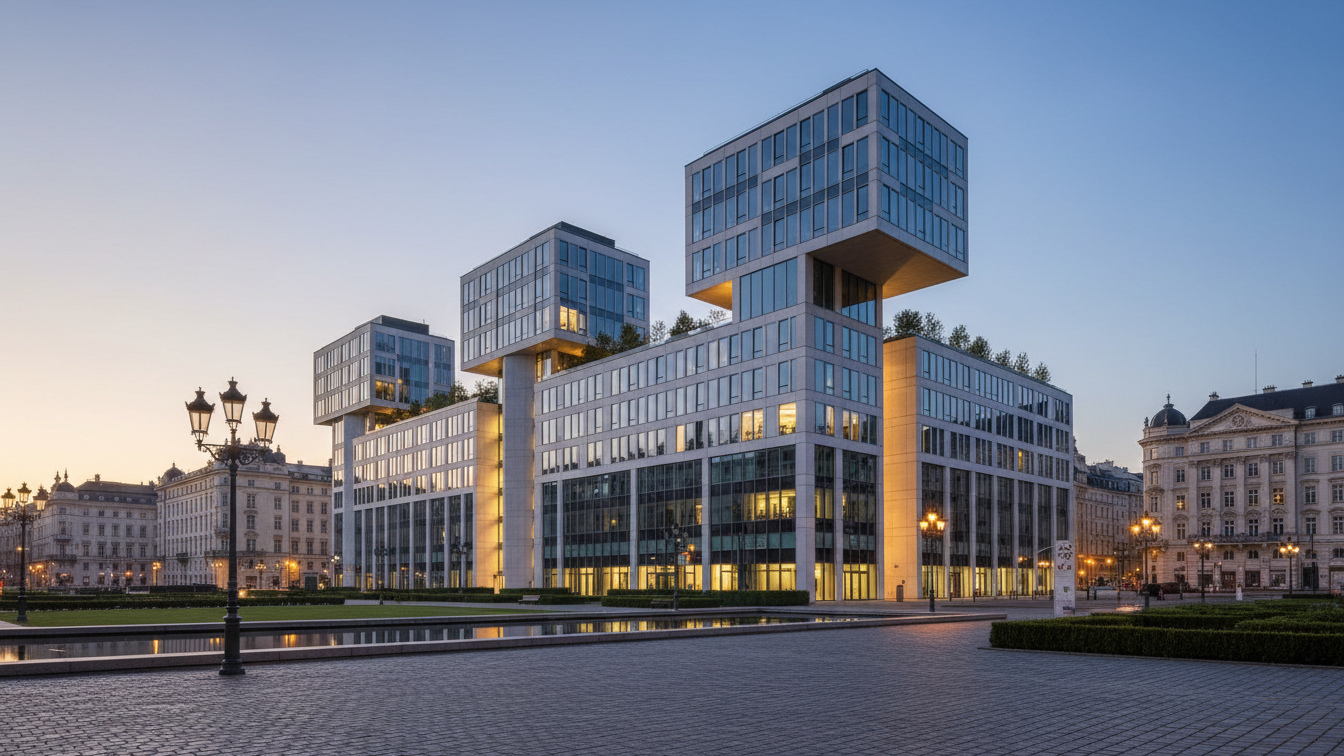
In north-central Mexico, less than three hours by car from Mexico City, the state of Querétaro is gaining massive economic significance. Alongside its colonial UNESCO World Heritage site, the country's dominant centre for digital infrastructure is currently taking shape in the region. John McWilliams, Head of U.S. Data Center Insights at Cushman & Wakefield, notes that substantial investments are flowing into the state. Major projects are emerging in rapid succession, allowing Querétaro to quickly evolve into a key cloud region for all of Mexico and the entire Western Hemisphere.
According to a 2026 report by BloombergNEF, around 72 per cent of Mexico's operational data centre capacity is located in Querétaro. The industry directory Data Center Map lists 66 facilities nationwide, 24 of which are in Querétaro. Global market leaders such as Amazon AWS, ODATA and CloudHQ are active locally. CloudHQ is developing a six-building campus with an investment volume of 6 billion dollars, set to become the largest facility of its kind in Mexico. Microsoft alone operates three sites in the state.
Strategic location and fewer hurdles than in the US
The US data centre industry is increasingly turning towards its southern neighbour. In Mexico, operators rely on proven planning and operational models whilst benefiting from lower labour costs and less regulatory pressure compared to the United States. While the first hyperscale data centre in the US was built by Google in Oregon back in 2006, Rodrigo Folgueras, Senior Vice President at CBRE Mexico, dates the start of the local expansion boom to 2019.
André Rizzo, Director of Industry, Science and Technology at Turner & Townsend Latin America, points to the direct proximity to the US, robust connectivity corridors and the growing digital economy. Querétaro is ideally located between the metropolitan areas of Mexico City, Monterrey and Guadalajara. Hiram Rodriguez Garza of Cushman & Wakefield emphasises that this central position among the hubs enables particularly favourable latency times. Furthermore, the region offers ample development land outside the densely populated capital without losing access to its infrastructure.
Challenges surrounding power and resources
Nevertheless, the sector demands immense resources for electricity and cooling, which has triggered debate worldwide. In the US, public protests and environmental concerns have already halted or cancelled projects worth 64 billion dollars, according to Data Center Watch. For sustainable development in Querétaro, reliable energy grids, planning approval processes and structured water management therefore remain decisive factors.
- —Availability of secured power capacity and fibre-optic routes
- —Favourable latency times to economic centres in Mexico and the US
- —Growing appeal in contrast to more restrictive planning conditions in the domestic market