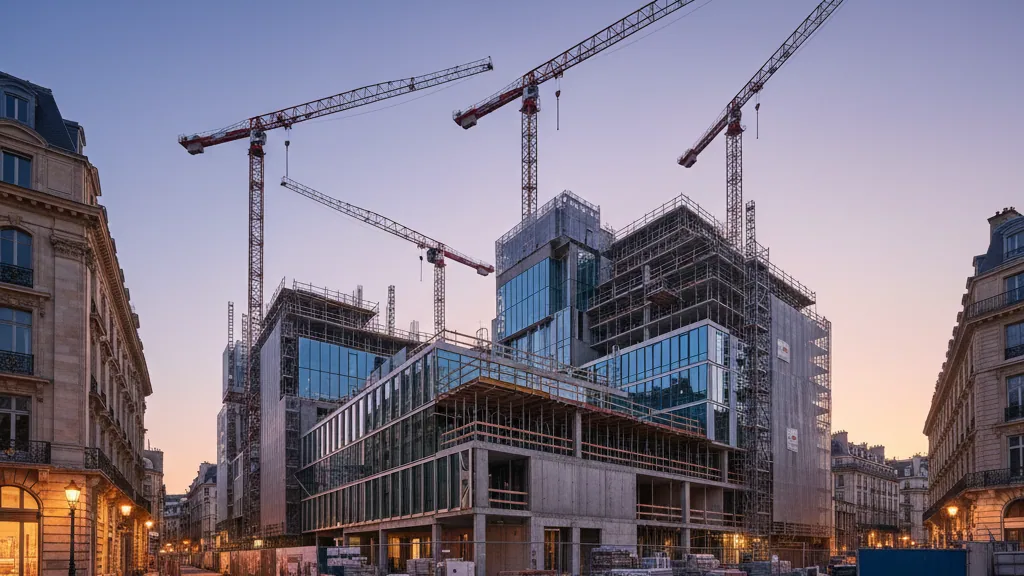
RATISBONA Handelsimmobilien is currently implementing a groundbreaking construction project in food retail in Haimhausen near Munich. A supermarket is being built for EDEKA Südbayern, designed as the first of its kind in Europe according to the principles of the Cradle-to-Cradle approach. The project aims to view buildings not as temporary structures or sources of waste, but as material depots whose components can be reused after their useful life.
During EXPO REAL 2026, the construction site of the so-called LOOP Market will offer specialist journalists exclusive insights into the practical implementation of circular construction methods. There, it will become clear how deconstructible structures, carefully tested materials, and comprehensive documentation of the resources used are integrated into a retail project. The market is scheduled to open in the fourth quarter of 2026. An integrated café will be operated by Backstube Wünsche.
Principles of the Circular Economy
At the core of the LOOP Market are the aspects of deconstructibility, material health, biodiversity, and transparency. Almost all materials used are separable and dismountable by type, which facilitates their subsequent recycling. Before installation, around 300 building materials were extensively tested to ensure their harmlessness and circularity. A Circularity Passport® Building serves to meticulously document the installed resources and components.
Another focus is on de-sealing land: over 75 percent of the plot area remains unsealed, contributing to biodiversity and preserving natural soil functions. This approach reflects the conviction that buildings such as food markets, which are heavily frequented in everyday life, must not be treated as "throwaway architecture," as Sebastian Schels, managing partner of RATISBONA Handelsimmobilien, emphasised. For him, when a market is built, it is decided whether waste will be generated in 20 years or whether valuable raw materials will return to the cycle.
Potential for the Industry
RATISBONA, which develops up to 30 projects annually, sees the standardisation of circular construction methods as a crucial lever to broaden the scope of such pilot projects. The company aims to move new construction methods from the experimental stage to standard implementation. The Haimhausen project thus addresses central debates in the real estate and construction industry, including resource conservation, reduction of CO2 emissions, the aforementioned de-sealing of land, the development of more resilient locations, and the fundamental question of how retail properties should be planned, built, and deconstructed in the future.