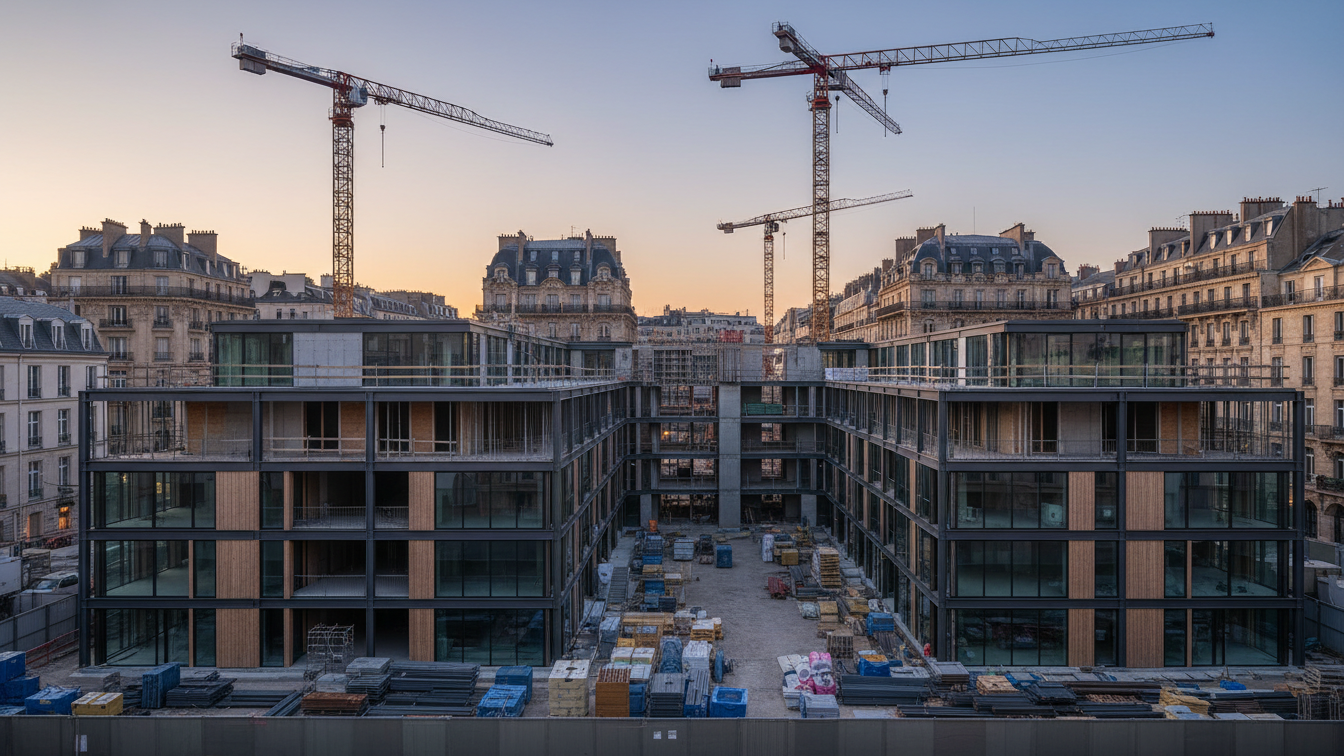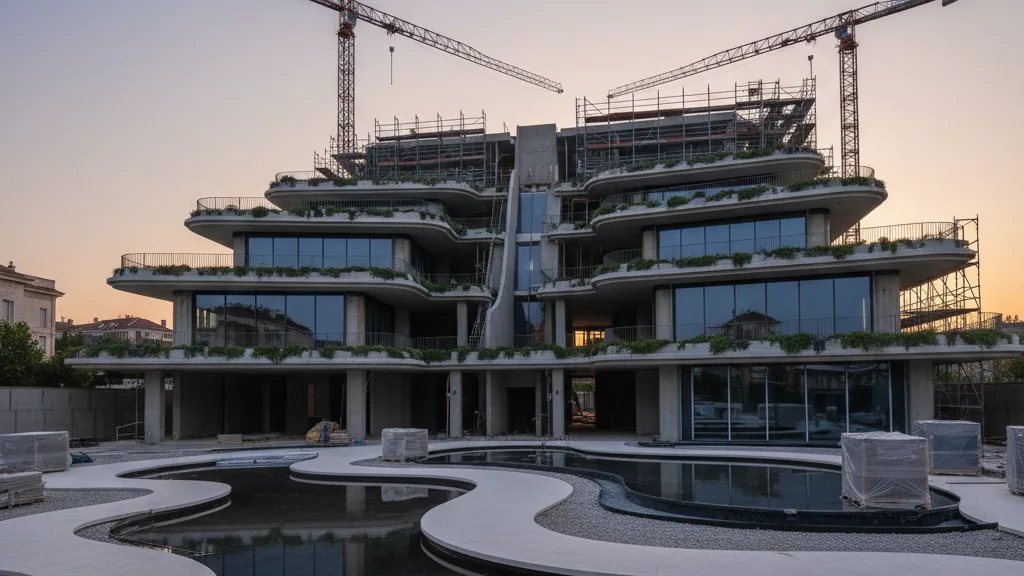
On 9 November 2026, GWW Wiesbadener Wohnbaugesellschaft mbH will celebrate the completion of a forward-looking new development at Bahnstrasse 20-22 in Wiesbaden-Erbenheim. The U-shaped building covers a total area of around 3,060 square metres and was built to the KfW Efficiency House 55 standard. Following the start of construction in July 2025, the property has been ready for occupancy since the end of October 2026. It combines 33 publicly subsidised flats across the three upper floors with an approximately 1,100-square-metre municipal day-care centre on the ground floor.
The project marks a first for GWW: for the first time, at least half of the energy required for space heating, hot water and communal electricity is generated on site from solar power. This is based on a concept by Freiberg-based energy expert Prof. Dipl.-Ing. Timo Leukefeld, which came to the attention of Alexander Harff, head of construction planning project management and authorised signatory at GWW. The architectural design by the firm A5 was specifically adapted for this purpose: instead of a flat roof, the structure was given a pitched roof in order to accommodate a total of 335 photovoltaic modules together with the facades and the canopies of the day-care centre.
Low-tech heat supply in the residential units
In the 33 flats, the housing company completely dispensed with water-based central heating. Heating is provided decentrally via highly efficient infrared panels that are connected directly to the electrical grid and controlled via room thermostats. For domestic hot water, each unit has a self-sufficiency boiler with two heating elements, one of which is primarily operated using the building's own solar power. For the day-care centre, however, the responsible municipal administration opted for a conventional approach: there, an air-to-water heat pump combined with underfloor heating provides temperature control for the rooms.
The decisive factor in trialling infrared technology was recurring quality problems with conventional piping systems. As Harff explained, inadequate crimping of pipes on construction sites repeatedly leads to pipe bursts when systems are put under operating pressure, despite prior pressure testing. Such incidents represent a significant cost and claims settlement factor in both new builds and existing stock, which is avoided through cable-based heat transmission.
Economic strategies for climate action
Against the background of the nationwide building strategy, which envisages a climate-neutral building stock by 2045, the housing company, founded in 1949, is seeking economically viable solutions for its portfolio of more than 14,000 flats. According to internal estimates, a full refurbishment of the entire stock with insulation, new windows and centralised plant engineering would require more than one billion euros, a sum that is not financeable for the company. GWW Managing Director Thomas Keller emphasised that new technical approaches were needed to effectively reduce CO2 emissions while keeping rent levels affordable.
- —Location: Bahnstrasse 20-22, Wiesbaden-Erbenheim
- —Key data: 3,060 square metres of total space, KfW 55 standard, U-shaped building structure
- —Spatial programme: 33 subsidised flats and around 1,100 square metres of day-care centre
- —Energy system: 335 solar modules, infrared heating and self-sufficiency boilers in the flats
In addition to energy consultant Timo Leukefeld and GWW project manager Alexander Gold, the architectural firm A5 and the construction company Glöckle were also involved in delivering the pilot project. GWW plans to evaluate the operating data collected from the new building in order to gain sound insights for future refurbishment and new construction projects within its own portfolio.