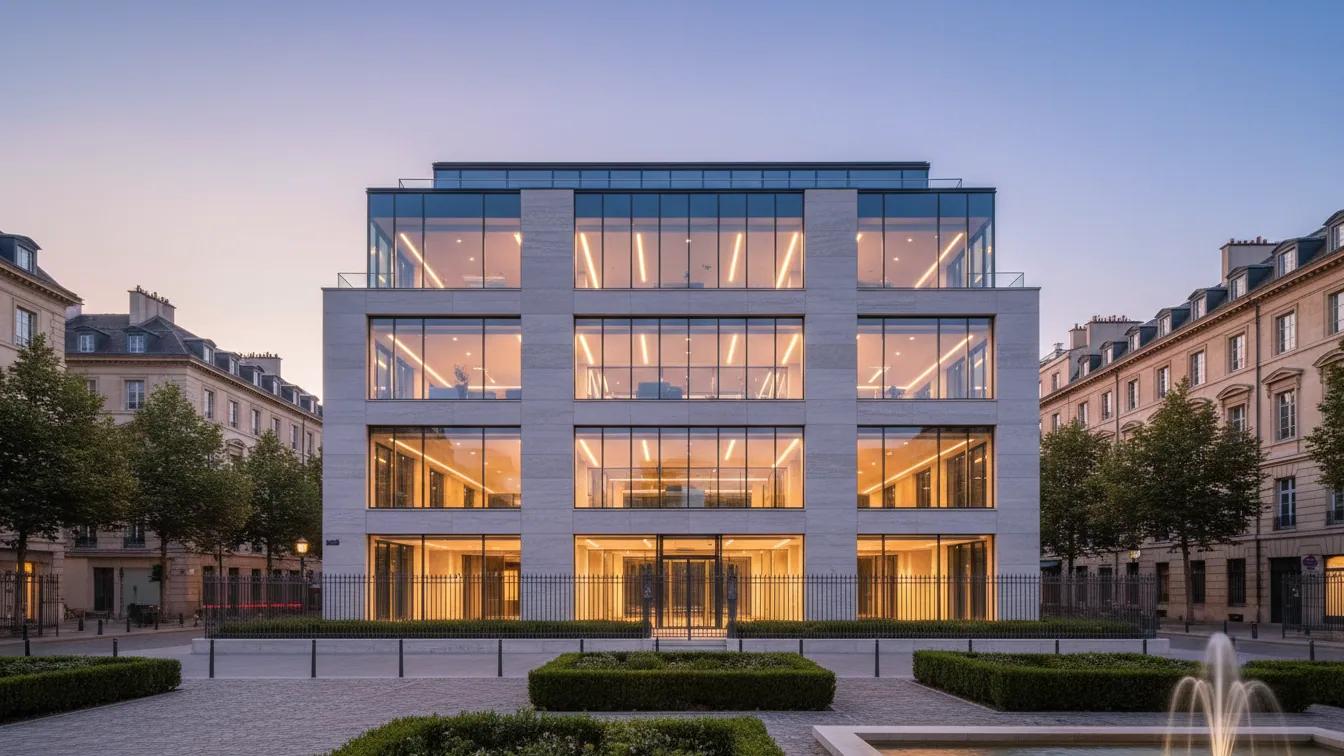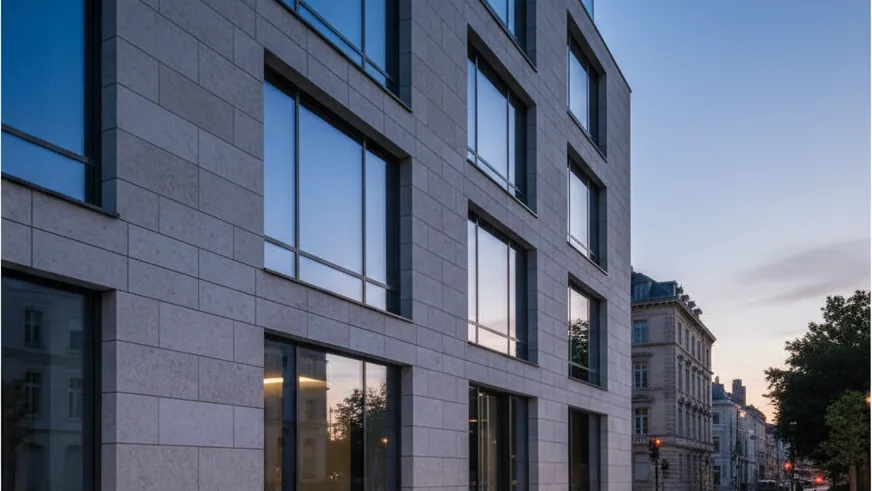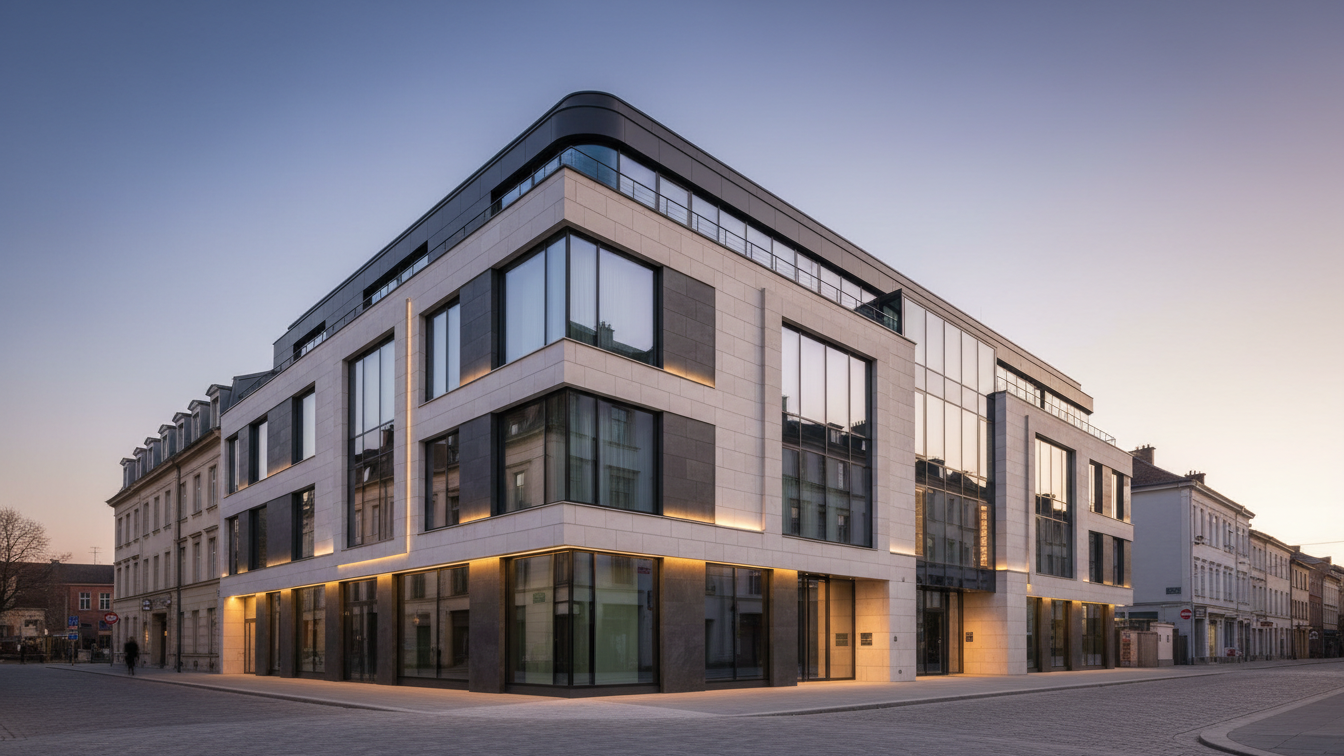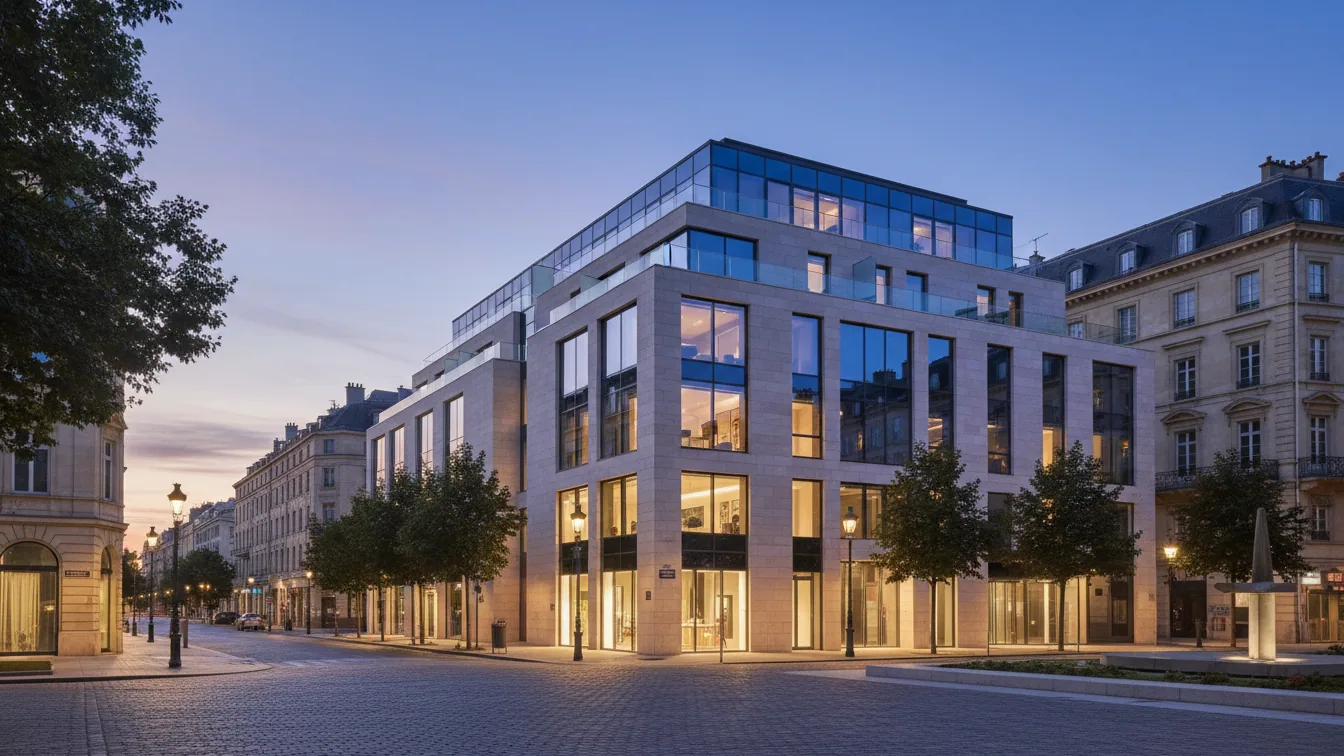
Comprehensive project financing has been arranged for the new police headquarters in Münster, the foundation stone of which was laid last week. Helaba acted as the consortium leader and worked closely with Sparkasse Münsterland-Ost. Other Sparkassen from North Rhine-Westphalia also participated in this construction loan, which underscores the efficiency of the collaborative efforts between state banks and Sparkassen in commercial real estate financing. CM Immobilien Entwicklung GmbH from Münster is responsible for the development of this project. Established entrepreneurial families from the Münsterland region serve as shareholders and equity partners.
The planned property envisages an above-ground development of up to six storeys and a two-storey underground development. The total rental area amounts to approximately 42,000 square metres. Additionally, over 1,000 parking spaces are planned to meet the needs of the approximately 1,400 future employees. Completion of the building complex is scheduled for the third quarter of 2029.
Location and Tenant Structure
The new police headquarters is located a few kilometres south-east of Münster's city centre. This micro-location is characterised by good transport links. Münster, as a significant regional centre in North Rhine-Westphalia, has approximately 300,000 inhabitants and over 40,000 students, which underscores the relevance of this investment for the region.
A long-term lease agreement for the property was concluded with the state of North Rhine-Westphalia. The lease term is 20 years, which ensures high planning security for all parties involved. Erwin Pletzer, Head of Real Estate Finance DACH – Region North at Helaba, expressed his pleasure at being able to support clients and partners in financing this regionally significant project and to strengthen cooperation within the group. The transaction demonstrates the ability of the participating financial institutions to structure and implement complex large-scale projects.
Importance of Cooperation
The cooperation between state banks and Sparkassen, as demonstrated in this case study, represents a model for efficient and goal-oriented project financing. By pooling expertise and capital resources, large-volume and regionally significant real estate projects can also be realised. This contributes to strengthening regional infrastructure and the economy. The involvement of various financial institutions distributes risk and simultaneously enables broad support for the project, which is crucial for its stability and success.