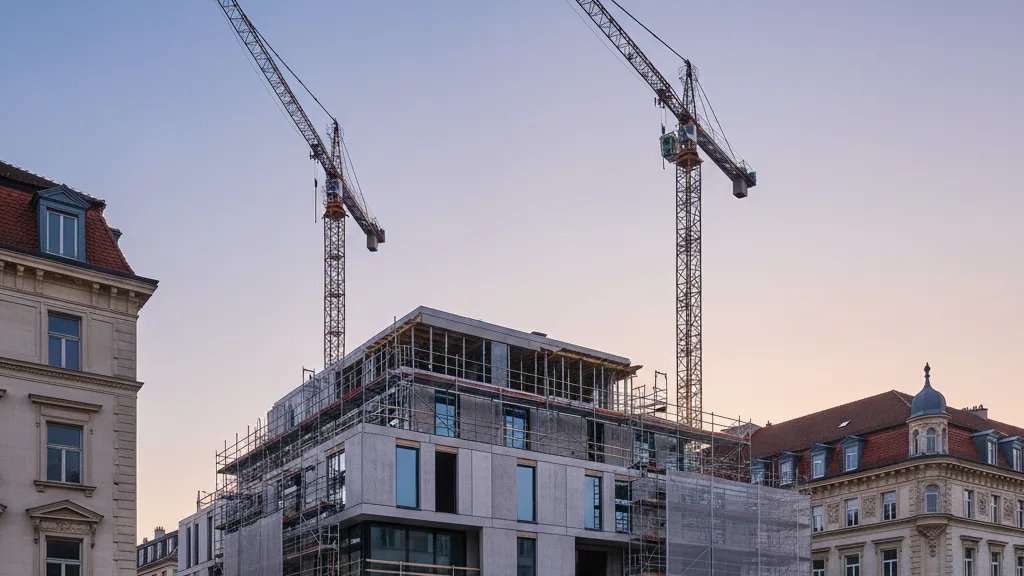
The New York investment market remains remarkably stable despite an environment shaped by regulatory intervention and selective capital allocation. Shimon Shkury, president and founder of Ariel Property Advisors, emphasised in an interview with the Commercial Observer that the mid-market segment below large institutional transactions in particular has shown notable resilience.
In the first three quarters of 2026, total transaction volume for commercial and residential investments in New York City reached 23.69 billion dollars across 1,914 sales. This represents an increase of 9.1 per cent in dollar volume and 7.9 per cent in the number of transactions compared to the same period of the previous year. Although volume in the third quarter declined by 25.2 per cent to 6.73 billion dollars, this was primarily attributed to exceptionally large individual deals in the previous year. Excluding transactions of 250 million dollars or more, volume in the third quarter actually rose by 4 per cent.
Growth drivers beyond the conventional residential sector
Outside the multi-family sector, development sites and office properties in particular recorded significant momentum. Development land volume rose by 9.7 per cent to 5.24 billion dollars through the third quarter, with transaction numbers remaining largely unchanged. Institutional interest is focused on three clearly defined priorities:
- —Conversion of office buildings to residential space: Incentive programmes such as 467-m provide economic impetus. A striking example is the acquisition of 1 Whitehall Street by Nathan Berman and Idan Ofer for 104.5 million dollars.
- —Rental housing development sites: Initiatives like 485-x assist developers in bringing schemes to fruition. In Gowanus, Ariel brokered sites worth 45.7 million dollars this year, including 604 Union Street for 11 million dollars in the third quarter.
- —Luxury condominiums in prime locations: In this highly selective segment, the acquisition of 56 North Moore Street in Tribeca by Alchemy Properties for 58.5 million dollars underlines confidence in truly exceptional locations.
In the office sector, the number of transactions increased by 5.6 per cent to 95 deals, even though invested volume fell by 2.8 per cent to 5.2 billion dollars. Buyers are differentiating sharply between buildings with credible leasing and repositioning prospects and assets requiring disproportionately high follow-up investment.
Three submarkets in the multi-family sector
In the multi-family segment, sales in the first nine months totalled 6.99 billion dollars across 1,044 transactions, representing a 7.9 per cent increase in volume. However, the third quarter recorded the weakest performance since early 2024 at 1.84 billion dollars. Rent-stabilised stock accounted for around 1.27 billion dollars, with the bankruptcy sale of the Pinnacle portfolio in the first quarter alone contributing 449 million dollars, or roughly 35 per cent of this submarket.
According to Shkury, regulated residential buildings often trade more than 50 per cent below their valuations prior to the Housing Stability and Tenant Protection Act of 2019. In light of constrained rental growth, higher interest rates and elevated operating costs, investors are demanding low entry prices and dependable ongoing yields. In contrast, buyers of market-rate properties price in market demand, whilst in subsidised housing, long-term government contracts such as Section 8 provide a reliable and contractually secured income base.