G
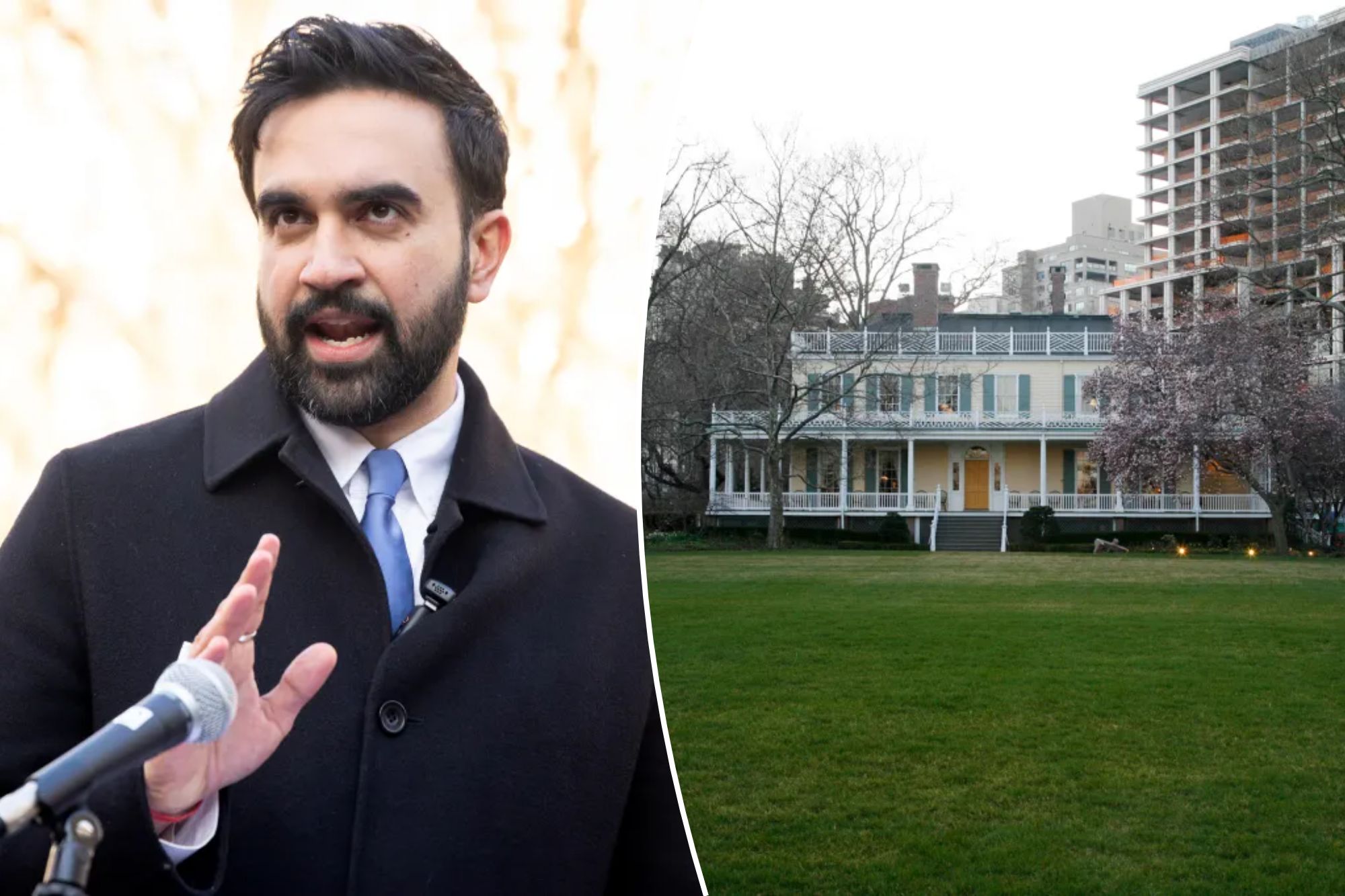
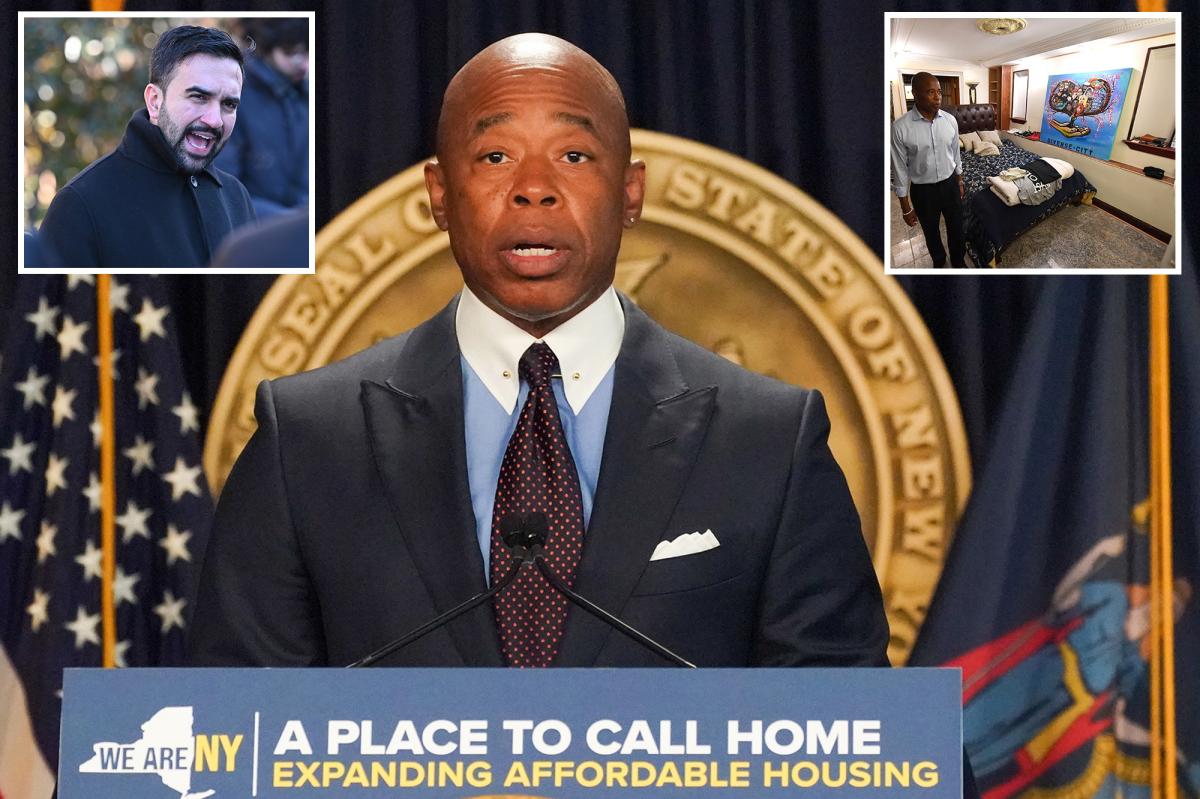
racie Mansion, the official home of New York City mayors, will welcome a new occupant next year. Mayor Eric Adams has lived there since 2022, but when his term ends, Mayor‑elect Zohran Mamdani and his wife Rama Duwaji will move in. Mamdani announced the move on Monday, saying the decision was driven by family safety and a need to focus on the city’s affordability agenda. He will leave his rent‑stabilized one‑bedroom apartment in Astoria for the family’s benefit.
The residence sits at the corner of East 88th Street and East End Avenue in Carl Schurz Park on Manhattan’s east side. The building’s white trim and green shutters have earned it the nickname “Little White House.” Its history spans from a pre‑Revolutionary War house to a modern mayoral residence, with numerous renovations, restorations, and notable visitors.
**Interior Overview**
The yellow paint on the exterior was chosen by former mayor Michael Bloomberg to reflect the color of a nearby historic house. The wrap‑around porch, restored in 1983, is the site where Alexander Hamilton recruited investors for the New York Evening Post in 1801. The front door, framed in carved wood and topped by a semicircular window, opens into a foyer with tan‑and‑white striped wallpaper and a faux‑marble painted floor in trompe‑l’oeil style. A compass pattern centers the floor, and a chandelier hangs above. An ancient grandfather clock has ticked since at least 1942, and a gold‑framed mirror sits above the fireplace.
A winding staircase leads to the second floor, which contains five rooms that have served as bedrooms, sitting rooms, and dressing rooms for various tenants. The foyer’s Federal‑style furniture and crown moldings complement the historic décor.
The yellow parlor, located to the right of the foyer, features a cannonball on the mantel—an artifact from the house’s time as a British loyalist residence destroyed in 1776. The parlor also displays a convex mirror with a gold frame and six candle sconces. During the de Blasio administration, the parlor showcased art by Japanese artist Tōkō Shinoda and collage artist Baseera Khan. The room’s color has varied: tan under O’Dwyer, peach under the conservancy’s recent repainting.
Behind the parlor lies a kitchen that received a $1.4 million facelift under Bloomberg in 2012. To the left of the foyer is a teal library, its carpets, sofas, and walls all in teal. The curtains, installed by Mayor John Lindsay in the 1960s, feature a floral chintz pattern on a blue background. The library contains historic figurines of George Washington, including a maquette carved by John Quincy Adams Ward. A window bears the name “Caroline,” a mark left by ex‑Mayor Rudy Giuliani’s daughter, continuing the tradition of children marking the house.
The library’s fireplace mantel displays “Raise Up,” a 2014 installation by Hank Willis Thomas depicting ten black men raising their arms, with posters reading “I am a man.” The piece reflects on slavery, lynching, and contemporary mass incarceration.
A carpeted dining room features ornate French wallpaper depicting a landscape garden scene, manufactured in the 1820s by Zuber et Cie. The wallpaper does not reach the ceiling; the area above is painted to match the sky of the landscape. The wallpaper was installed under the Edward Koch administration to reflect the house’s original style.
**Susan E. Wagner Wing**
Mayor Robert F. Wagner Jr. (1954‑1965) added a new wing to provide privacy and safety for his family. The wing, designed by architect Mott B. Schmidt, cost $800,000 and was completed in 1966 after Wagner’s wife Susan died of lung cancer in 1964. The wing features an ornate chandelier, crown molding, a golden convex mirror topped with a bald eagle sculpture (installed by Bloomberg), and a historic fireplace taken from the Bayard home where Alexander Hamilton died after his duel with Aaron Burr. The wing has hosted the “CATALYST: Art and Social Justice” installation by Gordon Parks, Martine Fougeron, and others.
**Fencing and Gardens**
The mansion’s fencing history dates back to 1896 when the NYC Parks Department installed the first fence. LaGuardia (1942) added a wrought‑iron fence; O’Dwyer moved it 25 feet farther for privacy; Lindsay added a yellow pine stockade; Koch installed a double fence; and De Blasio added an inner “privacy fence” inside a brick wall and wrought‑iron fence. The grounds have featured willows, poplars, daffodils, marigolds, cabbages, dogwood trees, and azaleas over the years. Today, tulips line the front, and a “seeds library” offers free seeds for edible or flowering plants. The grounds support a greenhouse collaboration with Project EATS to teach local students and parents about healthy eating.
**Timeline of Tenants and Legacy**
| Year | Tenant | Legacy |
|------|--------|--------|
| 1770‑1776 | Jacob Walton | Built pre‑Revolutionary house; destroyed 1776 |
| 1799‑1823 | Archibald Gracie | Built Gracie Mansion; slaves freed 1801 |
| 1823‑1857 | Joseph Foulke | Purchased from Rufus King |
| 1857‑1896 | Noah Wheaton | Victorian décor; left unpaid taxes |
| 1886‑1927 | NYC Parks Dept. | Public restroom, ice‑cream stand |
| 1927‑1934 | Museum of the City of New York | Saved from disrepair |
| 1942‑1945 | LaGuardia | First mayor to live in the house |
| 1946‑1950 | O’Dwyer | Bribery scandal, brief tenure |
| 1950‑1953 | Impellitteri | Limited ashtrays |
| 1954‑1965 | Wagner | Susan E. Wagner wing |
| 1966‑1973 | Lindsay | Feud with Wagners, renovations |
| 1974‑1977 | Beame | Added to National Register |
| 1978‑1989 | Koch | Established Gracie Mansion Conservancy |
| 1990‑1993 | Dinkins | First black mayor; focus on literacy |
| 1994‑2001 | Giuliani | Disrepair, legal drama |
| 2002‑2013 | Bloomberg | $7 million restoration, “People’s House” |
| 2014‑2021 | De Blasio | West Elm furnishings, public access |
| 2022‑2026 | Adams | Reopened to public, hosted events |
**Key Historical Notes**
- The original house was built by Jacob Walton in 1770 and used by the British during the Revolutionary War. It was destroyed in September 1776.
- Archibald Gracie’s house was built with the help of slaves and indentured servants. He freed them in 1801.
- The house changed hands from Gracie to Rufus King, then to Joseph Foulke, and finally to Noah Wheaton before the city took over in 1896.
- The mansion has hosted notable figures such as John Quincy Adams, Washington Irving, General Lafayette, Desmond Tutu, Nelson Mandela, and Frederick Douglass.
- The tradition of children marking the house began with Amelie Hermione Quackenbush in 1893 and continues today.
**Recent Renovations and Public Access**
Bloomberg’s $7 million restoration introduced a pale yellow hue, mahogany and faux‑bamboo furniture, French bronze chandeliers, and historically accurate upholstery. De Blasio’s tenure saw West Elm furnishings donated for the bedrooms, and the mansion was opened to the public for tours, meetings, and community events. Adams further expanded public access, hosting weddings, Juneteenth celebrations, and Pride events.
**Paranormal Claims**
Mayor Adams has publicly acknowledged ghost sightings, and former First Lady Chirlane McCray reported unexplained door movements and creaking floorboards. While the existence of ghosts remains debated, the mansion’s openness to the public has made it a cultural landmark beyond its political function.
**Conclusion**
Gracie Mansion remains a living museum of New York City’s political and social history. From its origins as a colonial house to its current role as a public venue, the residence reflects the city’s evolving priorities—affordability, public access, and cultural heritage—while continuing to adapt to the needs of its occupants and the community it serves.