D
uring the first RIA Edge Private Markets event in New York, a panel of senior advisers addressed the growing unease around private credit and real‑estate valuations. The discussion highlighted that, despite recent headlines—such as JPMorgan’s Jamie Dimon describing private‑credit “cockroaches” after two high‑profile defaults—strong fundamentals, rigorous underwriting, and top‑tier managers remain the key safeguards for client portfolios.
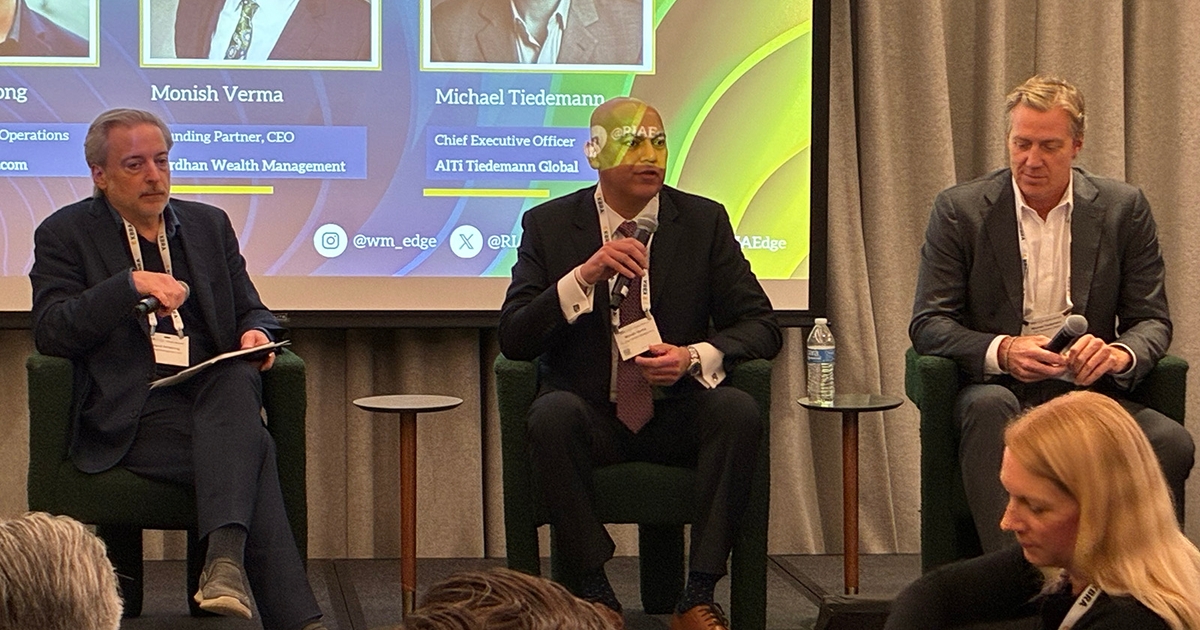
Michael Tiedemann, chief executive of AlTi Tiedemann Global, stressed that the best private‑credit managers are diversified, possess deep underwriting expertise, and maintain dedicated workout teams. “When problems arise, they have the resources to manage them,” he said. Tiedemann noted that defaults and delinquencies in the sector are still low and that no warning signs point to a larger credit crisis. He contrasted the volatility of bank asset bases, which can evaporate quickly, with the more stable asset matching in private credit.
Tiedemann also identified a potential new avenue: a secondary market for evergreen and interval funds focused on private credit. Interval funds typically restrict redemptions to 1 % monthly and 5 % quarterly, but a secondary market would give investors an additional exit route. “Acquiring high‑quality managers at an 8 %–15 % discount positions you advantageously,” he added. Selecting managers with these competencies and monitoring for aggressive loan terms or rising leverage are essential steps for advisers.
Monish Verma, founding partner and CEO of Vardhan Wealth Management, echoed the importance of diversification and disciplined due diligence. “We avoid any manager with leverage creep,” he said. Private debt is usually the first private‑market vehicle the firm considers for clients, scaling allocations to 15 %–25 % of the portfolio, with roughly a quarter of that allocated to private credit. The firm’s due‑diligence process is deep and efficient, allowing it to vet opportunities thoroughly.
On the real‑estate side, Nick Meyer, EVP of capital markets at BAM Capital, and Ben Paolone, EVP of investments and capital markets at Becknell Industrial, outlined their firms’ niches. BAM focuses on multifamily properties in the Midwest, while Becknell specializes in warehouses and logistics. Meyer highlighted the persistent U.S. demand for housing, noting that overbuilding in markets like Austin has led to falling rents, whereas Midwestern markets have seen fewer new apartments. Paolone pointed out that the single‑family home market has pushed first‑time buyers into their 40s, resulting in longer rental periods for many Americans.
Dmitriy Katsnelson, deputy CIO of Wealthspire Advisors, stressed the need for meticulous due diligence in real‑estate investments. “You must work with vertically integrated firms that can manage assets end‑to‑end,” he advised. Track record, concentration, and leverage levels are critical metrics. Katsnelson warned against single‑property Opportunity Zone funds and firms that push leverage beyond prudent limits. Paolone agreed, emphasizing the importance of proven sponsorship, strong governance, deep customer relationships, and robust underwriting.
BAM’s focus on industrial assets is driven by tailwinds such as e‑commerce growth and potential manufacturing expansion in the United States. Paolone added that demand drivers and underwriting quality are key when evaluating specific asset classes.
Katsnelson concluded with caution for new asset managers entering the RIA space. “We can be a pain in the butt to deal with,” he said. He recommended building strong relationships with custodians and offering clear, platform‑based solutions to attract interest.
David Bodamer, editorial director at WealthManagement.com, covers alternative investing, SMAs, ETFs, and model portfolios. He previously reported on commercial real estate for over two decades and has hosted the Wealth Management Invest podcast.