Z
illow’s sudden removal of climate‑risk scores—prompted by the California Regional Multiple Listing Service (CRMLS)—has sparked a debate over who must warn buyers about environmental hazards. CRMLS, the largest database for agents in the country’s biggest housing market, demanded that Zillow drop First Street’s flood and wildfire risk ratings. First Street’s models, used by insurers, banks, and public agencies, had been integrated into Zillow’s California feed. When Zillow complied, the scores vanished not only from California listings but from the entire national platform.
CRMLS framed the dispute as a question of scientific validity, yet the real consequence lies in real‑estate law. Agents and brokers are legally required to disclose any known material risks that could influence a buyer’s decision. If a broker is aware—or should reasonably be aware—of credible hazard data, that information cannot be ignored simply because it is no longer displayed on a consumer‑facing site. By pushing major platforms to suppress independent risk models, CRMLS has effectively shifted the burden onto agents, potentially increasing their liability rather than protecting them.
The National Association of Realtors (NAR) has long cautioned agents against presenting themselves as climate scientists. Instead, NAR recommends transparent use of reputable third‑party data. CRMLS’s campaign to eliminate First Street’s scores directly contradicts this guidance, leaving agents exposed to litigation if buyers later discover that a property faced severe flood or wildfire risk that had been publicly modeled.
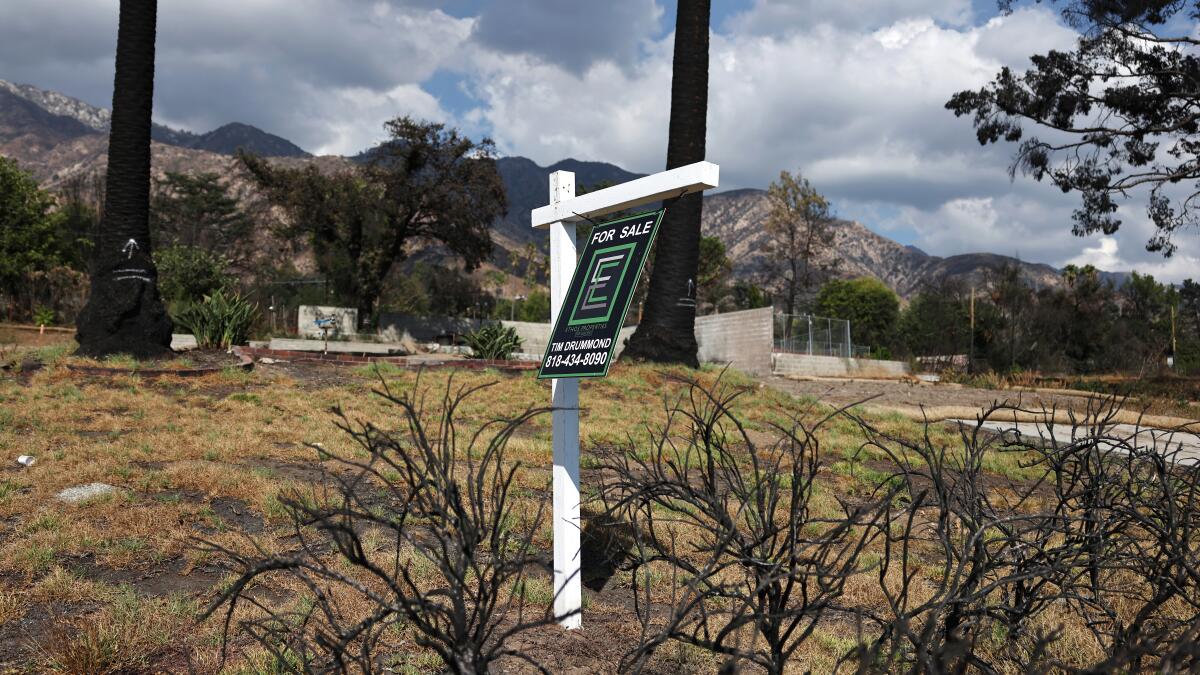
Recent events illustrate the necessity of third‑party data. After the January Eaton fire in Altadena, a Los Angeles Times investigation revealed that California’s official wildfire hazard maps identified only 21 % of the homes that burned. First Street’s independent models, however, had flagged 94 % of the destroyed homes as “severe” or “extreme” risk. Similarly, FEMA’s flood maps are often outdated—over 70 % reflect data from the 1970s and 1980s—and many flood‑insurance claims come from outside the designated Special Flood Hazard Areas. Investigations have shown that independent models frequently provide more accurate warnings than FEMA’s legacy maps.
CRMLS’s objection to probabilistic risk scores is misplaced. Probability‑based forecasting underpins insurance pricing, underwriting, and financial risk management across the United States. Courts require reasonable, evidence‑based disclosure of material risks, not perfect mathematical certainty. First Street’s methodologies are transparent, peer‑reviewed, and validated against real‑world losses, which is why banks, insurers, engineering firms, and federal agencies rely on them.
Suppressing public risk disclosures does not shield agents; it may do the opposite. Without standardized third‑party data presented directly to buyers, agents may be forced to communicate these risks themselves. When hazards materialize, the focus will shift from whether Zillow displayed a score to whether the agent fulfilled their duty to inform the buyer of known, credible risks.
Zillow’s nationwide removal of climate scores raises further questions. The company relies on CRMLS’s data feed for California listings, yet CRMLS’s objections were limited to that state. The decision to eliminate scores across the country suggests a broader influence than the original dispute warranted. CRMLS has hinted at pressuring other major platforms—Redfin, Realtor.com, Homes.com—to follow suit. If these platforms comply, agents could find themselves operating in a market where a single influential multiple listing service dictates which risk disclosures are publicly available nationwide. When suppressed risks later cause damage or loss, liability will be clear and extensive.
Dave Jones, director of the Climate Risk Initiative at UC Berkeley and former California insurance commissioner, notes that Zillow’s removal of climate risk scores may actually increase legal liability for real‑estate agents. Agents cannot legally ignore credible hazard data simply because it disappears from consumer‑facing platforms. Courts will likely focus on whether agents met their disclosure obligations at the time of sale, not on what Zillow displayed.
First Street’s independent climate risk models are accurate, transparent, and peer‑reviewed. They correctly identified approximately 94 % of homes destroyed in the January Eaton fire, far outperforming California’s official wildfire hazard maps, which captured only 21 % of at‑risk properties. Probability‑based forecasting is the standard foundation for insurance pricing, underwriting, and financial risk systems across America, meeting the legal standard for evidence‑based disclosure of material risks.
The National Association of Realtors warns agents against positioning themselves as climate science authorities and urges transparent reliance on reputable third‑party risk data—an approach contradicted by CRMLS’s campaign to suppress independent models. Zillow’s nationwide removal of climate scores, despite CRMLS objections being limited to California, represents an excessive rollback that eliminates scientific data consumers had relied on for years across the entire country.
Different views exist. CRMLS and some agents argue that First Street’s predictive flood risk data does not always align with observed conditions, citing listings identified as having very high projected flood chances that have experienced no flooding for decades. Displaying specific probability predictions for flooding can significantly impact a property’s desirability and influence buyer behavior in ways agents argue are unfair and potentially misleading. Market data shows that homes labeled with high climate risk scores sell substantially slower and sometimes for less money. For example, between June 2024 and March 2025, only 52 % of high‑risk homes sold compared to 71 % of low‑risk homes, and Redfin research found high‑risk homes sold for approximately 1 % less.
Real‑estate agents report that buyers cancel showings after seeing high risk scores and sellers are frustrated by an inability to challenge assessments they believe are inaccurate for their specific properties. Experts acknowledge that translating global climate models to individual homes is complex, with factors like elevation, foundation design, and surrounding topography significantly affecting actual risk. Standardized scores may oversimplify nuanced situations.
Industry leaders call for standardized government models—such as Florida’s hurricane catastrophe model—as a template for national risk assessments, rather than relying on multiple private companies producing vastly different assessments of identical properties. FEMA flood maps, though outdated in some cases, are based on historical data that some argue is more reliable than predictive models. The National Association of Realtors supports disclosure requirements only when risks are known or in designated flood zones.