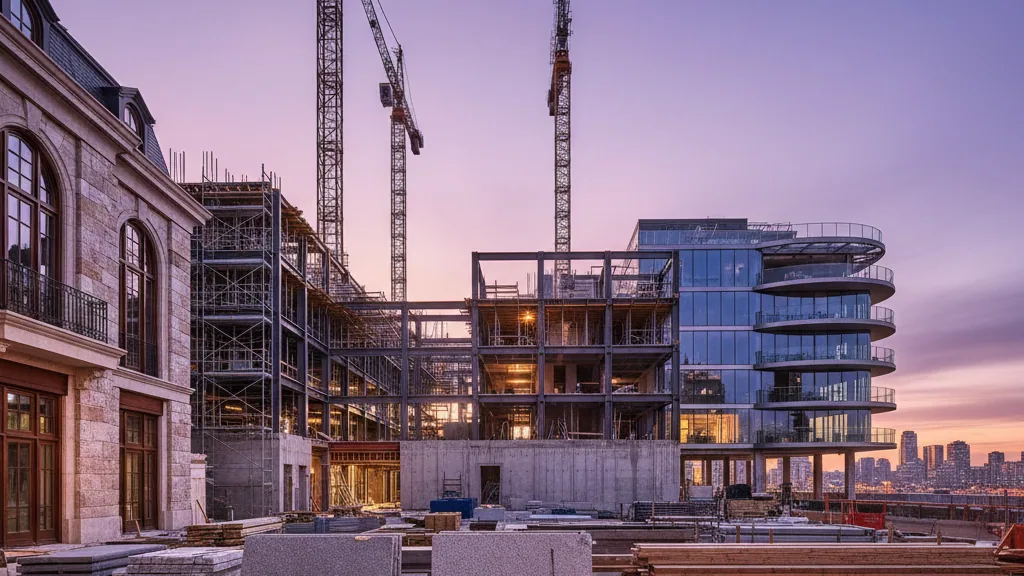
The combination of elevated interest rates and rising construction costs has noticeably altered the financing landscape for US residential property. While traditional commercial banks have significantly scaled back their involvement in speculative development projects within the premium segment, specialist private lenders such as Flatiron Realty Capital are recording growing demand for bridge loans.
Michael Ostad, who together with his brother Ed Ostad runs both the lender Flatiron Realty Capital and the New York property management firm TriStar Management, points to increasingly conservative underwriting. Loans are currently assessed strictly against actual construction costs rather than future valuation forecasts. In addition, underwriting guidelines require significantly higher interest reserves from the outset to cushion against extended marketing periods.
Market divergence between standard housing and the prime segment
According to Ostad, trends in the single-family housing sector are split in two. In the traditional volume segment, particularly in the Sunbelt, developers are suffering from the weakened purchasing power of end buyers, as many prospective purchasers can no longer secure financing at mortgage rates of 7 per cent. National inventory here rose to 1.6 million homes in September, the highest level since 2019, with around 43 per cent of sellers having to reduce their asking prices.
The situation is entirely different in sought-after luxury enclaves. In areas such as Palm Beach, Miami, the Hamptons and Aspen, strict zoning regulations and a lack of building land prevent oversupply, which is why higher construction costs can still be passed on to buyers.
- —High barriers to entry and strict planning procedures prevent an expansion of supply in prime locations.
- —According to data from MIAMI REALTORS®, around 61 per cent of sales over 1 million dollars and 88 per cent of transactions over 10 million dollars were settled entirely in cash in the first half of 2026.
- —Decoupling from mortgage rates shifts credit risk away from potential price discounts towards marketing timelines alone.
Operator perspective and complex market conditions in New York
Alongside the lending business, the Ostad brothers have been managing multi-family properties in New York for more than two decades. Ostad describes operating conditions there as the most demanding of his career. Since the 2019 changes to tenancy law, investments in rent-regulated buildings can only be passed on to a very limited extent, while taxes, insurance premiums, wages and repair costs continue to climb steadily.
Added to this are refinancing difficulties resulting from rising interest rates, as numerous loans were agreed under entirely different monetary conditions. However, the dual role as asset owner and lender sharpens judgement when issuing construction loans, as reliable partners and operational discipline form the most crucial line of defence against market risks.