A significant slump in tech shares following the US midterm elections has caused unease across the artificial intelligence sector. The tech-heavy Nasdaq index fell by 5.52 per cent on Thursday after Democrats took control of Congress and numerous local ballot measures restricted the construction of new data centres. This left the index more than ten per cent below its record high of 6 October 2026, before it recovered by 1.09 per cent on Friday. Market observers are now examining the potential consequences for commercial real estate.
Suhail Tayyeb, a professor at the Schack Institute of Real Estate at New York University, emphasised that any pressure on office landlords with a high proportion of AI tenants would only emerge with a time lag. A downturn in equity markets does not automatically lead to weaker letting activity. Rather, the decisive factor is whether the affected companies adjust their recruitment, expansion plans or capital investment commitments. Landlords should therefore closely monitor creditworthiness trends, sublease availability and shifting space requirements.
Stable demand for office space in Manhattan
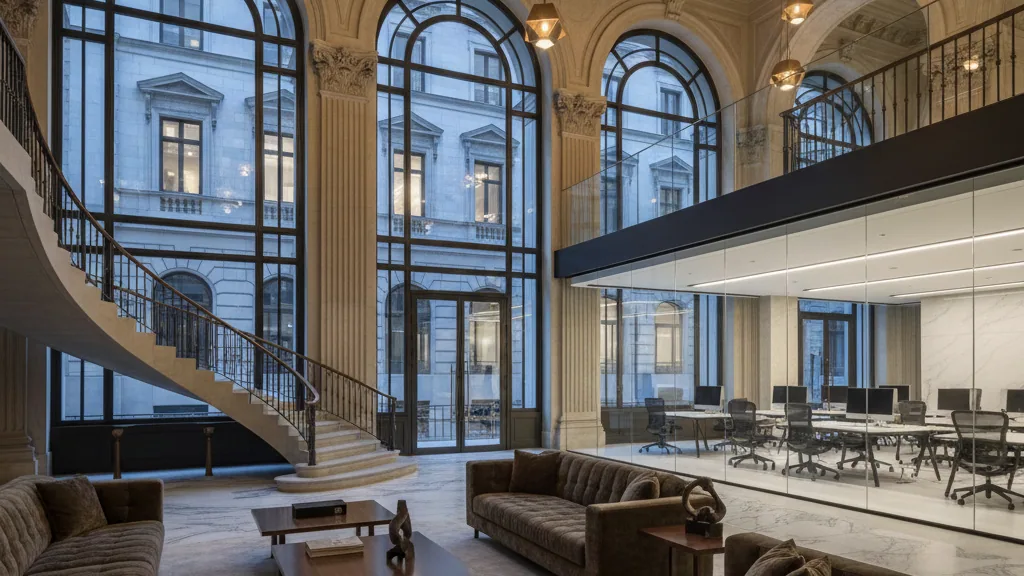
In the New York office market, there were no signs of slowing momentum immediately after the elections. Ten AI companies inspected properties in the Midtown South district. SpaceX is reportedly considering leasing 300,000 square feet, Palantir is evaluating spaces totalling 400,000 square feet and Sierra has shown interest in 250,000 square feet. In addition, Anthropic intends to expand its Manhattan presence beyond the 465,530-square-foot lease signed at 330 Hudson Street in April.
Steven Rotter, Executive Vice Chairman at Newmark, explained that while smaller buildings in Midtown South housing young start-ups could face letting risks, established corporations are likely to continue expanding their footprints. Landlords are expected to examine balance sheets and business model quality more closely in future, which is why flexible lease terms are becoming more important for tenants.
Political headwinds for data centres
The election results hit the data centre sector considerably harder. Of 41 nationwide ballot initiatives proposing restrictions on corresponding infrastructure projects, 40 were passed, with only a single referendum in North Dakota being defeated. Brendan Wallace, founder and managing director of venture capital firm Fifth Wall, pointed out that 26 gubernatorial candidates across 21 states had campaigned against data centres, with 173 million dollars spent nationwide on predominantly negative advertising.
- —In Ohio, 21 measures against data centres were passed, in some cases with majorities of up to 76 per cent in favour of outright bans.
- —In Texas, incumbent Governor Greg Abbott was unseated; the victorious Democrat Gina Hinojosa announced a moratorium on new developments.
- —According to a report by JLL from April, Texas was still considered the most promising market to overtake Virginia as the leading US data centre location.
Suhail Tayyeb added that while the fundamental demand for computing capacity remains intact, sustained pressure on corporate valuations is weighing on financing and project development. A clear distinction must be made between so-called hyperscalers with strong operating cash flow and smaller operators that are considerably more reliant on external capital.