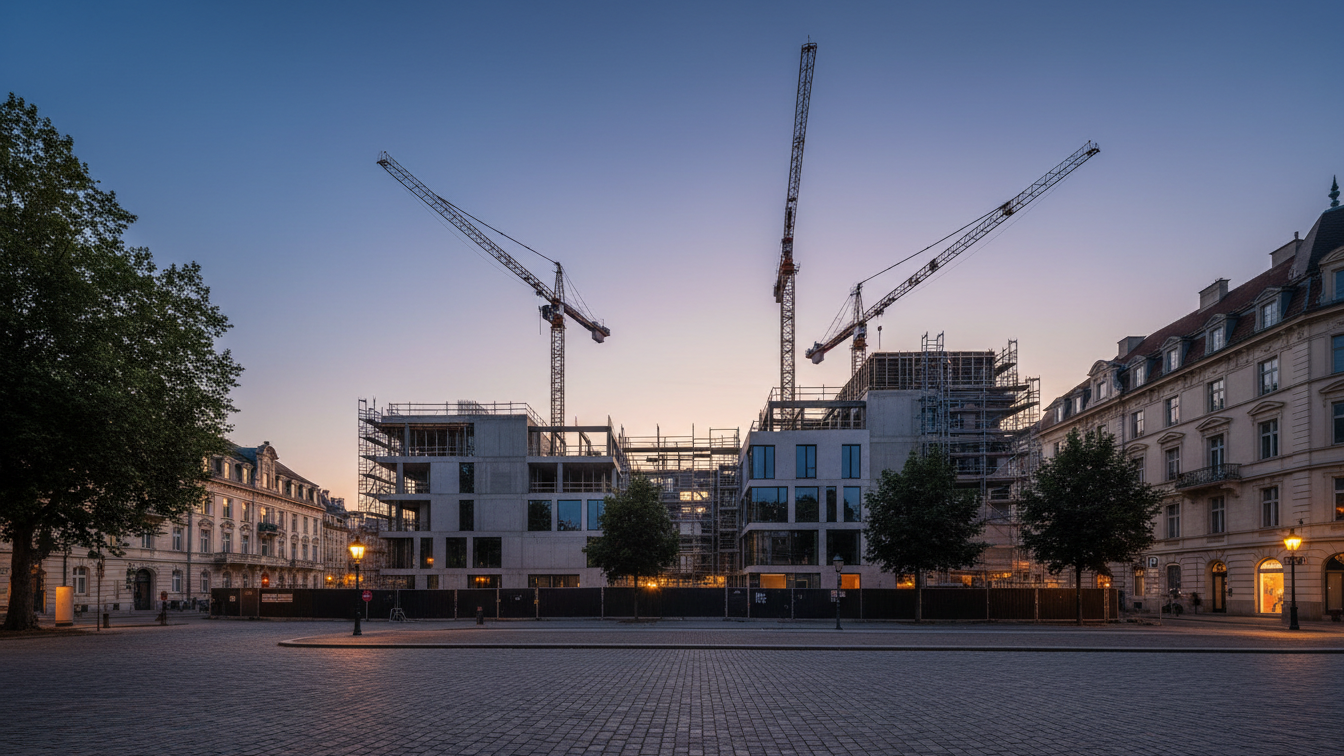
The Free State of Bavaria and the housing company Vonovia are deepening their cooperation to advance the creation of new housing and the further development of existing neighbourhoods. On the occasion of a construction project on Lützelsteinerstraße in Munich's Schwabing-Freimann district, the Bavarian State Minister for Housing, Construction and Transport, Christian Bernreiter, and the Chief Executive Officer of Vonovia, Luka Mucic, signed a corresponding letter of intent. The symbolic ground-breaking ceremony for the project was performed by Minister-President Dr Markus Söder in the presence of Munich's Second Mayor Mona Fuchs.
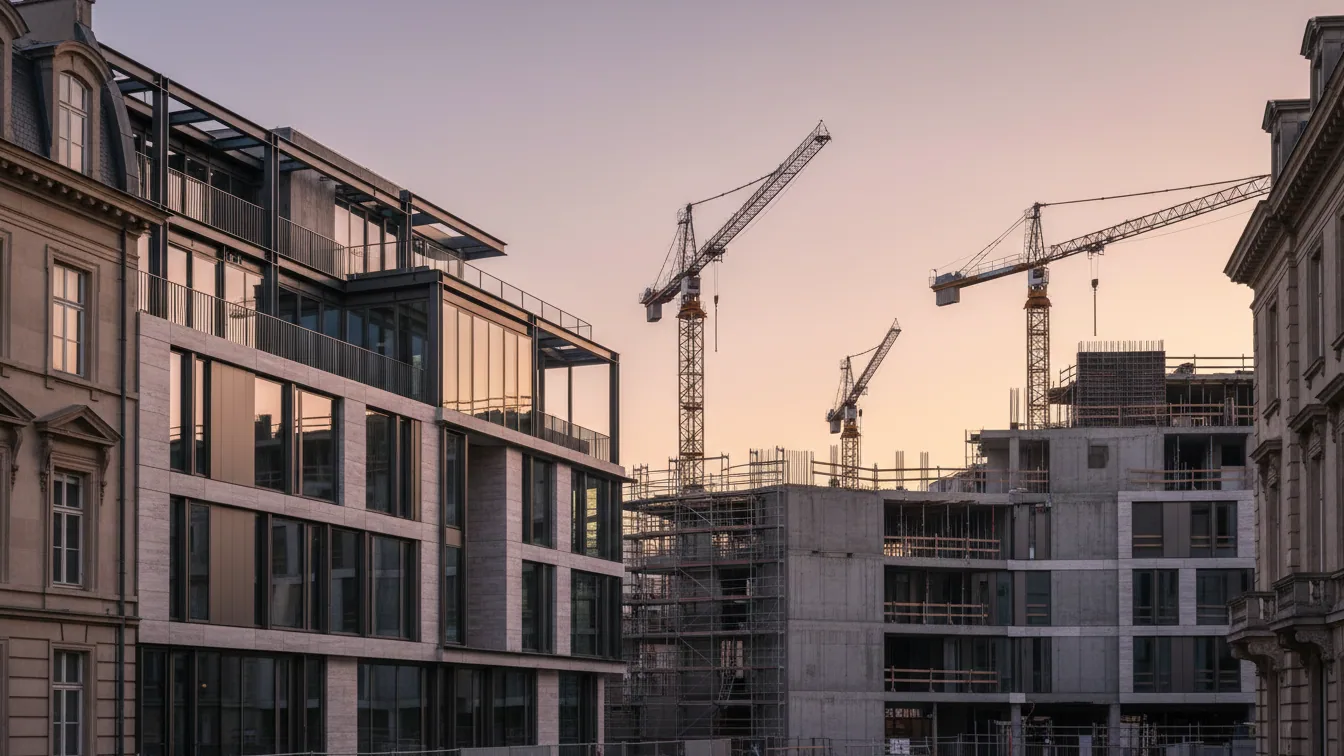
The project on Lützelsteinerstraße comprises the construction of 62 new apartments through land-efficient densification. At the same time, existing residential buildings dating from the 1960s are undergoing comprehensive energy-efficiency modernisations. According to Henning Schulze, Member of the Southern Regional Management Board at Vonovia, the company is relying on standardised and typified building solutions at this site to make construction processes within the existing infrastructure swift and cost-effective.
Long-term framework for new construction and existing building refurbishment until 2031
The newly concluded agreement provides for investments running into billions, scheduled to be realised across the entire Free State between now and 2031. The funds will be directed into new construction projects as well as energy modernisations and the upgrading of established neighbourhoods. Luka Mucic highlighted that long-term investments require reliable political frameworks. Cooperation between the state, municipalities and the private housing industry provides the necessary foundation for translating shared objectives into concrete construction projects.
A key component of the cooperation is the examination of practice-oriented instruments designed to noticeably streamline planning and approval processes. In doing so, the partners are examining the following levers:
- —Standardised planning and approval processes as well as typified and serial construction methods
- —Application of simplified planning approaches under Building Type E (Gebäudetyp-E)
- —Pragmatic parking space and mobility concepts
- —Adequate financing structures to safeguard economic viability
Funding landscape and housing policy framework in the Free State
Minister-President Söder emphasised the priority of affordable housing for Bavaria. In the current biennial budget, the Free State is providing EUR 3.6 billion for housing support via the so-called construction turbo. At federal level, Bavaria advocates tax relief, declining-balance depreciation options and special write-offs, while property acquisition tax in the Free State is not being increased. Out of a total stock of 6.8 million homes, nearly every fourth new apartment in Germany was built on Bavarian soil; in 2025 alone, 54,000 apartments were approved in the Free State.
Construction Minister Bernreiter pointed out by way of contrast that Bavaria relies on dependable partnerships rather than regulatory interventions such as the socialisation of housing stock. The Munich project serves as an example of how targeted cooperation can swiftly mobilise additional residential capacity to meet the high demand for housing across Bavarian metropolitan areas and regions on a sustainable basis.