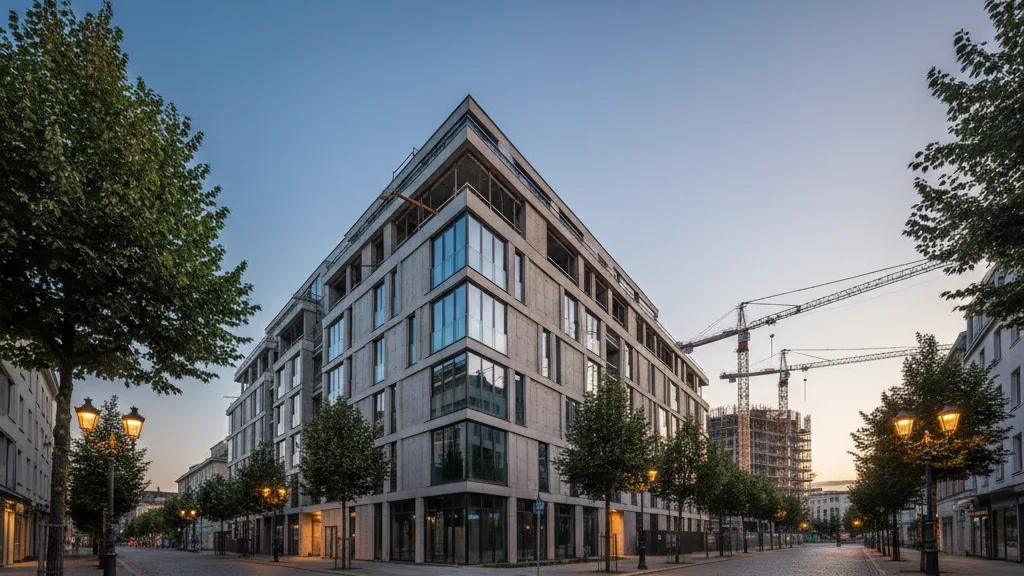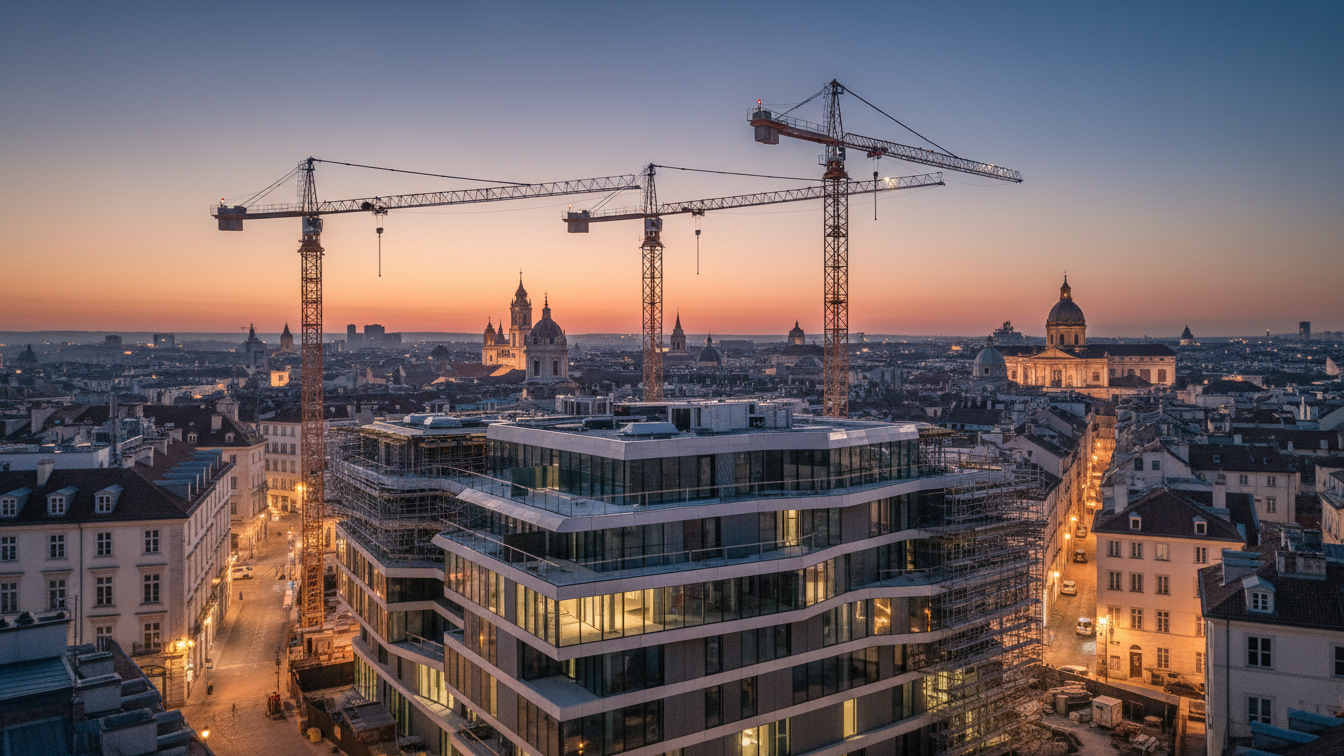
In the light of ongoing stagnation in Berlin residential construction, the Architects and Engineers Association of Berlin-Brandenburg (AIV) is launching the specialist lecture series "Wohnraum schaffen" (Creating Living Space). The discussion forums bring together decision-makers from politics, planning administration, the housing industry, architecture, and engineering to debate practical solutions to the structural housing deficit in the federal capital. The series of events is scheduled to continue next year with further focal points.
According to AIV board member and initiator Philip Engelbrecht, the market does not suffer from a lack of planning concepts, but primarily from a lack of implementation. The goal of the series is therefore to focus on what is feasible and bring stakeholders with differing perspectives to the table. The association identifies high construction costs, lengthy planning and approval processes, and restrictive regulatory requirements as key obstacles to new development. At the same time, existing building stock, amended legal frameworks, and novel construction methods offer substantial leverage for creating living space.
Planning acceleration and conversion of commercial stock
The programme opens with a presentation by Maren Kern, Board Member of the Association of Berlin-Brandenburg Housing Companies (BBU), examining the current market condition and housing policy guidelines for the new legislative period. Here, reconciling rapid new housing construction with affordable rents takes centre stage. The subsequent evening session focuses on the so-called construction turbo and the practical implementation of new legal instruments designed to accelerate building procedures. Speakers include Tine Fuchs from the Berlin Senate Department for Urban Development, Building and Housing, Dr David Meurers from the Federal Ministry of Building, Sebastian von Oppen from the Federal Chamber of German Architects, Prof. Dr Matthias Hellriegel, and Elise Pischetsrieder from the practice weberbrunner pischetsrieder.
Another programme item examines the conversion of commercial property into residential space, discussed using the Karstadt Wedding project and aspects of circular building. Nils Wenk of Baumschlager Eberle Architekten and Prof. Dr-Ing. Christoph Gengnagel of Bollinger+Grohmann Ingenieure address the structural potential and building law limitations of such transformations. Subsequent events are set to explore aspects such as the Hamburg Standard, intergenerational building, and core questions of building culture.
- —29 October, 18:00: Market situation and housing policy outlook with Maren Kern (BBU)
- —9 November, 19:00: Statutory instruments for planning acceleration under the construction turbo
- —19 November, 18:00: Commercial conversion and circular building using the Karstadt Wedding project example
Preserving architectural quality during the acceleration process
AIV Chairman Christian Müller stresses that the housing question must not be treated in isolation as a mere numbers game. Speed and economic efficiency should not be pushed at the expense of urban planning and architectural standards. Rather, ways must be found to achieve leaner, more cost-effective procedures without compromising the long-term appeal and functionality of urban quarters. The AIV sees the series as a platform for continuous professional dialogue that goes beyond simply listing problems.