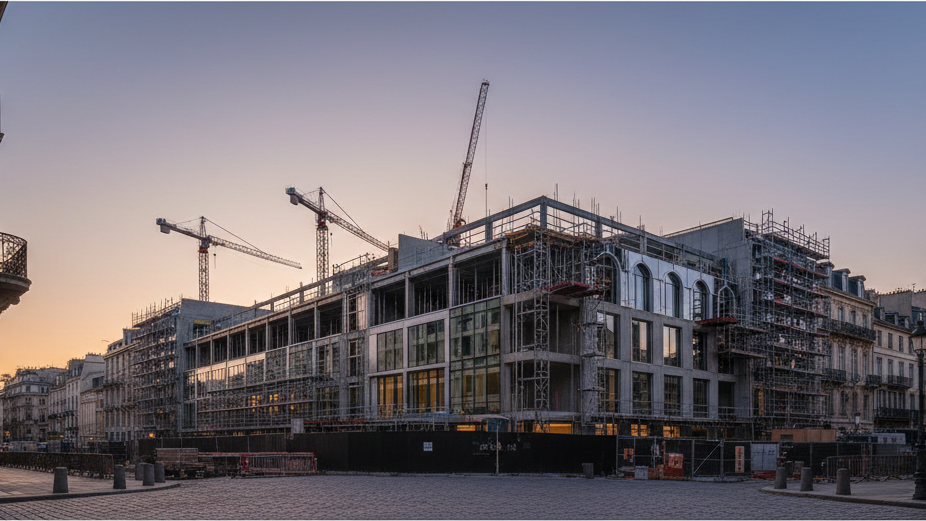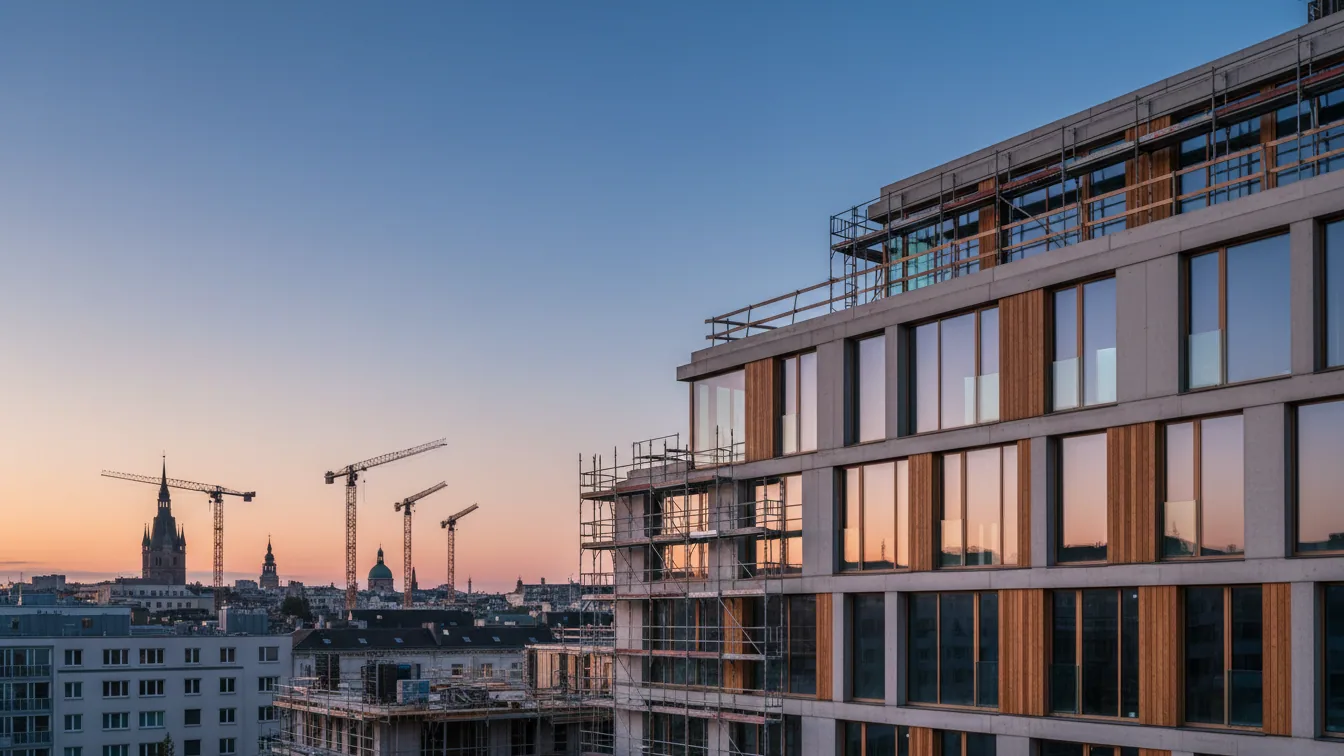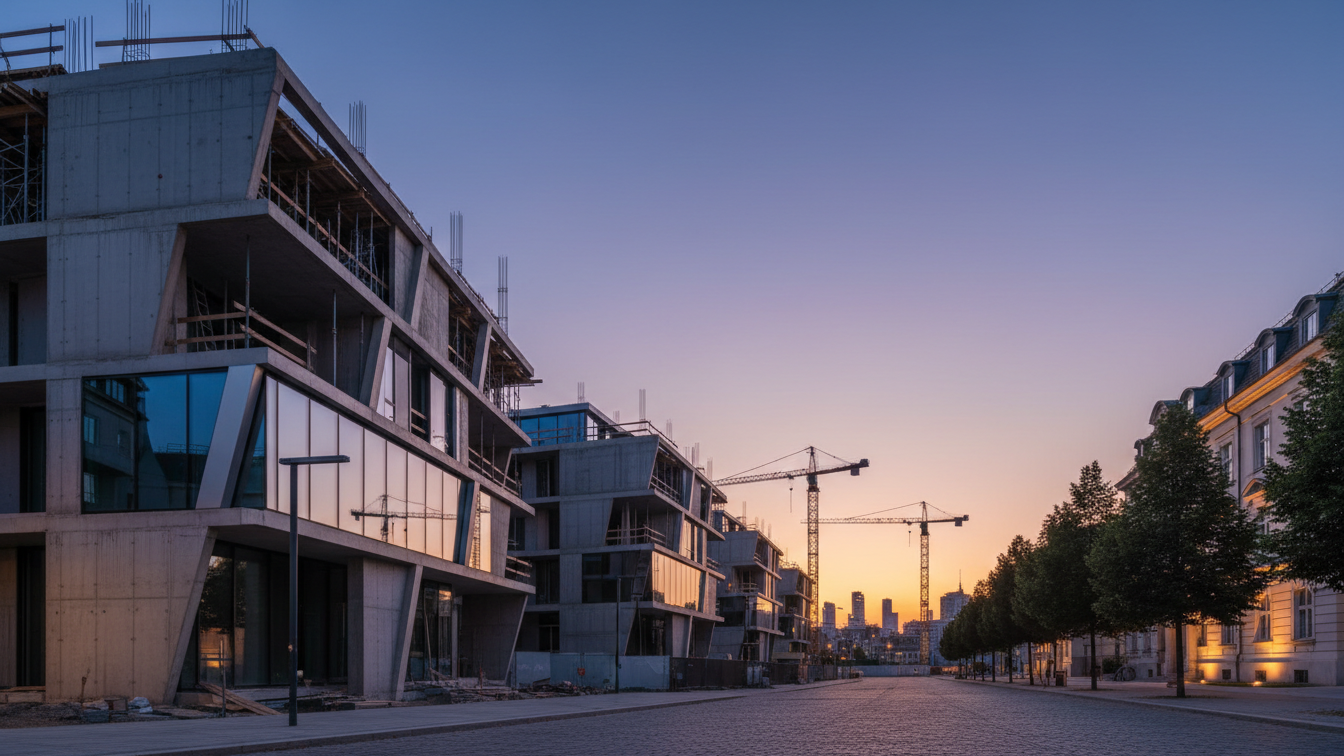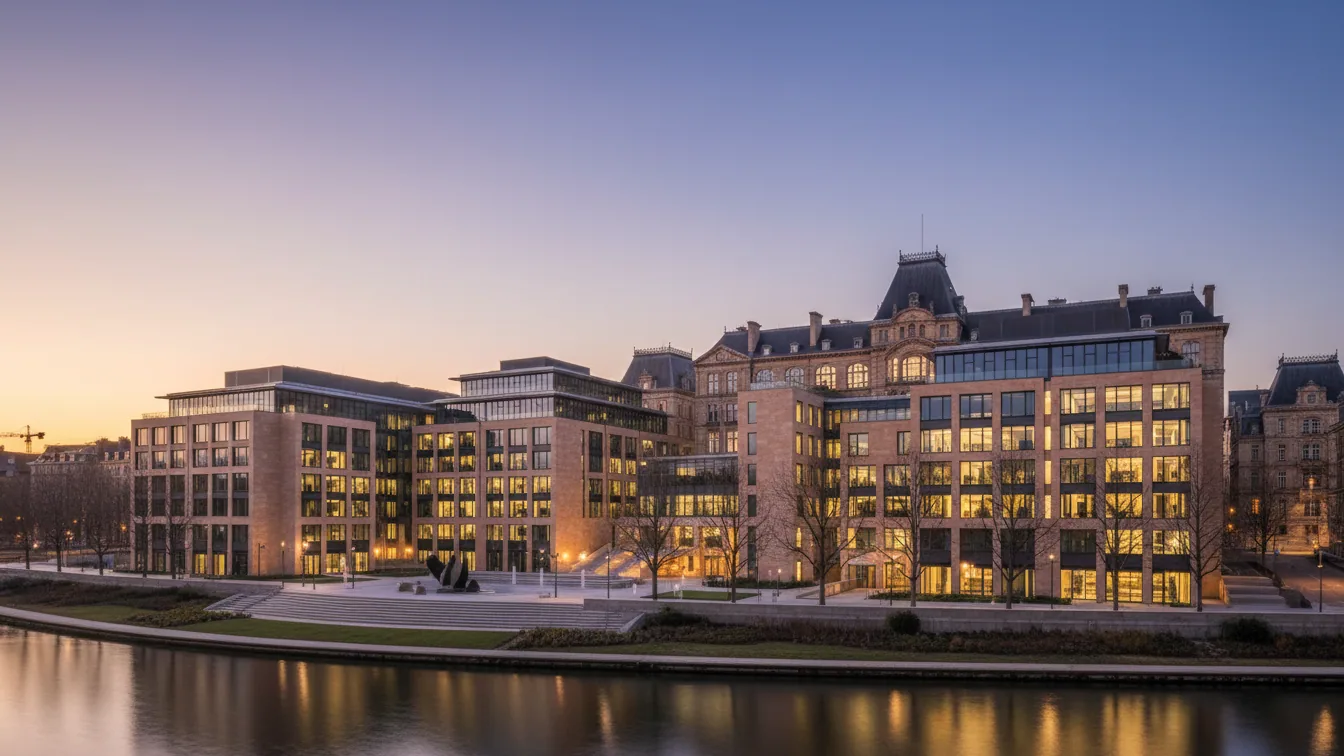
Property prices in Germany remained largely constant in the third quarter. According to the latest property price index from the Association of German Pfandbrief Banks (vdp), values rose by 0.2 per cent compared with the same quarter of the previous year, but fell to the same extent (-0.2 per cent) compared with the previous quarter. Behind this aggregate figure lies a clear divergence between the individual segments: whilst residential properties rose by 1.0 per cent year on year, office assets recorded a sharp price drop of 3.9 per cent year on year and 1.0 per cent quarter on quarter. Retail properties were unchanged year on year (0.0 per cent) and stable quarter on quarter with an increase of 0.1 per cent.
The survey conducted by vdpResearch is based on the continuous analysis of actual transaction data from more than 700 lending institutions. Following a cooperation with the Deutsche Bundesbank, the methodology for selected sub-indices was adjusted at the beginning of the year, with 2022 defined as the new base year. According to vdp Chief Executive Jens Tolckmitt, higher financing costs are complicating investment decisions across the board. Whilst residential property prices are supported by persistent excess demand, the market environment is weighing particularly heavily on office properties.
Owner-occupied homes drive price levels in residential sector
Within the residential segment, owner-occupied housing in particular acted as a price driver. Compared with the third quarter of the previous year, condominiums increased in price by 2.3 per cent and single-family houses by 1.3 per cent. The total increase for owner-occupied housing stood at 1.4 per cent. Values for multi-family houses rose by 0.5 per cent over the same period, but remained virtually unchanged compared with the preceding quarter. In parallel, new-contract rents for rental flats rose by 3.5 per cent year on year, driven by the persistent housing shortage. This rent increase led to yields on multi-family houses rising by 2.9 per cent, as measured by the property yield index.
Across the top seven metropolitan areas of Berlin, Düsseldorf, Frankfurt am Main, Hamburg, Cologne, Munich and Stuttgart, residential property prices climbed by an average of 1.4 per cent year on year. Hamburg led this development with an increase of 2.4 per cent, followed by Frankfurt am Main with 1.6 per cent and Cologne with 1.4 per cent. Stuttgart, by contrast, recorded a decline of 0.5 per cent. In direct quarter-on-quarter comparisons, all seven cities posted slight discounts ranging between -0.4 per cent in Düsseldorf and -0.9 per cent in Stuttgart. Rents in the major cities rose by an average of 3.0 per cent, with Hamburg recording the highest increase at 4.1 per cent and Stuttgart the lowest at 1.4 per cent. Property yields in the top seven cities grew by an average of 1.5 per cent.
Developments in commercial sector and housing policy context
In the commercial property market, trends remained mixed. Despite falling purchase prices, new-contract rents for offices increased by 2.5 per cent year on year, whilst retail space posted rental growth of 1.7 per cent. As a result of these opposing movements in prices and rents, yields in the vdp property yield index rose by 6.7 per cent for office assets and by 1.8 per cent for retail properties.
Regarding framework conditions in the housing market, Tolckmitt pointed to political decisions. Whilst the vdp supports initiatives such as the planning acceleration scheme (Bau-Turbo) and the simplified building type E to reduce construction costs, the association issued an urgent warning against attempts to expropriate private housing stocks. Citing the Berlin coalition negotiations between the Left Party, the Greens and the SPD, Tolckmitt stressed that debates over socialisation damage the confidence of lenders. Instead, stable financing conditions and reliable investment frameworks are required to secure the swift construction of new housing.