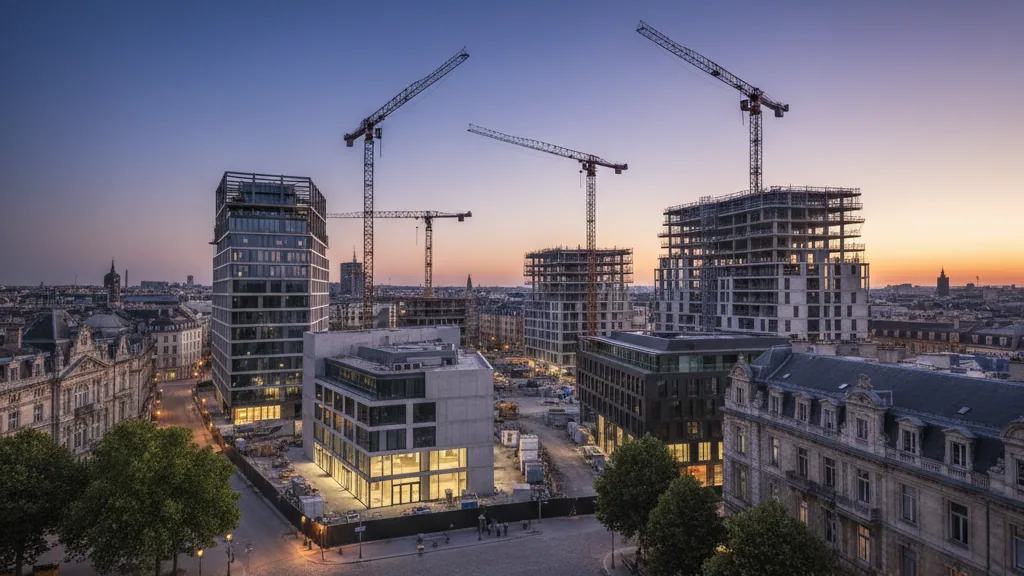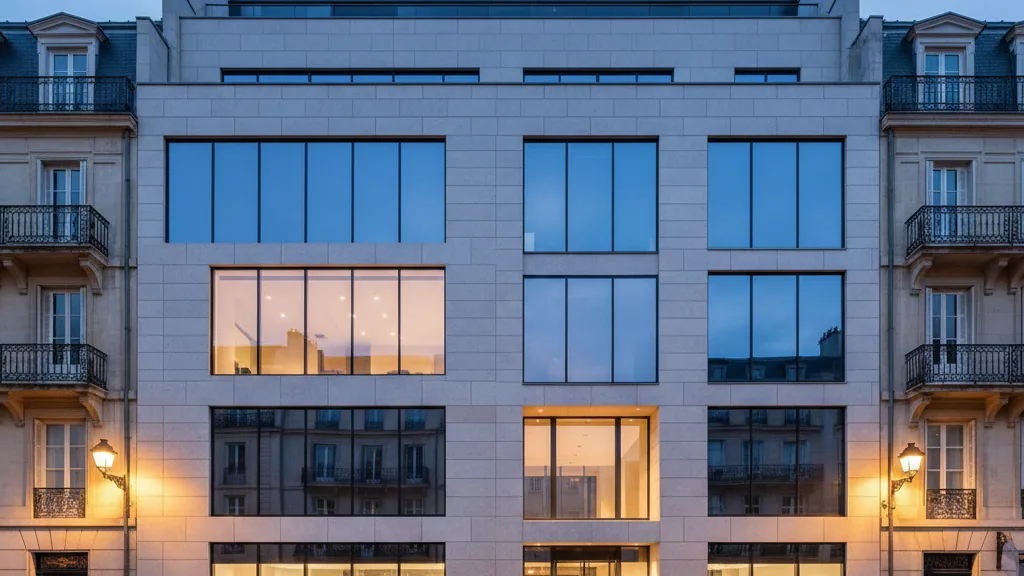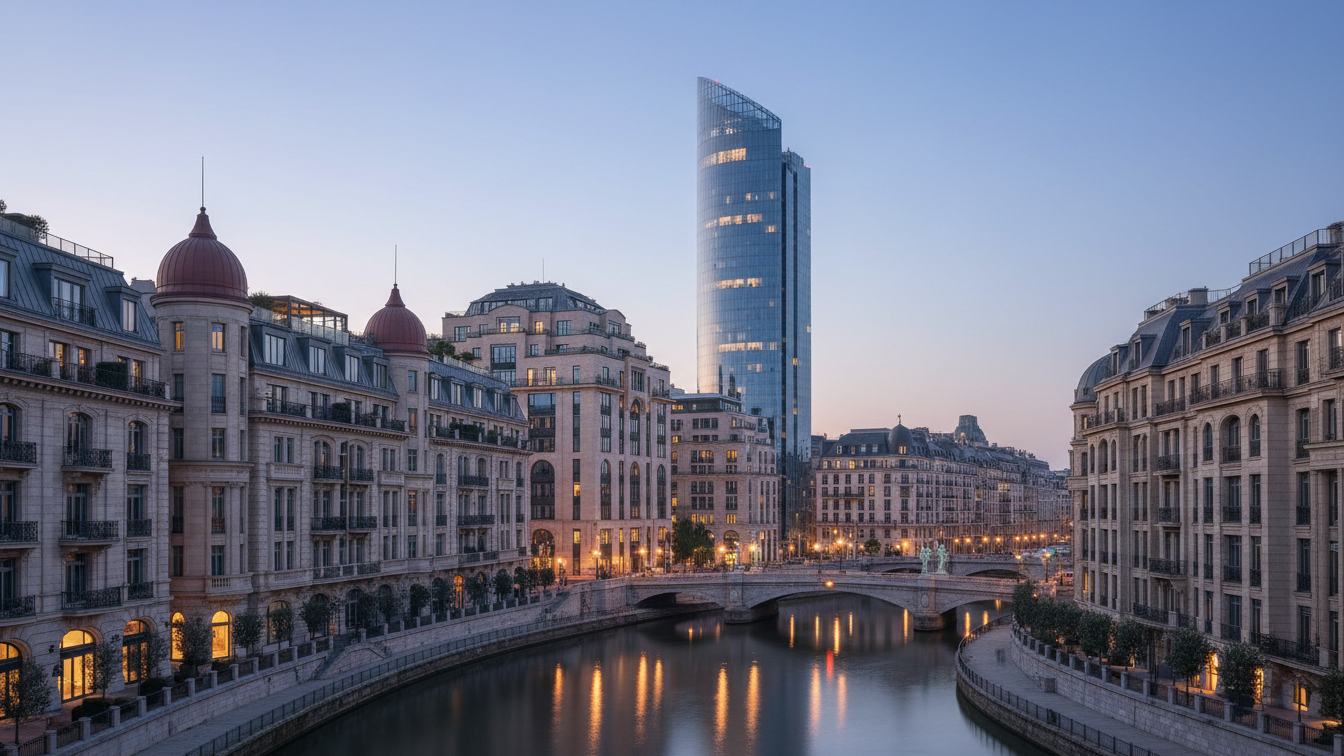
The Berlin office market shows a divergent development: While the number of office employees increased by approximately 76,000 people, or nine percent, to 886,100 between 2020 and 2025, the vacancy rate rose from 1.8 to 8.6 percent in the same period. This development, documented in the eighth Berlin Commercial Pulse by GSG Berlin and bulwiengesa, indicates that employment growth no longer necessarily leads to a proportional increase in space requirements. A further increase in the vacancy rate to 9.3 percent is predicted for 2026. Nevertheless, experts from bulwiengesa expect the number of office employees to rise to around 928,000 by 2028.
Hybrid working models, increased space efficiency and adapted corporate structures significantly influence the demand for office space. At the same time, the demands on location and quality are increasing. Sebastian Blecke, operational managing director at GSG Berlin, states that while the demand for office space has not disappeared, it has changed substantially. Companies are evaluating their space requirements more precisely and making more selective decisions, with the suitability of buildings in terms of location, quality and flexibility becoming crucial for user needs.
Revitalisation of the Rental Market and Spatial Relocation
After a subdued 2025, the Berlin office market saw a revitalisation in the first half of 2026. Approximately 378,000 square metres of office space were transacted, which is above the half-year average of the past five years of around 314,000 square metres. In the whole of 2025, five transactions exceeding 5,000 square metres were registered; in the first half of 2026, there were already more than ten. For the full year, bulwiengesa expects a take-up of over 600,000 square metres. Digital companies contributed significantly to this revitalisation, accounting for around 25 percent of the total take-up in the first half of 2026. Larger transactions include JetBrains with approximately 20,000 square metres, Wolt and Snowflake with over 8,000 square metres each, and Doctolib with approximately 8,000 square metres. The share of start-ups in the take-up decreased from about ten percent in 2025 to 8.5 percent in the first half of 2026.
Demand is increasingly shifting spatially to central locations. Between 2013 and 2022, 61 percent of transactions were in the city centre and city periphery; since 2023, this figure is 73 percent. The share of the periphery decreased from 32 to 22 percent in the same period. This differentiation is reflected in rental prices. The prime rent in the Berlin city centre reached a new high of approximately 47 EUR per square metre in the first half of 2026, despite the higher vacancy. Less attractive locations and older existing spaces, however, are under pressure, and prime rents in the periphery have recently declined.
Changing Requirements and the Influence of Technology
Oliver Schlink, commercial managing director at GSG Berlin, emphasises that the overall city vacancy rate alone reveals less about the functionality of the office market. What is crucial is which spaces are vacant, as demand focuses on properties that meet companies' changed requirements in terms of location, quality, and flexibility. This flexibility is evident not only in space size and fit-out, but also in contract design. Nele Hänsel, managing director at KASTEN-MANN Real Estate Advisors, notes that short lease terms, such as those requested by successful companies for up to 36 months, represent a conscious business decision in an uncertain environment to be able to react to changes.
The Commercial Pulse for the first time examined the influence of Artificial Intelligence on future space requirements. Around 36 percent of the 127 surveyed GSG tenants expect some influence in the next two to three years, but the majority anticipate no or only minor impact. The reasons for changes in space requirements do not currently suggest a general withdrawal from office and commercial spaces. Almost half of respondents cite growth as the cause, about a third cite cost pressure, and almost a quarter cite efficiency improvements. Downsizing and working from home are each mentioned by less than a fifth. AI is therefore more likely to change the market through new requirements for buildings and space concepts, as flexibility, diverse usage options, and powerful technical infrastructure gain importance.
- —Educational institutions and research: increase in space of around 50,000 square metres (+135%) to over 80,000 square metres.
- —Healthcare and gastronomy: also saw increases in space.
- —Largest shares of space in the GSG portfolio: retail (18%), communication, media and IT (17%), manufacturing industry (16%).