The renowned Concordia-Haus in Wuppertal-Barmen, a prominent building ensemble on the Werth, has new owners. As of 1 September 2026, the listed property belongs to Wuppertal project developers and investors Robert Düssel and Ulrich Volmer, operating as Düssel & Volmer Immobilien eGbR. With this acquisition, they are taking over a central property that has characterised Barmen’s city centre for many decades.
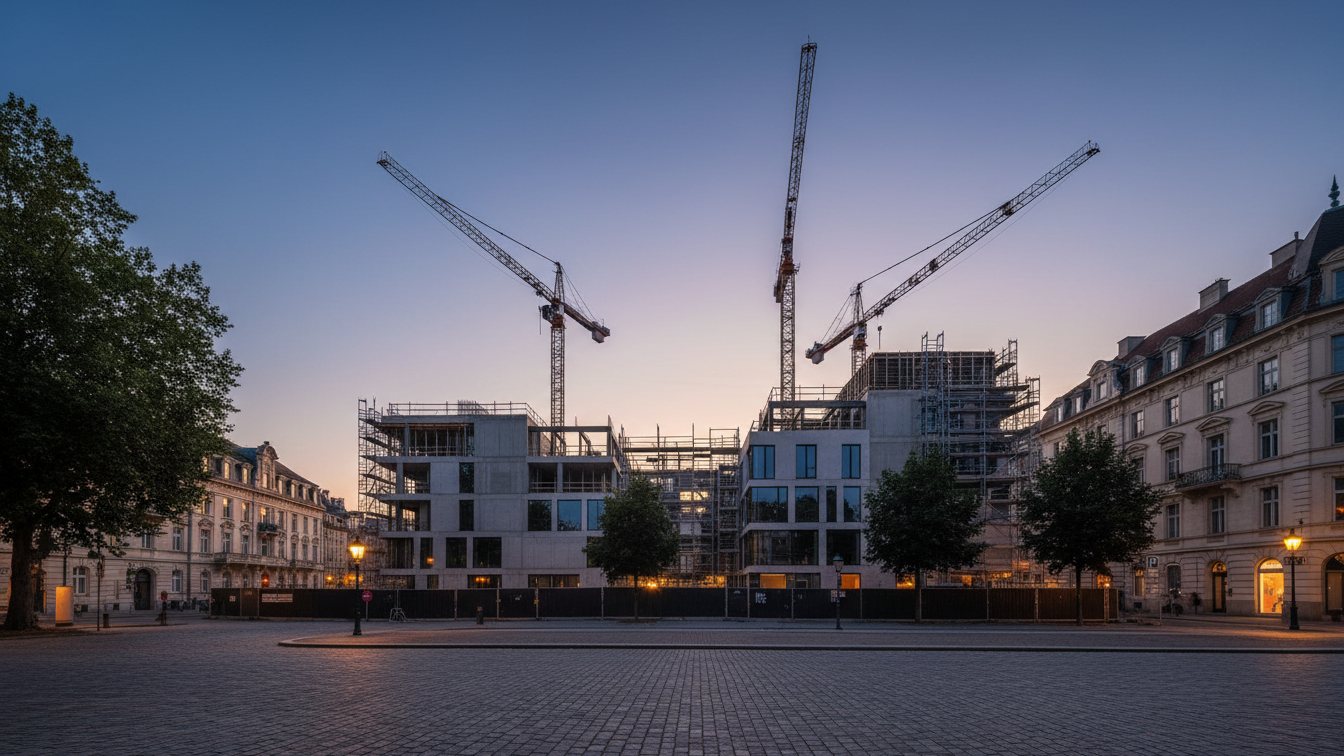
The Concordia society will retain its halls in the building long-term. The buyers, both closely connected to the city of Wuppertal, have been active as investors in the region for years. Robert Düssel will lead the project development, planning, and construction execution, drawing on his extensive experience from numerous successfully realised renovation projects. The acquisition represents a substantial task: approximately two-thirds of the approximately 9,400 square metres of usable space are currently vacant, and there is a significant need for refurbishment. Furthermore, the requirements of monument protection must be observed for all interventions.
Strategic Development and Usage Perspectives
The first revitalisation step will focus on the shop units and the facades. Robert Düssel and Ulrich Volmer are actively seeking new tenants for the vacant retail spaces. The former cinema complex, known as Fita-Palast, spans around 3,000 square metres and evokes memories for many Wuppertalers of its heyday as Barmen's largest cinema with 1,400 seats (from 1948 to 1998). For this area, concrete usage ideas exist within the culture and public use segment, though planning is still in an early stage.
Michael Schmidt-Russnak, Director of the Concordia society, played a crucial role in the sales process. He actively supported the change of ownership and strongly advocated for the sale to Düssel and Volmer. The transaction was also advised by Brockhoff. Michael Schmidt-Russnak emphasised that it was decisive for Concordia that the house went to local buyers who not only invest but also possess their own construction expertise and experience to master the challenges of renovating and restructuring existing properties. An investor with local knowledge and a long-term perspective was the preferred solution for the location, as opposed to a pure financial investment.
Long-Term Commitment and Urban Integration
The new owners are aware of the scale of the task. Robert Düssel explained that the building belongs to Barmen and should be fully utilised again. The goal is to preserve its character while giving it a viable future, which will happen gradually and with the involvement of the local network. Ulrich Volmer added that a long-term holding period is being sought, and a quick resale is not the focus.
The development of the Concordia-Haus aligns with the objectives of the Integrated Urban Development Concept (ISEK) Barmen. By reactivating the upper floors and shop units, footfall in the Werth pedestrian zone is to be increased. Directly in front of the building, the 'new Werth' is emerging with the Kulturteppich Barmen (Barmen Culture Carpet). However, positive city centre development requires that surrounding properties are integrated into these measures. Robert Düssel and Ulrich Volmer are therefore seeking dialogue with the city, the ISG Barmen-Werth, and Barmen Urban. This project represents a clear commitment from the investors to their home city, by combining an investment in Wuppertal with the preservation of a historically significant building in Barmen.