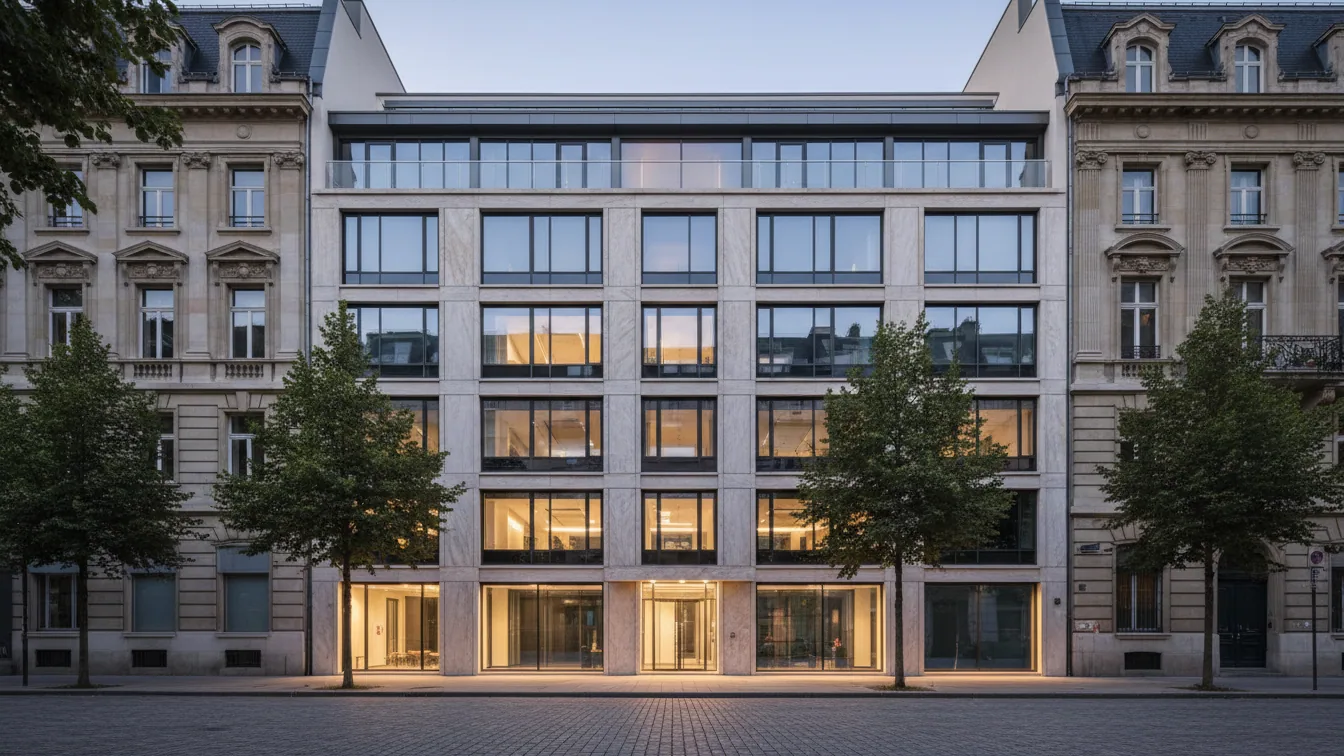
The global construction sector contributes significantly to worldwide waste generation and is responsible for a substantial proportion of CO₂ emissions. This underscores the necessity of re-evaluating resource utilisation in construction. A key insight here is that existing buildings should not merely be regarded as the end-points of their life cycle, but rather as potential raw material stores for future construction projects.
Against this backdrop, the development of urban mining concepts is gaining importance. The aim is to systematically record materials present in cities and make them accessible for reuse or recycling. This requires a detailed inventory and categorisation of the raw materials incorporated into buildings.
Stuttgart as a pioneer for resource efficiency
In this context, the company Concular is making a significant contribution. It is developing an Urban Mining Cadastre specifically for the city of Stuttgart. This cadastre is intended to provide a precise overview of the material resources bound within urban structures. The initiative aims to position the city of Stuttgart as a pioneer in the field of the circular economy and resource efficiency.
The implementation of such a cadastre enables planners and developers to access existing materials from buildings designated for deconstruction as early as the design phase of a new project. This not only reduces the demand for primary raw materials but also minimises transport routes and landfill costs, leading to a significant reduction in environmental impact.
Strategic relevance and future potential
The strategic relevance of the Urban Mining Cadastre for Stuttgart lies in its ability to make the local construction industry more sustainable. It transforms the view of demolition and new build towards an integrated cycle, in which resources are continuously reused. The recording of building materials as secondary raw material sources forms the basis for more efficient and environmentally friendly urban development.
- —Identification and cataloguing of building materials in existing buildings.
- —Promotion of the circular economy in the construction sector.
- —Reduction of the demand for primary raw materials.
- —Minimisation of construction waste and CO₂ emissions.
This development represents an important step to address the challenges of the construction sector with regard to resource conservation and environmental protection. The systematic recording and reuse of building materials in urban areas offer significant potential for more sustainable and future-proof construction practices.