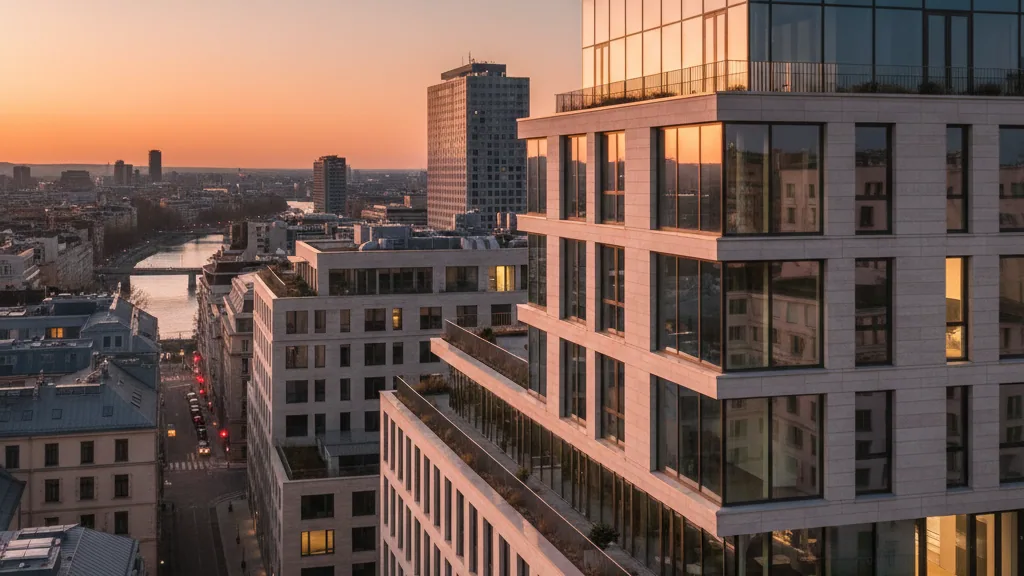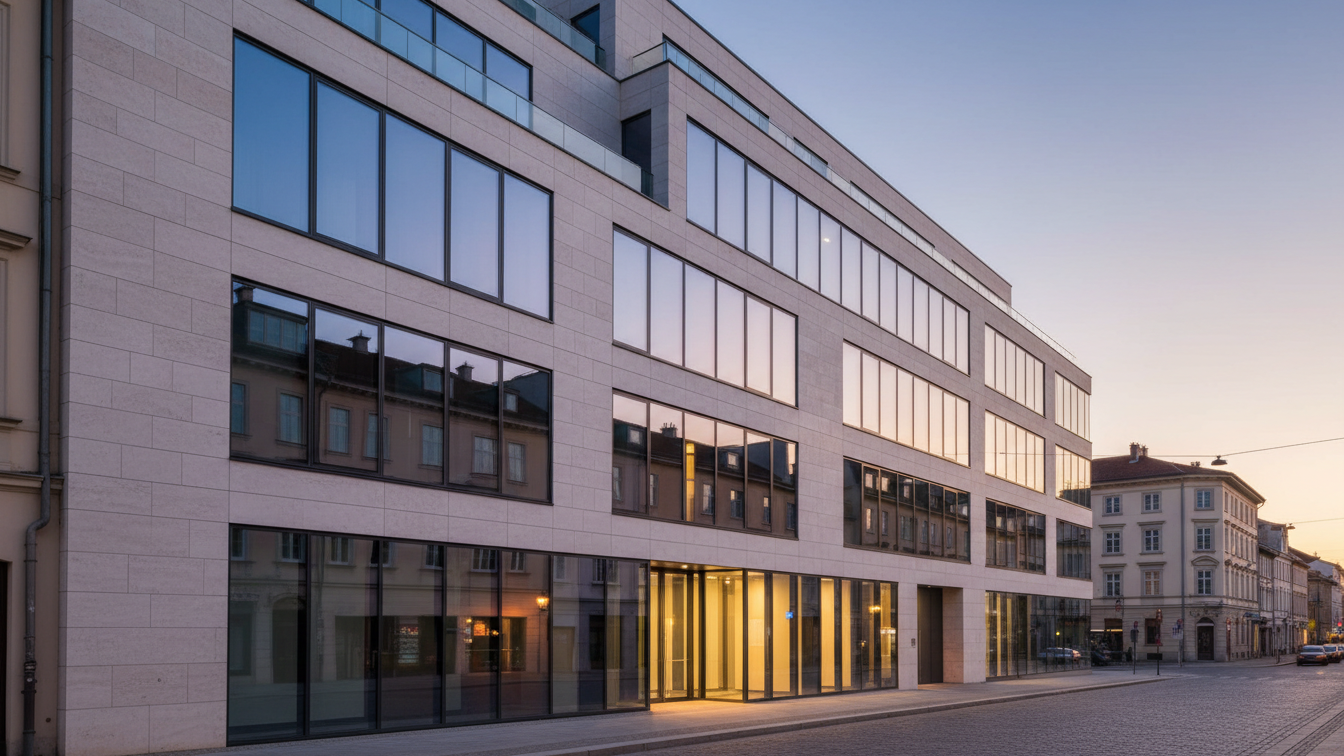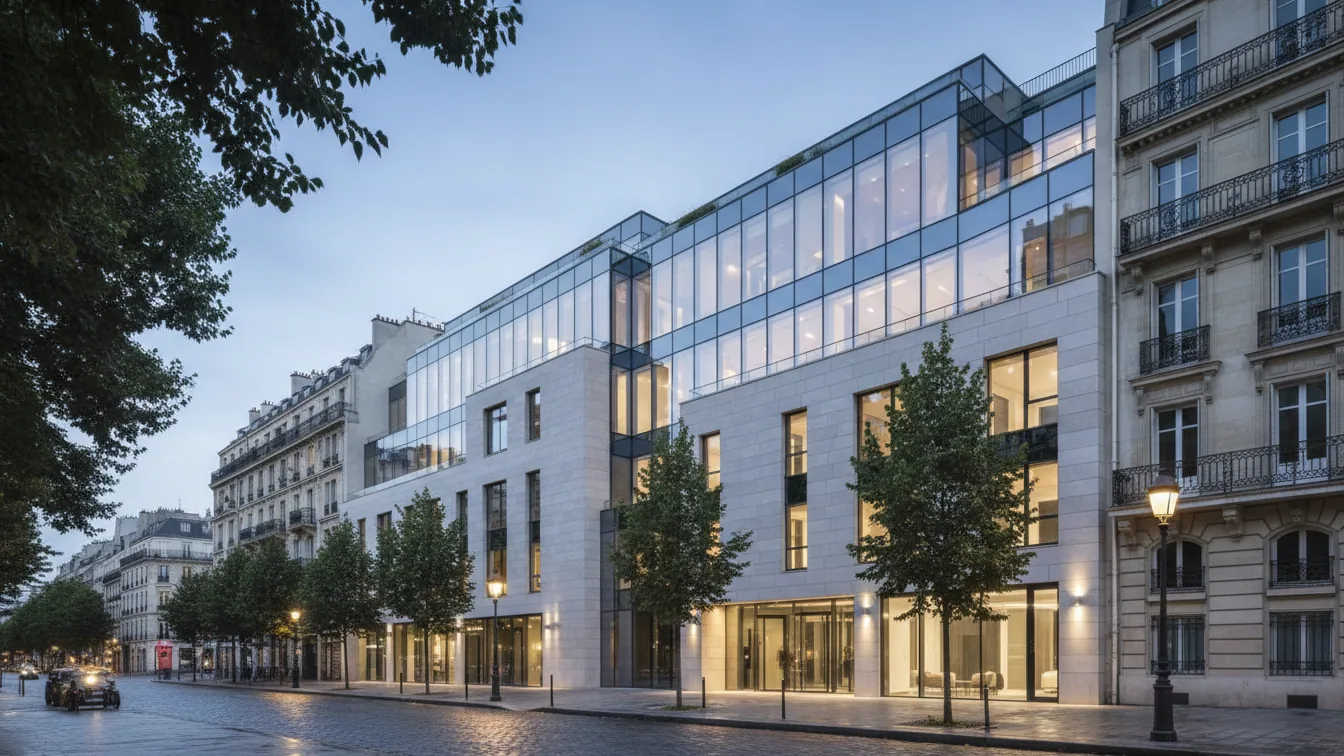
The European real estate company Covivio is constructing the 030BLN high-rise at Berlin's Alexanderplatz. This construction project, which reaches a height of 130 metres, combines various types of use across 33 floors. It includes offices, retail spaces, gastronomy, and approximately 300 urban-living units. The total rental area of the project amounts to around 60,000 square metres. The name 030BLN refers to Berlin's area code and the international abbreviation for the city, highlighting its local connection and international orientation.
The consulting firm Drees & Sommer SE, specialising in construction, real estate, and infrastructure, has been providing comprehensive services for the realisation of the 030BLN from the outset. The project is characterised by an innovative building concept that combines Germany's first facade-integrated photovoltaic system on a high-rise over 60 metres tall with geothermal energy, as well as digital security and operational concepts.
Covivio's focus is not primarily on the building's height, but on its future viability, as explained by Andreas Tichay, Covivio's responsible project manager. For Covivio, as a portfolio holder committed to sustainability, long-term functionality and aspects such as diverse and flexible use, energy efficiency, security, and digital infrastructure are paramount.
Energy Concept and Sustainability Aspects
The facade of the 030BLN integrates a photovoltaic system that extends over the roof and building envelope, covering a portion of the electricity demand directly at the building. The realisation of this PV facade required the approval of the German Institute for Building Technology, which was granted after extensive fire tests. Kay Promehl, Associate Partner at Drees & Sommer and Head of Technical-Economic Construction Consulting, confirmed that the safety of a PV facade at this height meets the requirements of conventional facade claddings. 864 solar modules generate approximately 120,000 kilowatt-hours of electricity annually.
Another element of the energy concept is the use of the foundation as an energy source. 54 thermally activated bored piles act as heat exchangers between the building and the ground. In winter, they extract heat from the ground to warm the building, while in summer, they release excess heat into the ground for cooling. This method serves a dual purpose for the otherwise necessary bored piles and reduces the energy consumption of a conventional air conditioning system. Covivio aims for LEED Gold certification for its sustainability concept.
- —Facade-integrated photovoltaic system with 864 solar modules
- —Geothermal energy via 54 thermally activated bored piles
- —Dual function of the sprinkler tank as a cold storage unit
- —Aiming for LEED Gold certification
Security and Digital Infrastructure
The 030BLN features a detailed security concept developed by Drees & Sommer in collaboration with Covivio and the Berlin authorities. This concept was reviewed and confirmed by security experts from the state and federal police. Kay Promehl emphasised the increasing relevance of protecting critical infrastructures in light of cyber-related risks and geopolitical tensions. The KRITIS Umbrella Act, effective from March 2026, tightens requirements for operators of critical infrastructures, for which the 030BLN creates structural prerequisites.
Access is regulated by personalised passes or digital access authorisations via smartphone, with a real-time system deciding which areas may be entered. The collected images from surveillance cameras are consolidated in a central unit to ensure a high level of security for future tenants.