The German property market is currently showing a paradoxical stagnation. Although mortgage interest rates have exceeded the four per cent mark and continue to rise, property prices remain stable. A price collapse has so far failed to materialise, although a slight reduction in bubble formation is discernible. This dynamic is described as 'raging standstill', which increases market pressure.
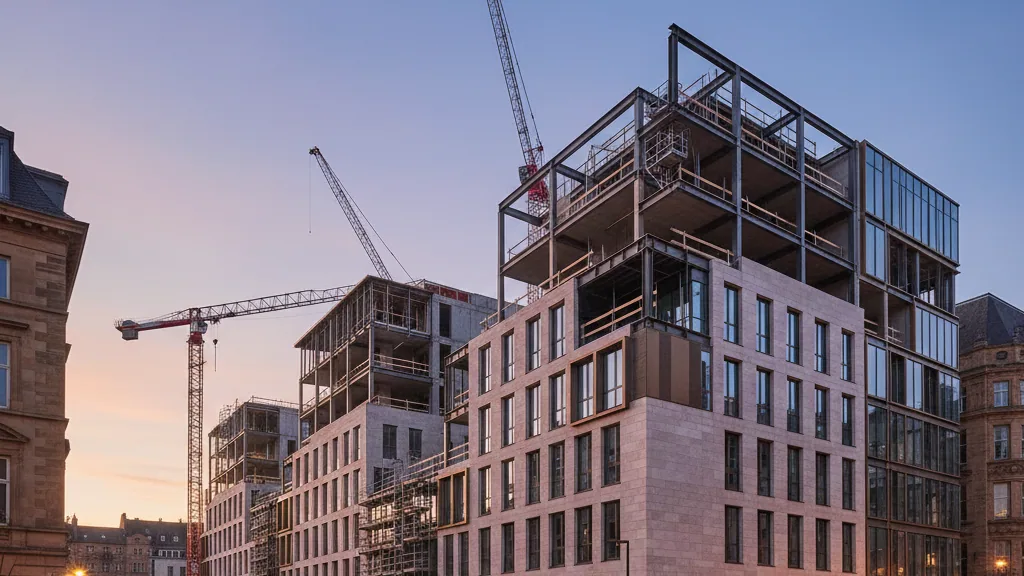
A significant factor for this price stability is an artificial scarcity of housing. The decline in construction activity is currently preventing property prices from falling. Without this low supply, prices would have collapsed massively with the interest rate turnaround in 2022, according to the analysis. This is primarily a qualitative scarcity, as a current analysis by the empirica institute confirms.
Qualitative Scarcity as a Price Driver
The empirica study indicates that there is a pronounced housing shortage in Germany, particularly in many major cities. This is surprising, as the housing stock has grown more strongly since 2011 than both the population and the number of households. While asking rents rose massively between 2011 and 2024, the calculated housing supply – i.e. dwellings per inhabitant or household – has slightly improved. The authors of the analysis note that so-called housing hoarding and an accumulation of unrealised demand have created a 'scarcity out of nothing'. To counteract this situation, it is crucial to increase fluctuation in the housing market and to change incentives so that existing housing becomes market-relevant again.
Germany is suffering from a qualitative housing shortage, not acute homelessness. While many citizens live in a property, it often does not meet the optimal criteria regarding size, location, or amenities. The search for a suitable property thus develops into a permanent process. This situation gives potential buyers a stronger negotiating position.
Factors for Buyer Reluctance
- —Rising interest rates or economic uncertainty lead prospective buyers to remain in their current living situation.
- —A failure to purchase does not result in immediate homelessness, but merely the retention of the suboptimal status quo.
- —Political debates such as those on the Building Energy Act and unclear renovation requirements increase uncertainty, causing potential buyers to hesitate.
The currently scarce housing continues to act as a buffer, stabilising the market and dampening the risk of a property bubble bursting. However, this fragile balance could falter should interest rates continue to rise and uncertainty regarding jobs and renovation obligations persist.