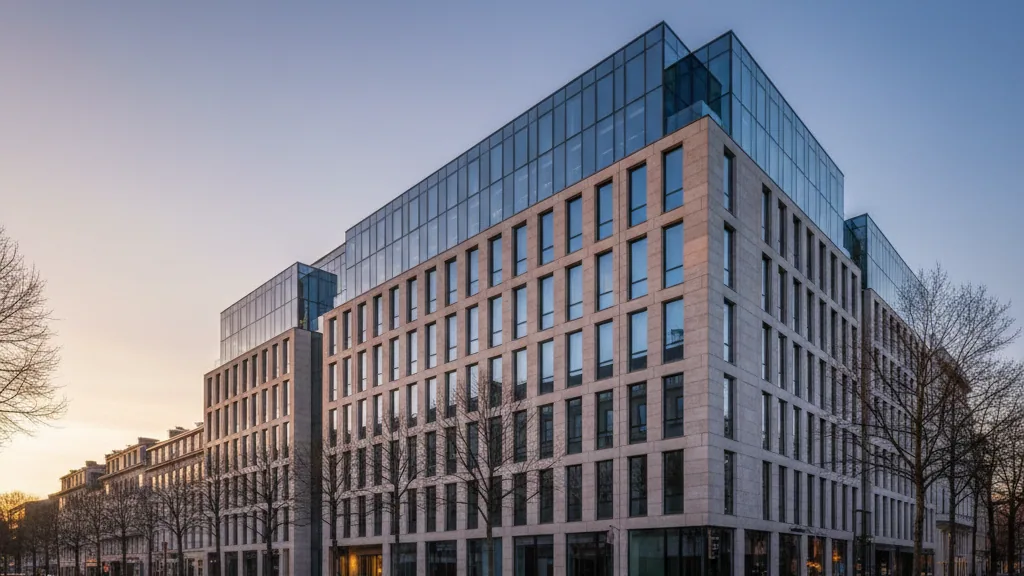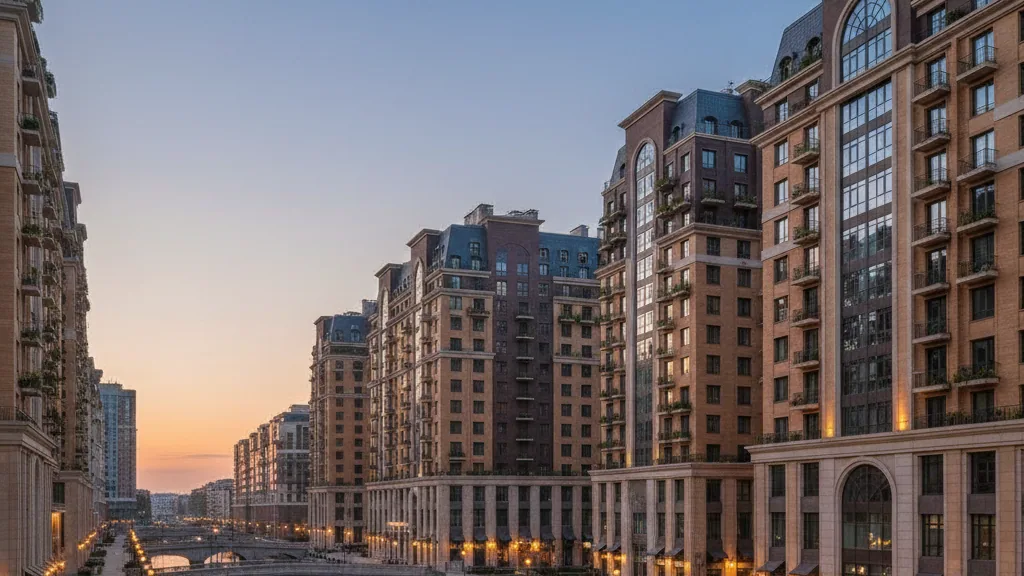
A pronounced divergence between asset classes is evident in the Frankfurt real estate market. According to recent surveys by Savills for the third quarter of 2026, the vacancy rate in the office segment stands at 14.3 per cent, corresponding to a floor space volume of around 1.4 million square metres. At the same time, the housing market has a vacancy rate of just 0.1 per cent. Despite the extensive supply of office space, prime office rents climbed to 56 EUR per square metre with a prime yield of 4.6 per cent. Sebastian Stein, Director Investment at Savills Frankfurt, attributes this trend to structural change. Companies primarily demand ultra-modern, centrally located office space, but are reducing their overall floor area. Since 2020, annual office take-up in Frankfurt, at around 350,000 square metres, has remained significantly below the previous level of approximately 500,000 square metres; only the exceptional year of 2025 recorded 543,000 square metres thanks to several major deals.
Framework conditions and hurdles for conversions
The substantial office vacancy brings conversion concepts into focus, yet these schemes often face commercial and structural hurdles in practice. In central Frankfurt locations, achievable office rents continue to exceed residential rent levels. In addition, building structures such as deep floor plans, insufficient natural light, access routes and planning law limit residential conversions. Stein emphasises that, alongside housing, alternative use concepts such as educational facilities are also viable, provided the overall context is sound in terms of planning and economics.
Several Frankfurt projects demonstrate that alternative use approaches can succeed. CELLS converted the Lateral Towers in Frankfurt-Bockenheim into a school campus for around 3,200 students over a construction period of approximately two and a half years. The building complex houses two secondary grammar schools and a vocational school, and is occupied under a 30-year lease with the City of Frankfurt; by spring 2028, the site will be expanded to include a six-court sports hall. For temporary accommodation formats, Gerold Springer, Director Transactions at International Campus, reports sustained strong demand. Developed from an office building in Gallus, THE FIZZ with 381 beds shows an occupancy rate of 96.8 per cent for the 2026/27 winter semester. Opened in 2024, HAVENS LIVING on Voltastrasse also originated from a former office complex and provides 145 furnished apartments.
Active asset management and housing market outlook
Conversion does not, however, prove feasible for every existing property. Markus Leuchte, Head of Letting Management Frankfurt at HIH Real Estate, points to a 9,000-square-metre office building in City-West. An assessment for residential or temporary accommodation there was rejected due to fire safety and escape route regulations. Instead, HIH invested in a show floor, a new cooling system, a lobby redesign and charging points, achieving complete reletting to companies from the healthcare and insurance sectors. Leuchte underlines the necessity of active management, as tenants increasingly demand flexible leases and bespoke fit-outs.
In the housing market, Dominik Barton, Managing Director of Barton Group, expects further moderate rent increases across all Frankfurt locations for 2027. According to external surveys, reletting rents for existing flats in prime locations currently range between 15.30 and 19.20 EUR per square metre. For newly built first-occupancy properties, the segment averages 25.80 EUR per square metre; 26.50 EUR is forecast for 2027. Barton considers the revitalisation of existing buildings to be economically feasible, provided owners and investors can refinance costs through long-term rental income. Furthermore, accompanying energy-efficiency refurbishments directly impact tenants' operating costs.