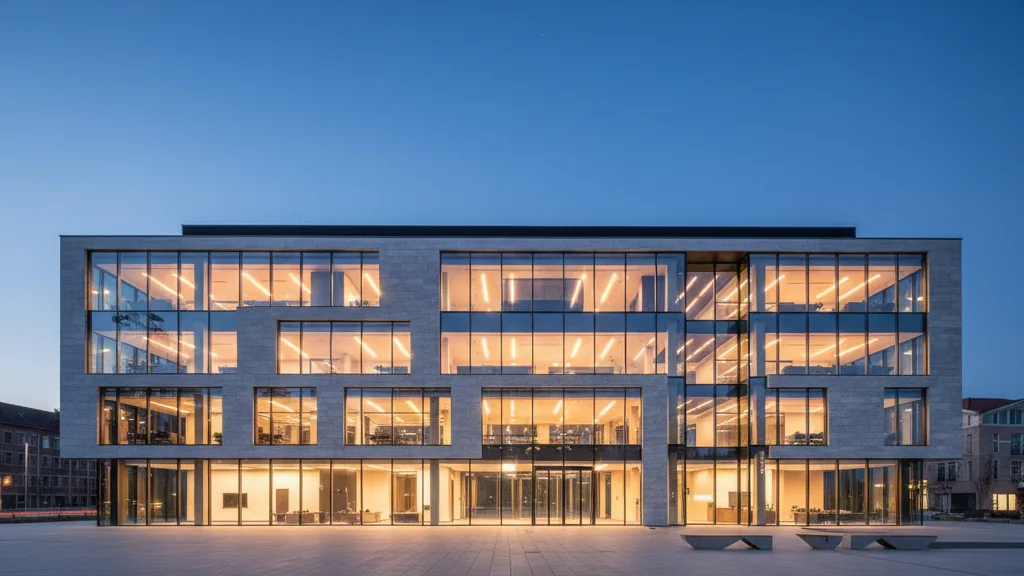
With the adoption of the statutory resolution for the project-related development plan and the determination resolution for the amendment to the land use plan, the decisive municipal steps for the realisation of the Munich Arena in Freising have been taken. The procedure, which lasted for around four years, is thus concluded at the municipal level. Now, only the approval of the land use plan amendment by the Government of Upper Bavaria remains as the final formal step.
The planned concert arena, designed for approximately 20,000 visitors, is intended to be among the largest and most modern event venues of its kind in Europe. The project focuses on a 'Music First' philosophy, which aims to ensure high-quality acoustics, optimal stage visibility, a special quality of stay, and professional conditions for artists, organisers, and the audience. The Munich Arena is intended as an open event venue and will be available to all stakeholders in the live entertainment sector.
Significance for the Region and Multimodal Transport Concept
The location at Munich Airport is considered advantageous for its development into a significant live entertainment hub in Europe. The Munich metropolitan region is described as a region with high purchasing power and innovative capacity, numerous international companies, a strong research landscape, and sustainable growth. This environment makes the location attractive for national and international artists, organisers, and visitors. From the outset, planning considered not only the building itself but also the entire visitor experience. This includes arrival, orientation within the arena, the concert evening, and departure, which are conceptualised as a coherent visitor experience.
A central aspect of the planning is the multimodal transport concept developed in collaboration with transport planners. This concept aims to integrate the arena into the existing mobility infrastructure and connect various modes of transport such as the S-Bahn, regional rail, bus, car, taxi, ride-sharing, and bicycle. The concept is continuously refined and adapted with the responsible partners.
Lorenz Schmid, Managing Director of SWMUNICH Real Estate GmbH, emphasised the significance of this milestone following the conclusion of the municipal development plan procedure. He stressed that live music has the power to bring people together and enrich a region culturally and economically. Schmid expressed the vision that the arena would become a place where concert experiences turn into lasting memories and the best conditions for live entertainment are provided. The goal is to bring national and international artists to Bavaria, set new cultural impulses, and achieve a long-term economic impact for Freising, the Munich metropolitan region, and the Free State. The Munich Arena aims to establish itself as 'Europe’s Main Stage for Legendary Live Entertainment'.
Monika Schwind, Mayor of the major district town of Freising, expressed a positive view on the potential cultural and economic impulses for the region. She emphasised the importance of such projects for international visibility and new value creation, particularly in phases of economic challenge, provided they are carefully planned and implemented. Barbara Schelle, Head of Urban Planning for Freising, pointed out that the quality of the project was also shaped by the procedure itself. Suggestions from public participation, specialist planning, and the design advisory board contributed to refining the planning over the four-year process. Particularly in questions of urban integration, open spaces, access, and design, it was crucial to bring together various interests. Following the municipal resolution, the planning and realisation steps will focus on the subsequent phases. Thanks were extended to the Mayor, the city council, the city administration, the specialist authorities, the design advisory board, and the citizens for their contributions to the process.