R
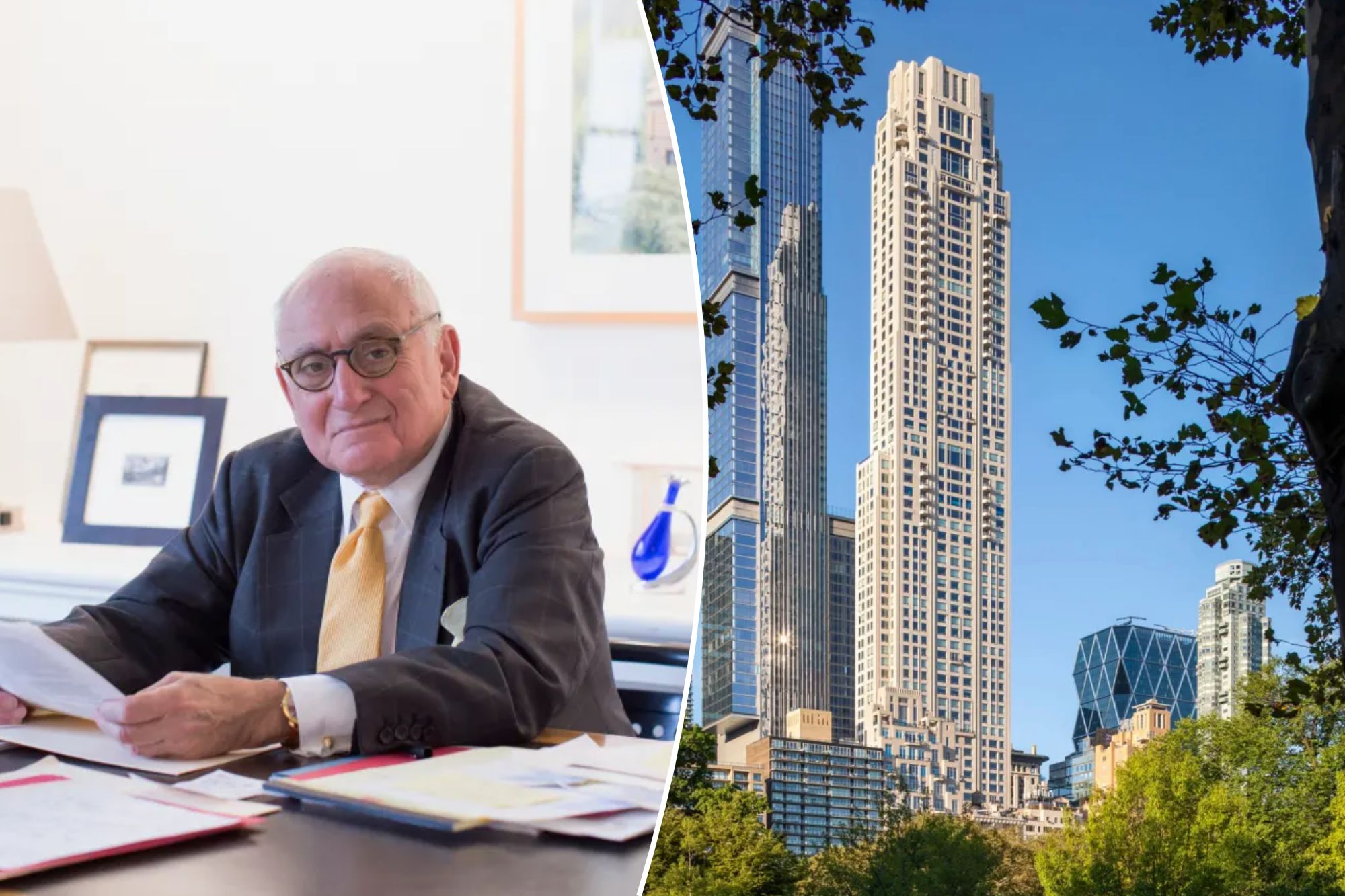
obert A.M. Stern, whose career spanned five decades, drew inspiration from New York’s pre‑war architecture to reshape the city’s skyline. His preference for masonry over steel and glass set him apart from contemporaries and produced two of Manhattan’s most coveted condo towers, 15 Central Park West and 220 Central Park South.
The late architect, born in Brooklyn, died on Thanksgiving morning at 86 from a pulmonary illness. His firm, RAMSA, announced his passing last week. “He was a giant,” said Samuel White, partner at PBDW Architects and great‑grandson of Gilded Age architect Stanford White.
Stern founded RAMSA in 1977. Early work focused on private homes and institutional projects, but the 2000s marked a peak when he applied his signature style to luxury towers. 15 Central Park West, completed in 2008, sold out entirely and became the city’s most expensive condo at the time, attracting A‑listers such as Denzel Washington and Sting. White noted that the tower “changed the game for a certain kind of apartment building in Manhattan” and that Stern “dominated it.” 220 Central Park South, finished in 2019 on Billionaires’ Row, remains the most expensive home sale in the U.S., with Ken Griffin’s $238 million penthouse setting the record.
Stern’s buildings are distinguished by their classical aesthetic and historical sensitivity, contrasting sharply with the glass‑heavy towers that dominate much of Manhattan. Architecture critic Paul Goldberger likened Stern to Ralph Lauren, describing him as a brand for “solid, trustworthy traditional design that isn’t trying to reinvent the world.” His pre‑war style proved that masonry and craftsmanship still hold value in modern skylines. Jonathan Miller, an appraiser, observed that 220 Central Park South is among the few Billionaires’ Row condos to see significant price increases over the past decade.
Stern’s deep admiration for New York’s architectural past informed every project. He studied older buildings meticulously, not merely copying their surface. He was known for his bespoke suits, pocket squares, yellow socks, and lifelong love of Fred Astaire films. His work extended beyond Manhattan: he designed vacation homes in the Hamptons, East Coast collegiate buildings, Disney resorts, and the Bronx Community College Library. In the 1980s and 1990s, he collaborated with post‑modern architects on projects that used historical references in an ironic way, later shifting toward a more honest representation of those styles.
The firm’s first Manhattan triumph, the red‑brick and limestone Chatham at 181 E. 65th St., opened in 2000. The building’s stylized façade recalled turn‑of‑the‑century New York and became Stern’s Manhattan base. His later tower, 255 E. 77th St., topped out in spring, showcases Gothic and Art Deco influences with carved oak leaf details, a loggia, and a decorative crown—an unmistakable tribute to the city’s heritage.
Stern was also an educator. He taught at Columbia University, his undergraduate alma mater, and served as dean of Yale School of Architecture, where he had studied as a graduate student. His scholarly output includes more than a dozen books on New York architecture, with six volumes considered indispensable by architectural historians. John Hill praised the series as “phenomenal” and “exhaustive,” noting its value for writers and tour guides alike. The most recent edition, “New York 2020,” was co‑authored with David Fishman and Jacob Tilove.
Stern’s legacy endures in the more than 20 condo buildings he designed across Manhattan, especially on the Upper East Side. His work demonstrates that classical modernism can coexist with contemporary luxury, setting a benchmark for future developments. As Samuel White remarked, “You have to be a little bit envious. At the very least, you have to admire somebody’s ability to get that much done.”