F
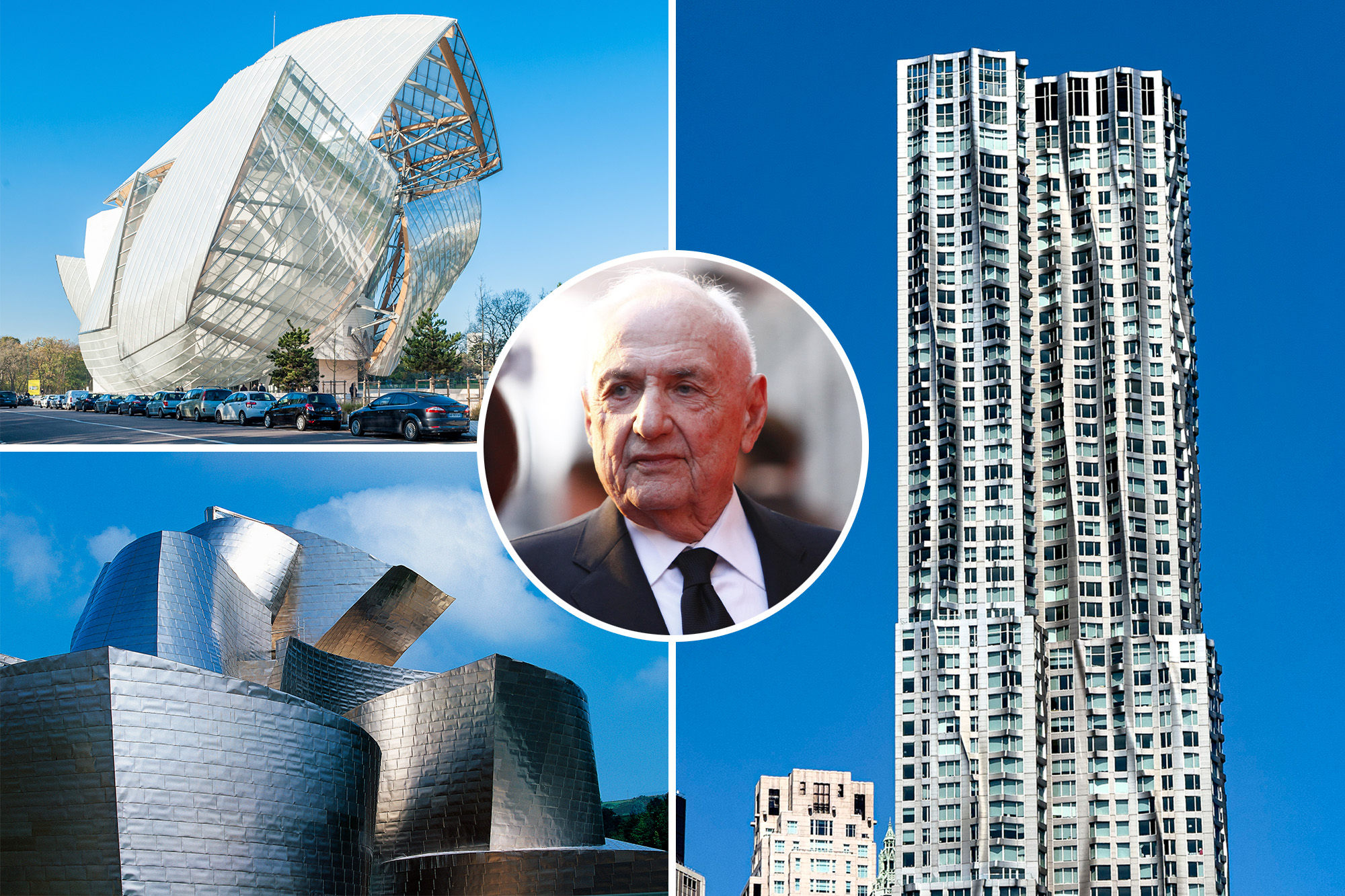
rank Gehry, the Pritzker Prize‑winning architect whose name has become shorthand for architectural audacity, passed away at 96 after a brief bout of respiratory illness. His death was confirmed by the New York Times, which noted that the 96‑year‑old had died at his Santa Monica home. Gehry’s career spanned continents and left an indelible mark on the built environment, from the shimmering Guggenheim in Bilbao to the soaring 8 Spruce St. in Manhattan.
In New York, Gehry’s most celebrated work is the 870‑foot, 76‑story tower at 8 Spruce St., completed in 2011. At the time of its opening it was the tallest residential building in the Western Hemisphere. The façade is a sweeping wave of 10,500 steel panels that shift hue with light and weather, a signature of Gehry’s kinetic aesthetic. The tower houses nearly 900 apartments, with 13 units currently on the market. Prices range from $4,638 for a studio to almost $16,700 for a three‑bedroom near the roof, according to StreetEasy. The building was conceived as a “triptych” alongside the historic Woolworth and Municipal Buildings, creating a dialogue between past and future.
Gehry’s first full‑scale New York commission was the IAC Building in Chelsea, finished in 2007. Its curving white skin, reminiscent of a ship’s sails, made it instantly recognizable from the West Side Highway. A smaller, yet equally striking, project is the titanium‑clad cafeteria at Condé Nast’s former Times Square headquarters, a testament to Gehry’s fascination with the metal’s reflective qualities.
Beyond the United States, Gehry’s influence is global. The Fondation Louis Vuitton in Paris opened in 2014, while the Guggenheim Museum in Bilbao, Spain, debuted in 1997. The Bilbao museum, clad in titanium, became a cultural beacon that revitalized a post‑industrial city, drawing 1.3 million visitors in its first year—a phenomenon now dubbed the “Bilbao Effect.” Architectural critic Paul Goldberger noted that the building turned a once‑forgotten town into a tourist destination, underscoring architecture’s power to reshape economies.
In Los Angeles, Gehry’s Walt Disney Concert Hall, completed in 2003, stands near City Hall and the Broad Museum. Goldberger has called it “the greatest public building in America of the 21st century,” praising its unprecedented form and functional excellence. The hall’s sweeping curves and stainless‑steel façade have become an icon of contemporary design.
Further north, the Fisher Center at Bard College in the Hudson Valley showcases Gehry’s versatility. Though tucked away amid the campus’s green spaces, the performing‑arts venue reflects his signature fluidity and material experimentation. The center’s understated presence contrasts with his larger, more flamboyant projects, illustrating his range.
Gehry’s personal history informs his work. Born in February 1929 in Toronto, he moved to Los Angeles as a teenager after his father’s health declined. He changed his surname from Goldberg to Gehry to escape antisemitism. His father, Irving, was a heavy drinker who suffered a heart attack in the 1940s, a trauma that haunted Gehry and fueled his desire to create architecture that “doesn’t bore the pants off everyone.” In a 1997 interview with the Guardian, Gehry described the emotional resonance of 8 Spruce St., saying, “I want to share it with my dad, to show him that I built a skyscraper right by the Woolworth Building.”
Despite his towering achievements, Gehry remained approachable. Goldberger recalled him as “driven and ambitious, yet relaxed and easy‑going.” His skill in concealing his intensity behind a calm demeanor made him a beloved figure among peers and students alike. Gehry’s legacy is not only the physical structures he left behind but also the way he broadened public perception of contemporary architecture, proving that buildings can be both functional and profoundly expressive.
He is survived by his second wife, Berta Aguilera, and their two sons. From his first marriage he had two daughters, one of whom died in 2008, and a sister, Doreen Gehry Nelson. Gehry’s death marks the end of an era, but his work continues to inspire future generations, reminding us that architecture can be an artful, transformative force.