L
andlords near Temple University are facing a hard market. A rowhouse at 1734 N. Gratz Street, once listed for $475,000 in April 2024, sat unsold for a year. Real‑estate broker Patrick C. Fay stepped in, relisting it in April 2025 at $875,000. That same day the property was marked pending, with Fay representing the buyer.
A review of 33 sales Fay handled last year shows a similar pattern: properties listed at modest prices lingered on the market, then Fay’s buyers closed deals for $290,000 to $550,000 above the original asking. On average, his clients paid roughly twice the initial listing. Fay, based at Coldwell Banker in Old City and Moorestown, N.J., has now brokered at least $40 million in multifamily deals around Temple, and every property sold for more than $750,000 in the past 90 days lists him as buyer’s agent.
Investigations reveal that many of these buyers belong to a small, repeat group, some linked to a 2000s mortgage‑fraud case. Federal agents found that the group bought distressed homes with inflated mortgages, pocketed the excess, and let the properties fall into foreclosure. Fay insists all his transactions are legitimate, citing a rebound in student‑housing demand after Temple’s enrollment peaked. “It’s a desirable area,” he says, noting the university’s recent enrollment shortfall and the resignation of its admissions head.
Nick Pizzola, VP of the Temple Area Property Association, calls the current climate a buyer’s market: rents are down, vacancies up, and landlords are struggling. Financing for Fay’s sales comes from higher‑risk private lenders, whose popularity surged after the 2008 crash. Jon Hornik, head of the National Private Lenders Association, flagged Temple‑area sales on a watchlist for suspicious activity, suggesting that inflated values are enabling borrowers to secure more debt than warranted.
Fay has faced legal action in New Jersey Superior Court from seven credit‑card companies over $57,000 in unpaid debts, many default judgments. Business records list him as debtor to Atlanta‑based Real Commissions, a firm that advances cash to agents based on promised commissions. In an email, Fay cited 2022 student‑rental sales of $800,000–$900,000 to justify his higher prices, claiming neither party set or influenced those values. He declined to explain why buyers paid twice the original asking.
A former property owner, who wished to remain anonymous, recounted trying to sell his rental last year. Fay’s offer of $875,000 was the amount recorded on the deed, but the owner claims the actual sale was $385,000, $15,000 below the original listing. The owner said he was aware the deal seemed odd but accepted it because his agent assured him a better price was unlikely. He noted a mortgage and a lack of renters, describing the situation as “desperation.” The official sale price was $250,000 above comparable properties on the block, and another nearby property sold for the same $875,000 shortly after being relisted from $475,000.
Temple’s history as a commuter school has long left a shortage of on‑campus housing. Private developers converted predominantly Black working‑class neighborhoods into student housing, especially after Philadelphia’s post‑war boom. The pandemic halted the rental boom, and declining enrollment and rising crime rates further strained the market. Temple President John Fry recently announced plans to bring more students back with new dorms, but many former student‑housing blocks remain underpopulated.
Pizzola notes that the Temple Area Property Association’s membership has fallen as owners exit the rental business. “Since COVID, the market flipped,” he says. “Investors who bought off‑campus housing before the pandemic were wiped out.” Developer Bart Blatstein, involved in the mid‑2000s boom, remarks that recent transactions are “highly unusual,” joking that he would accept a commission if a property sold for twice its value.
Official records show more than forty corporations purchased student‑rental buildings through Fay, but most trace back to a handful of buyers. Stephen L. Johnson, a Montgomery County resident, is linked to six purchases totaling $5.2 million. Several companies were registered at his mother’s home, though she claims she was unaware of the corporate use. Johnson echoed Fay’s optimism about Temple’s future, predicting a surge in values if the university expands. He could not explain why 17th Street Estates LLC paid $900,000 for a property listed at $475,000, citing a need to discuss with Patrick.
Another client, Tanjania Powell‑Avery of Pottstown, was charged in 2010 with mortgage fraud, aiding the purchase of distressed properties and submitting false documents. She served probation and house arrest, yet companies tied to her appeared in at least two recent Temple sales, each paying about double the listing price. Powell‑Avery did not respond to requests for comment.
Abigail Tookes, related to the 2010 defendants, had companies linked to $3.4 million in mortgages for five properties involving Fay. All five recorded sale prices at twice the original values. Tookes insists the transactions were legitimate investments, with no fraudulent activity.
Other parties connected to Fay’s sales—Patrick M. Williams, Miles Fambro, Angel Rodriguez—did not reply. The same mortgage broker, Viva Capital Group, appears in many Temple deals. Viva’s president, Juan Arguello, states the firm operates within state and federal regulations and does not contact sellers or agents. He relies on an external appraisal company but did not disclose the appraiser used for Philadelphia sales.
Pizzola warns that the inflated sale prices could raise neighborhood property assessments, increasing tax burdens, especially on blocks where Fay’s clients own multiple units. He suspects fraud, noting that multiple sales at twice market value “don’t pass the smell test.”
A property on Cecil B Moore Ave, listed at $850,000 in October, cites Fay’s recent sales as comparables to justify its high asking price, yet it remains unsold. In the past three weeks, three more Temple‑area properties went under contract, all with Fay as agent. A large apartment complex on North Broad Street, listed for just under $6 million in late October, was relisted for $12 million in November, then removed from the market.
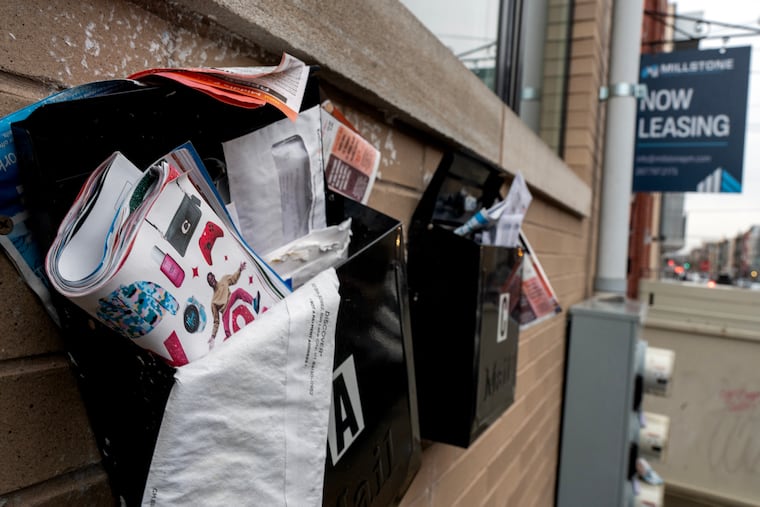
The city has begun placing liens on some of Fay’s earliest deals for unpaid water bills, and several properties have missed biannual commercial trash‑hauling fees. Some buildings appear unoccupied; mail has piled up outside two recently purchased units on Fontain St, each bought for $875,000. Locks are broken, doors ajar, and a Temple sticker sits on an upstairs window.
Hornik warns that unless Fay’s purchasers generate enough rental income to cover mortgage costs, lenders may foreclose, leaving dozens of properties in limbo. “If the loan goes negative, the lender has to foreclose and they won’t recover the money,” he says.