D
r. Elsie Taveras, chief community health and equity officer at Mass General Brigham, notes that workforce development is the core of Mayor Michelle Wu’s agenda. Unlike the spectacle of ribbon‑cutting ceremonies, Wu has steered Boston’s economic plan toward building a skilled labor pool, beginning with Boston Public Schools’ pledge to offer every student a summer job and extending to large‑scale training programs for adults.
The city has redirected more municipal funds toward workforce initiatives and secured over $100 million in public and private grants. This focus has attracted marquee firms such as Hasbro, drawn by Boston’s reputation for cultivating talent. From Wu’s inauguration in early 2022 to early 2025, city employment rose 2.7 percent—outpacing Massachusetts but lagging the national average, according to the U.S. Bureau of Labor Statistics.
Harvard economist Edward Glaeser emphasizes that “human capital is the foundation of 21st‑century urban success” and that cities must create opportunities for people beyond the elite. Wu’s strategy reflects this philosophy, prioritizing equitable economic growth over new construction, which has stalled due to high vacancy rates and interest costs.
Wu has amplified youth employment and adult training, launching the Good Jobs Metro Boston Coalition and the Life Sciences Workforce Development Initiative. Neil Sullivan, longtime executive director of the Boston Private Industry Council, describes Wu’s approach as a seamless link between public schooling and the labor market.
In 2022, the city secured a $23 million federal grant to place roughly 4,600 residents in jobs across Greater Boston. By August, 3,250 individuals had completed training or secured positions as childcare teachers, HVAC technicians, and EMTs, earning between $18 and $36 an hour. At the 2023 BIO convention, Wu announced a life‑sciences program aimed at training 1,000 city residents for research‑lab roles by 2025, investing $5.7 million and partnering with the Massachusetts Biotechnology Council. Although only 126 residents have finished training and 73 have found jobs, the program is being adjusted to broaden pathways into healthcare, where shortages persist.
Trinh Nguyen, the city’s chief of worker empowerment—a cabinet‑level role created by Wu—stresses the need for “ramp‑up” opportunities for all Bostonians, ensuring access to the full spectrum of jobs.
Youth summer employment remains central. Wu has tripled funding to $21 million annually and raised an additional $10 million from philanthropy. In her 2024 State of the City address, she pledged to guarantee a summer job for every Boston Public School student who wants one. That summer, 10,511 students enrolled, up from 6,455 in 2022. The city is also forging stronger ties with community colleges and UMass Boston to support career pathways.
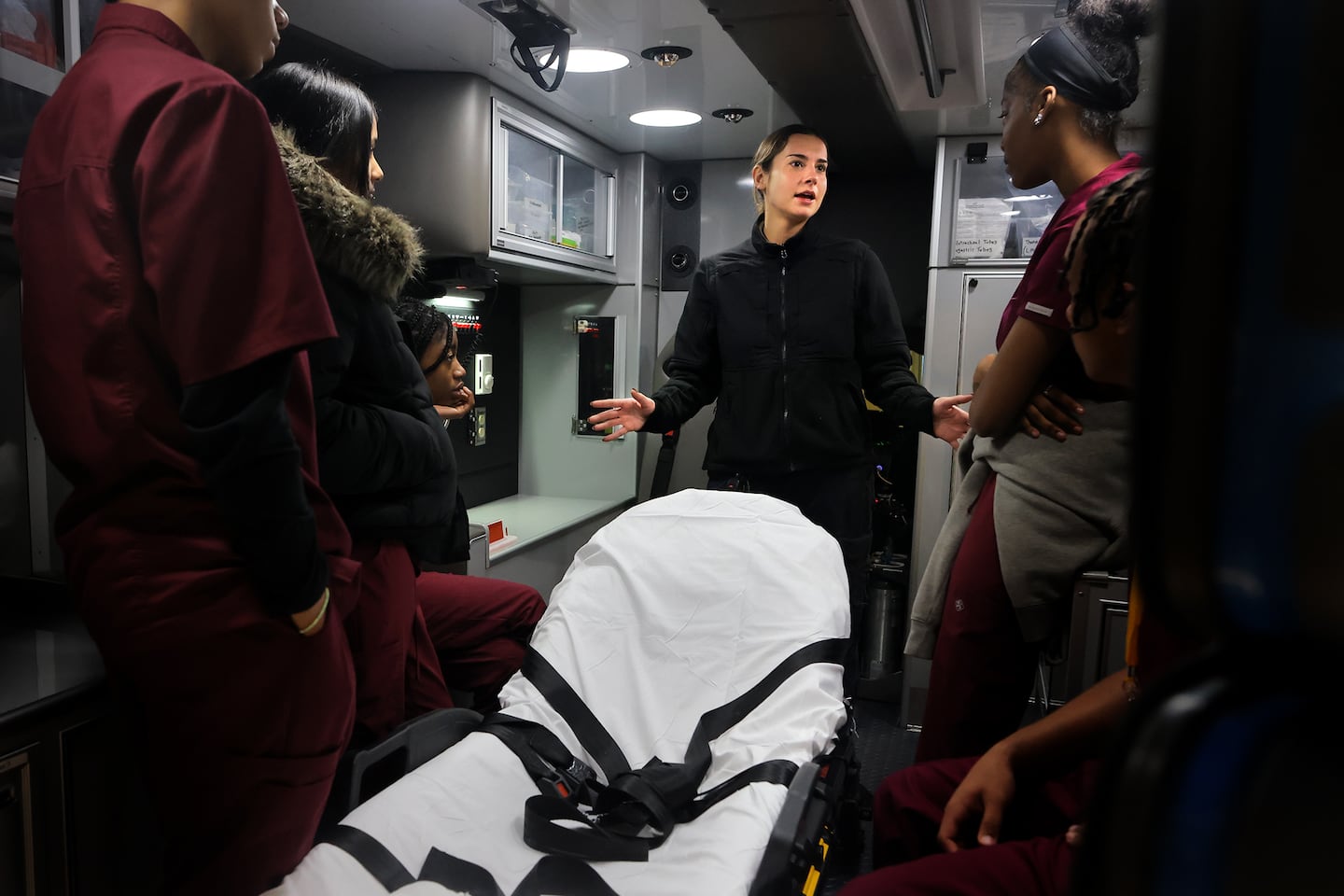
A flagship example is the expansion of EMK Academy for Health Careers, a BPS vocational high school. A $37.8 million Bloomberg Philanthropies grant will double enrollment to 800 students and add new tracks in medical imaging and biotech lab sciences, with potential salaries exceeding $100,000. Students already gain hands‑on experience at hospitals such as Brigham and Women’s and Massachusetts General, performing tasks from IV insertion to patient fall prevention.
Dr. Taveras highlights the partnership’s dual benefit: it addresses hospital labor shortages and offers students a tangible career vision that can break cycles of poverty.
Challenges loom. Hiring momentum is slowing amid economic headwinds, grant funds are depleting, and commercial property tax revenue—critical to the city budget—has fallen. This may force Wu to confront a strained relationship with developers. Boston attorney Dan Dain notes that with housing starts and construction activity down, the city’s balance of growth and development remains unsettled.
Wu’s overarching goal is to make Boston a place where talent at all levels can thrive. She argues that companies choose Boston because of its people, and that nurturing, recruiting, and promoting talent will ultimately drive demand for office space and housing. In a post‑primary speech, she declared, “I’m fighting to make Boston a home for everyone. I’m talking about making Boston the human capital of the world, the talent capital of the world.” If this vision succeeds, the city’s skyline will follow.