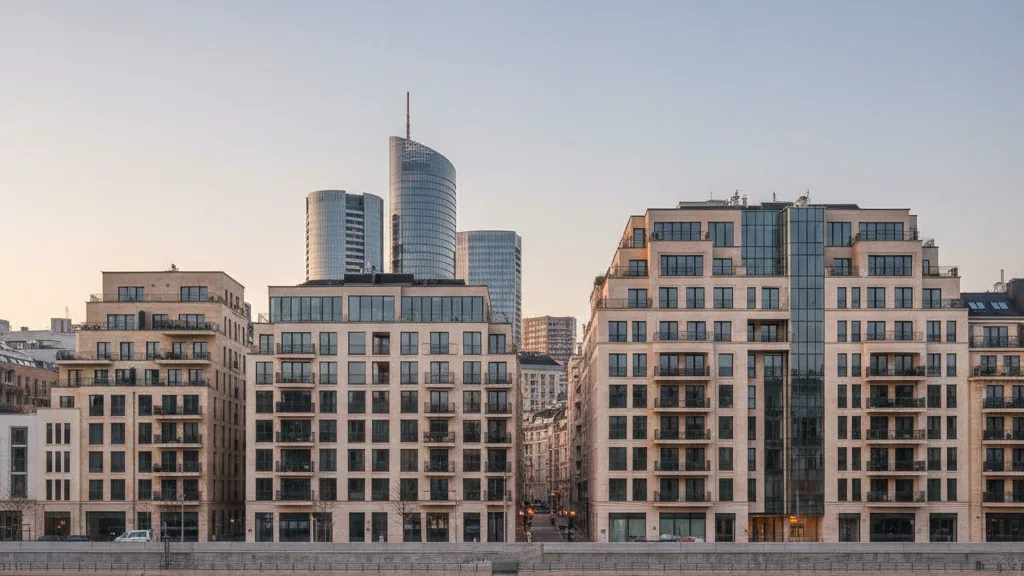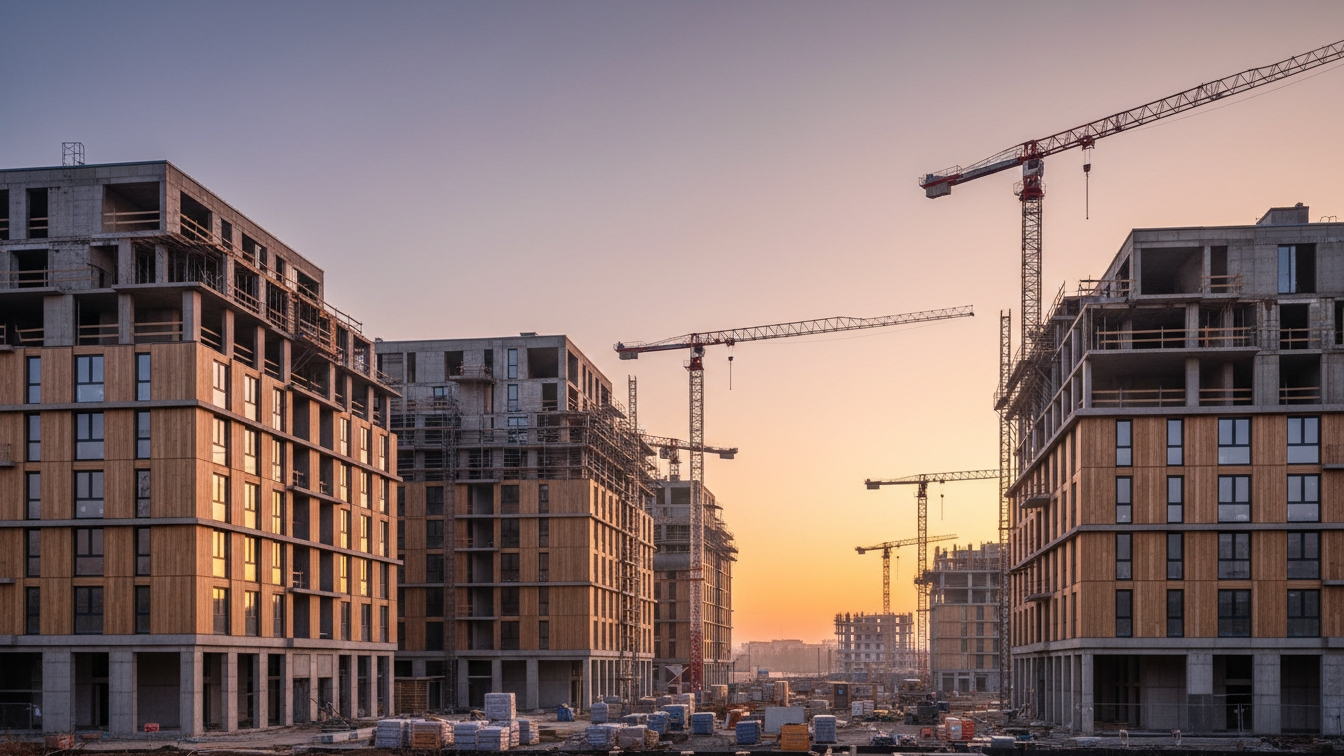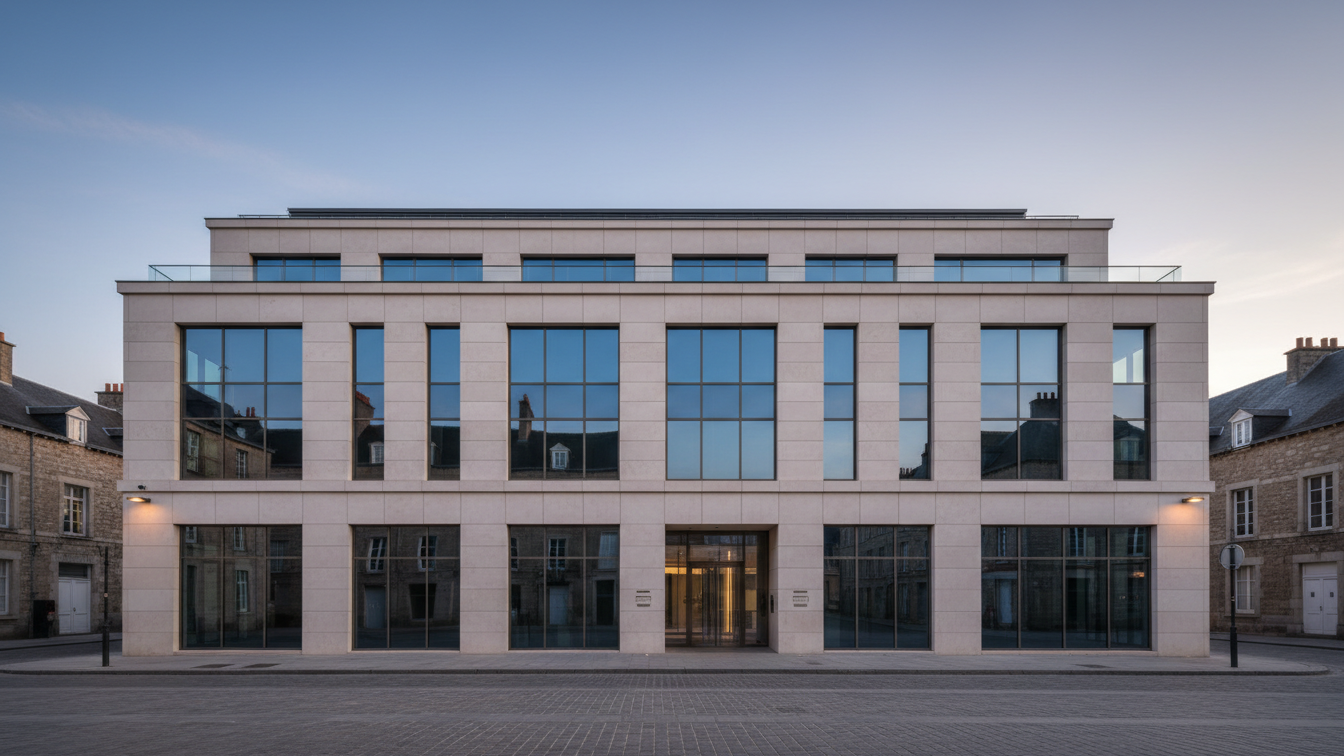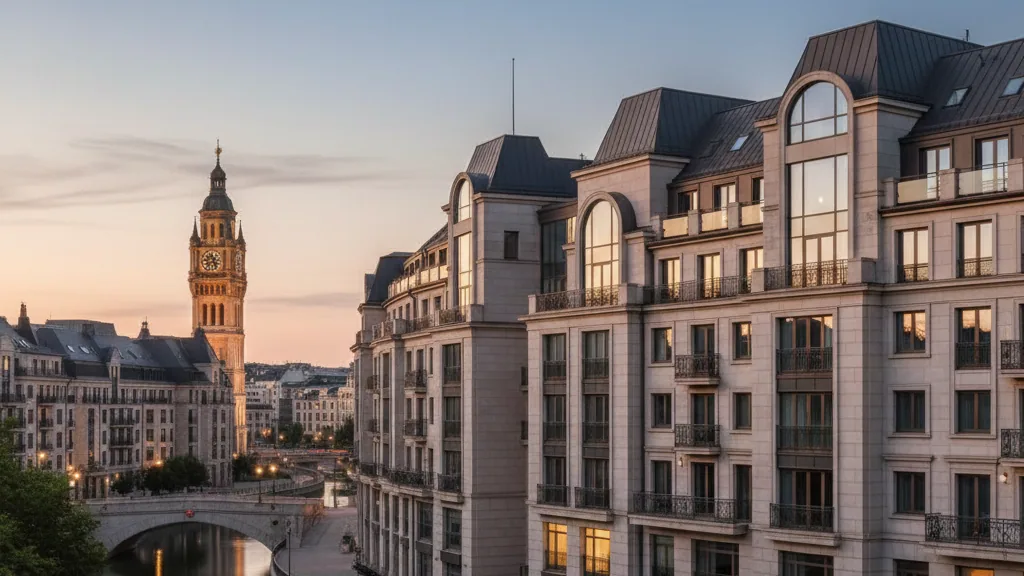
At the Inno-Forum Thüringen at Viega's corporate headquarters in Großheringen, eleven companies presented field-tested methods for accelerated, economical, and climate-neutral construction and refurbishment. The symposium was held under the patronage of Minister-President Mario Voigt and was organised jointly by the initiative Neues Bauen - 80 Sekunden and the Serial Refurbishment Competence Centre of the German Energy Agency (dena). The aim of the gathering was to link the housing industry, system providers, and state policy directly.
Speaking for the state government, Stefan Gruhner, Minister for Federal and European Affairs, Sport and Volunteering, and Head of the Thuringian State Chancellery, contextualised the initiative. Affordable housing, he noted, is a decisive factor in Thuringia's future viability, both in urban and rural areas. Fast and cost-effective processes in new construction and refurbishment are indispensable, meaning direct dialogue between the commercial sector and funding bodies provides a tangible benefit for the federal state.
Funding conditions and economic framework
Florian Krey of Thüringer Aufbaubank presented the newly launched funding programme for the years 2026 to 2030, initiated by the Ministry for Digital Affairs and Infrastructure. The guideline provides for interest-free loans and repayment subsidies that can cover up to 80 per cent of eligible costs. The support encompasses rental housing in new developments, modernisations of existing properties, and explicitly vertical building extensions.
Krey illustrated the necessity of this support using current market data. Construction costs of 4,000 EUR per square metre or more are no rarity in new developments. To deliver such projects without public subsidies, a net cold rent of around 19 EUR per square metre would be required. In the subsidised segment, however, the guideline demands a cap of 6.80 EUR per square metre for locations such as Erfurt, Jena, or Weimar. Serial and modular construction, he argued, serves as the lever to reduce building costs permanently and keep projects viable across their entire life cycle.
Regional divergence and market-ready technologies
Pressure on Thuringian housing markets varies considerably. While the 2022 census shows average net cold rents of 7.04 EUR per square metre in Jena and vacancy rates of around two per cent in Erfurt, the rent level in the district of Greiz stands at 4.67 EUR. In the Weimarer Land district, the Federal Institute for Research on Building, Urban Affairs and Spatial Development puts the annual requirement for new builds at just five units per 10,000 residents, compared with a national average of 38. In the whole of 2025, only 1,445 flats in new residential buildings were completed across the state.
The presented solutions address these challenges with modular and prefabricated systems. Across two themed sessions, participants voted on specific approaches that were discussed directly with housing companies in curated rounds:
- —GeoCollect won the vote in the speed category with high-performance geothermal collectors for thermal subsoil utilisation, while Ernst Schweizer presented flat roof systems for green roofs, Faktum Industries an adhesive-free sealing system, and Trustlog digital surety bond processing.
- —Vestaxx won over attendees in the cost category with window-integrated heating, flanked by Viega's fire protection strip allowing up to 500 millimetres of shaft space savings, Argillatherm's indoor climate system, and the recyclable solid wall SEMBLA by Polycare Research Technology.
Robert Kroth, Managing Director of Neues Bauen - 80 Sekunden, and Nico Gorsler from dena agreed that the transition in construction and refurbishment is not failing due to technical feasibility, but rather due to a lack of industrial replication of proven models. Daniel Quick from host company Viega also emphasised that serial construction must incorporate subsequent operations right from the start in order to establish standardised, maintenance-friendly processes.