US companies are intensifying their efforts to encourage employees to return to the office. However, many companies are lagging behind on the necessary investments required to make workplaces more attractive, competitive, and adaptable. This is according to CBRE's “2026 Office Occupier Sentiment Survey”, which offers detailed insights into the current challenges and strategies in the US office real estate market.
The survey results highlight a discrepancy between companies' expectations for office presence and the actual efforts made to promote this presence through improved work environments. While the desire for a full or partial return of the workforce to the office is clearly discernible, the necessary investments in technology, furnishings, and flexible workplace concepts are often not being made to a sufficient extent. This could lead to a lower acceptance of office use in the long term.
Technological Progress and the Future of the Office
A central theme of the study is the influence of Artificial Intelligence (AI) on the design and use of workspaces. AI is not only changing how work is performed, but also the demands placed on office environments. Companies that invest in AI-powered tools and infrastructure can offer their employees more efficient and collaborative work experiences. Offices are expected to increasingly become hubs for innovation and collaboration, supported by advanced technologies.
CBRE emphasises that the design of future offices must consider the integration of AI applications. This applies not only to intelligent building systems for energy efficiency and space management, but also to workplaces that enable seamless interaction with AI tools. The ability to analyse data and optimise workflows will be crucial for the attractiveness and functionality of modern offices. Companies that fail to invest here risk falling behind in the competition for talent and productivity.
Adaptable Workplace Strategies Are Needed
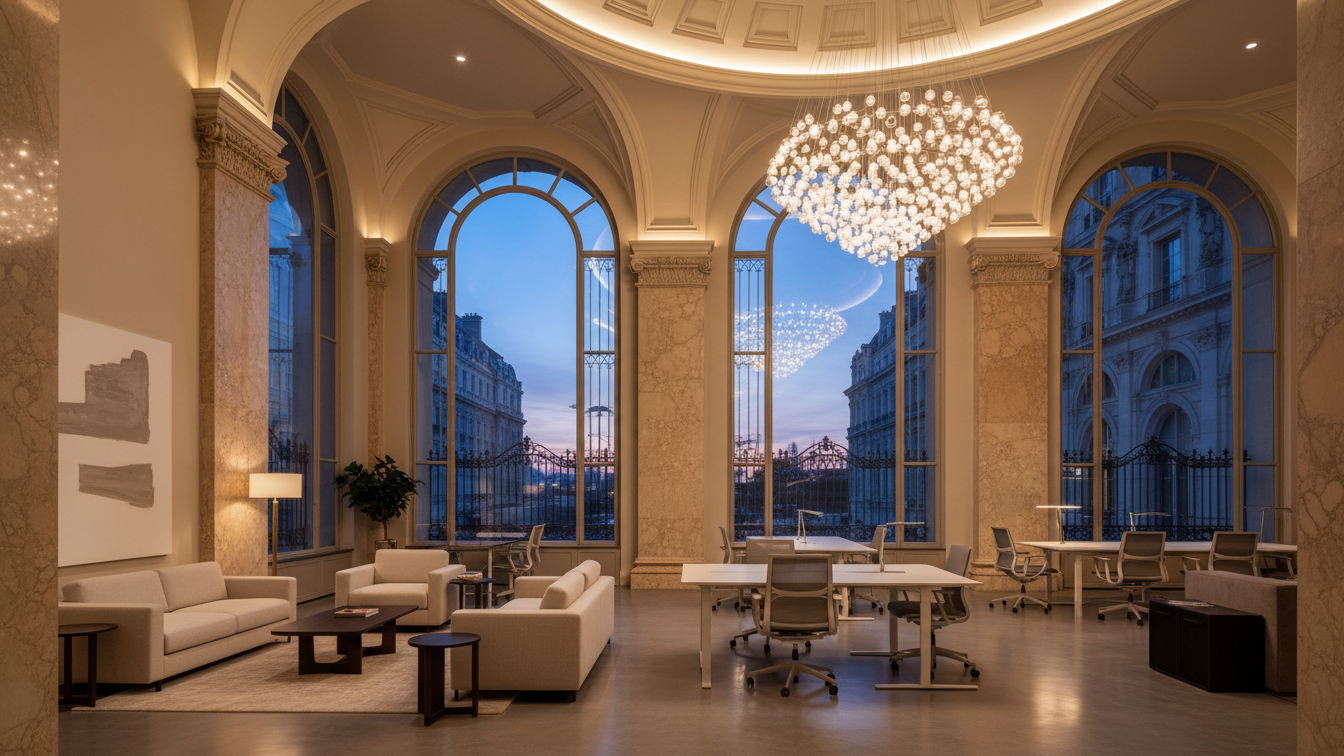
The study highlights the necessity of flexible and adaptable workplace strategies. Given the rapidly evolving work landscape and the influence of new technologies, office spaces must be designed dynamically to accommodate different working styles. This includes both collaborative areas and retreats for concentrated work. A rigid office environment without corresponding adaptations will hardly be able to meet the demands of a modern workforce. The results of the CBRE survey are therefore a clear signal to decision-makers in the US to proactively redefine their office strategy.
- —Investments in technological infrastructure to support AI applications are essential.
- —Adaptable and flexible office concepts promote productivity and employee satisfaction.
- —The changing world of work requires a strategic realignment of office property planning.
- —The attractiveness of the office largely depends on the working conditions and facilities offered.