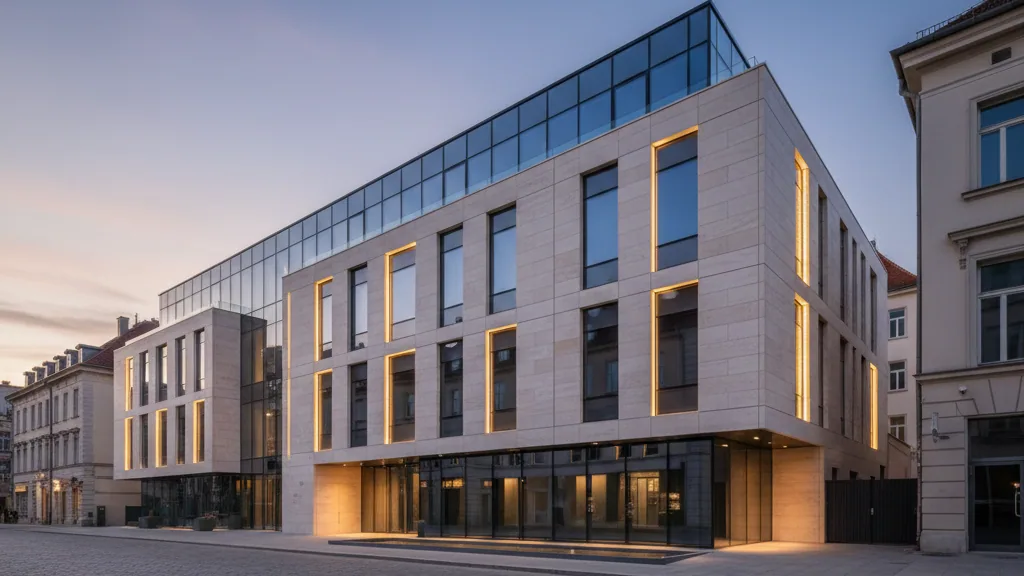
Spacial, a platform offering artificial intelligence-based engineering services for residential construction, recently announced the appointment of Ravid Shwartz-Ziv as a scientific advisor. Shwartz-Ziv, an assistant professor and faculty fellow at the Center for Data Science at New York University, leads authoritative research in the field of large language models (LLM). His work focuses on explaining, using information theory, which learning processes neural networks actually undergo. This expertise is intended to help Spacial further optimise its technology in the construction sector.
Spacial aims to empower construction companies and architects to design and execute construction more efficiently. The platform uses AI to accelerate construction planning and development while minimising human error. A central goal is to streamline technical decisions and thereby significantly shorten project lead times. Spacial's technology can, for example, support the optimisation of material usage or the early identification of potential structural problems in the planning process.
Artificial Intelligence in Construction
The integration of artificial intelligence into the construction industry is becoming increasingly important. Companies like Spacial use AI to transform traditional processes, from the initial design phase to completion. The implementation of AI-powered tools can help overcome the complex challenges of modern construction, including rising material costs, skilled labour shortages, and the need for more sustainable building practices. The capabilities of LLMs to process complex data and recognise patterns are particularly valuable here.
Spacial's strategic decision to bring a leading expert like Ravid Shwartz-Ziv into its team underlines the company's commitment to remaining at the forefront of technological development in the construction sector. Shwartz-Ziv's research on the transparency and interpretability of AI models is crucial for building trust in autonomous systems and promoting their acceptance in critical application areas such as civil engineering. His expertise will enable Spacial to develop more robust and explainable AI solutions that meet the highest standards of safety and efficiency.
By applying advanced AI technologies, Spacial aims not only to improve efficiency and quality in residential construction but also to contribute to reducing environmental impacts. The optimisation of construction processes through AI can minimise material waste and lower energy consumption during the construction phase. This positions Spacial as an important player in shaping a future-proof and sustainable construction industry.
Prof. Shwartz-Ziv's Expertise
Professor Shwartz-Ziv's research focuses on deciphering the black-box nature of neural networks. He investigates how these models learn and what internal representations they form to make decisions. His insights from information theory provide important methodological approaches to better understand the complexity of large language models. For Spacial, this means the opportunity to develop an AI platform whose decisions are comprehensible and transparent, which is of paramount importance in engineering and construction.