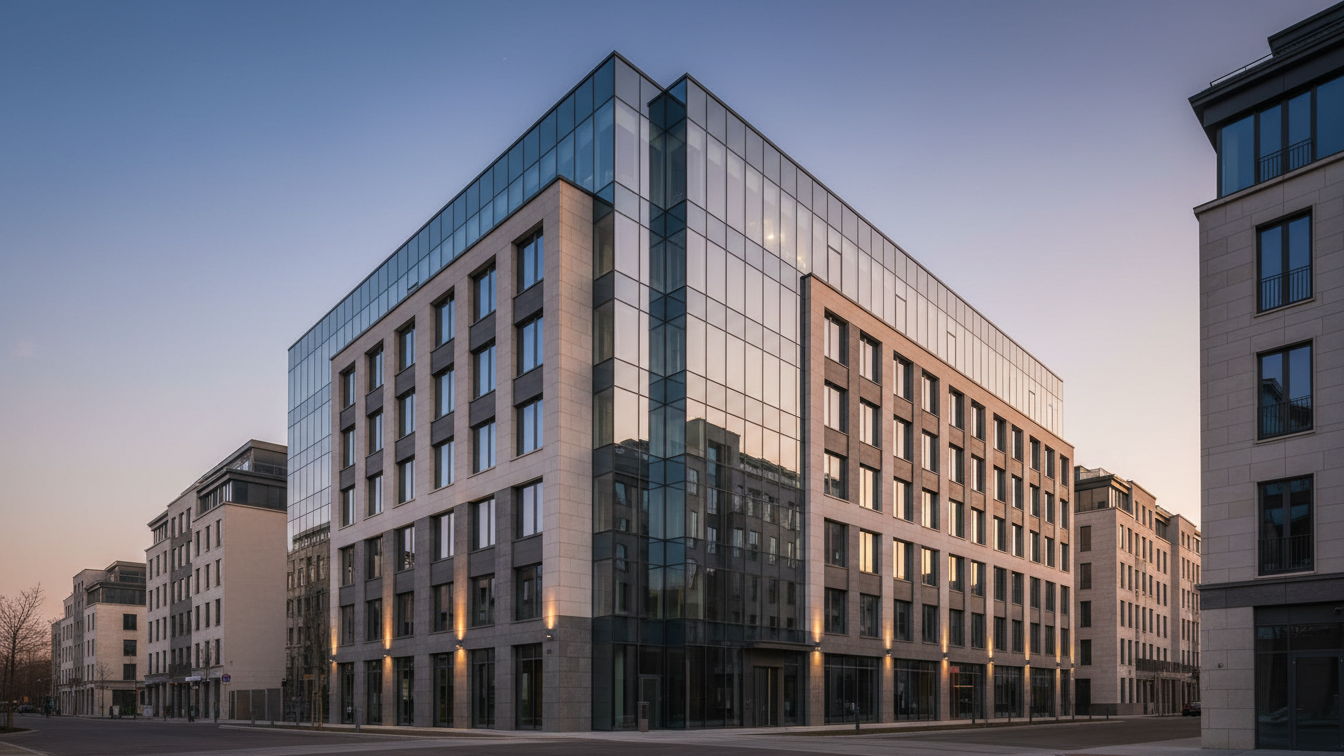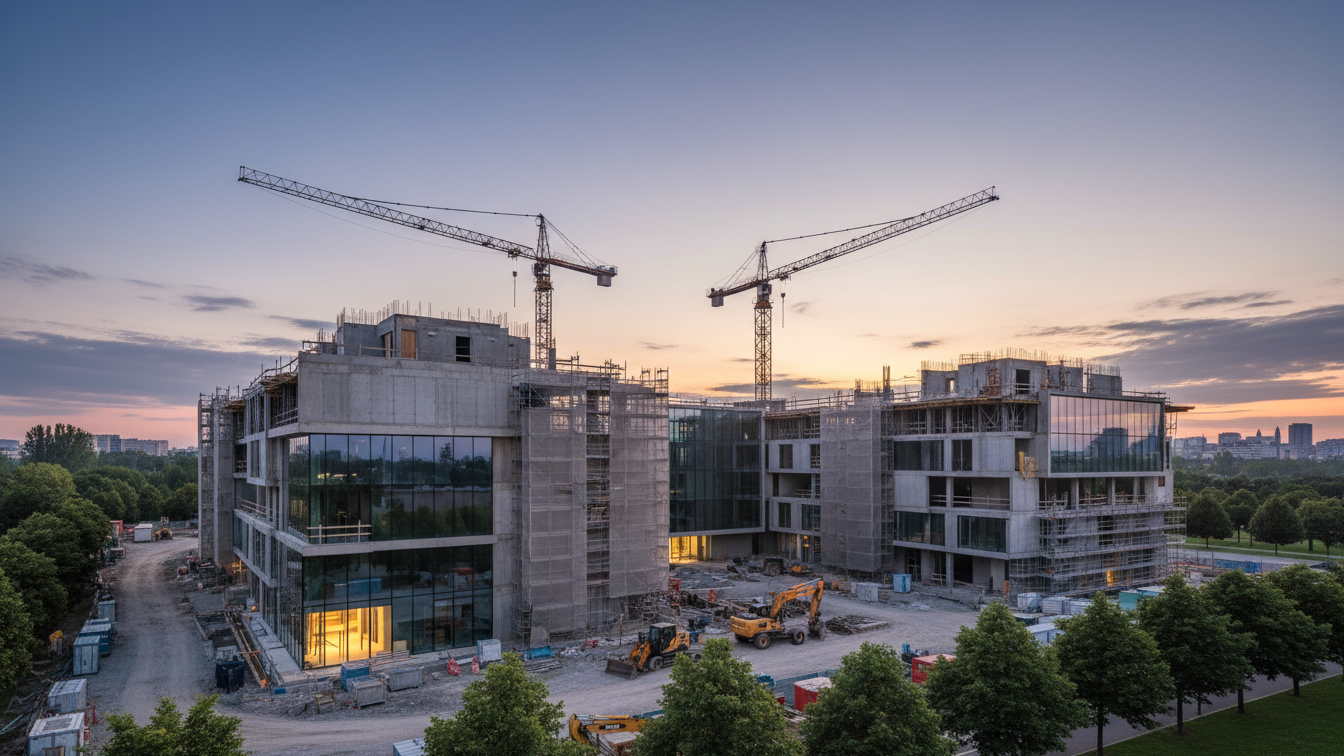
In the first half of 2026, the Berlin property market recorded increased activity, particularly in the office segment. Office take-up rose by 55 per cent compared to the same period last year, reaching approximately 378,000 square metres. This development is largely attributable to several large-scale lettings. Despite this positive dynamic, the market environment remains challenging, characterised by geopolitical uncertainties, high financing costs, and subdued overall economic development.
These factors contributed to the vacancy rate for office properties rising to 9.1 per cent. An exception is the prime property segment, where demand continues to exceed the limited supply. Here, a top rent of up to EUR 47 per square metre was achieved, representing a new record high.
Resilience and Transformation in the Industrial Sector
The Berlin market for logistics and light industrial properties also proved robust during the same period. Take-up in this segment increased by 14 per cent to around 176,000 square metres, while prime rents remained stable despite the difficult economic climate. The term industrial properties encompasses both large-scale logistics warehouses for storage and distribution, as well as flexibly usable business parks and production properties that combine storage, office, service, and manufacturing spaces.
A current market report by Berliner Sparkasse emphasises the increasing importance of sustainability aspects for the future viability of logistics and light industrial properties. Sustainability is understood here as a decisive competitive and value driver, extending beyond purely ecological requirements. This involves a holistic view of the property throughout its entire life cycle, from planning and construction through operation to decommissioning.
This transformation is particularly evident in the expansion of photovoltaic systems. These are now often standard equipment in new industrial developments. In the Berlin region, 70 to 80 per cent of logistics and light industrial spaces completed since 2022 already feature such solar installations. The locally generated electricity not only serves the building’s operation but also lays the foundation for the progressive electrification of logistics processes and supply chains, for example, through charging infrastructure for electric lorries.
- —Self-sufficient power supply from renewable energies
- —Battery storage
- —Intelligent load management
These components are gaining importance as integral parts of modern logistics sites and are increasingly becoming a focus for operators, financiers, and investors. The new Building Modernisation Act is expected to further increase modernisation pressure, especially on older existing properties. The energy efficiency of buildings will in future influence market value, marketability, and financeability more strongly than before. Consequently, the energy performance certificate for logistics and industrial properties is gaining significance as an indicator of their attractiveness.
Marcus Buder, Head of Commercial Real Estate Finance at Berliner Sparkasse, noted that sustainability aspects no longer represent an added benefit but form a crucial value driver for logistics and industrial properties. He explained that energy efficiency, the use of renewable energies, and flexible building concepts increasingly determine a property’s economic viability, financeability, and future sustainability. Self-generated electricity also creates the basis for the electrification of logistics processes. Corresponding investments thus strengthen the value and competitiveness of tomorrow's logistics and industrial properties.