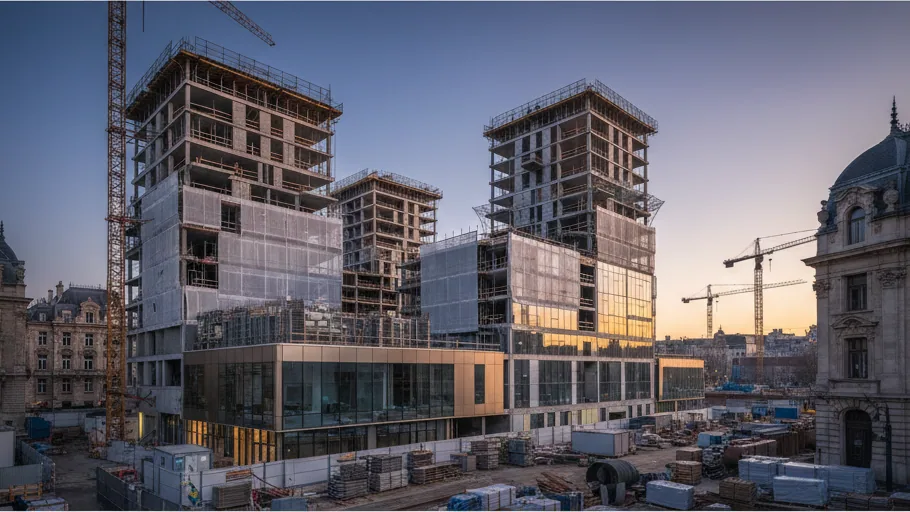
The German federal government is pursuing the goal of making the construction process in Germany more efficient and cost-effective. In this context, Building Type E has been introduced. This undertaking, originally initiated by the Grand Coalition, addresses the need to make construction projects more practicable given current market conditions and regulatory requirements. The intention is to create incentives for faster realisation of construction projects and to ease the burden on the construction industry through targeted adjustments to building law.
The concept of Building Type E is intended to facilitate the construction of certain building structures by reducing building law requirements. This primarily concerns constructions where a less detailed review or simplified approval is sufficient. The expectation is that this will reduce both the time and costs for developers and builders. Such a new regulation could be particularly relevant for certain types of commercial buildings or standardised residential construction.
Background and Objectives of Building Type E
The discussion about Building Type E is embedded in a broader debate on the modernisation of German building law. Representatives of the construction industry have long called for a streamlining of the bureaucratic processes that dominate the planning and implementation of construction projects. Building Type E is regarded as a model that could potentially initiate a paradigm shift in approval practice by shifting the focus from comprehensive upfront review to greater personal responsibility for builders and planners. However, this requires a precise definition of the areas of application and responsibilities.
The implementation of the proposed changes is associated with various challenges. These include the precise definition of the criteria a construction project must meet to fall under Building Type E, as well as clarifying liability issues in the case of simplified construction. In parallel, questions arise regarding acceptance and understanding among the authorities, planners, and construction companies involved. The introduction of such a model requires careful consideration between the desired acceleration and the need to maintain quality and safety standards.
- —Objective: Simplification and cost reduction in construction.
- —Origin: Initiative of the Grand Coalition for building law reform.
- —Potential impact: Faster project realisation, reduced bureaucracy.
- —Challenges: Definition of application areas, clarification of responsibilities.
The current discussion about Building Type E illuminates the complexity of reform efforts in the German construction industry. Implementation would not only entail technical and organisational adjustments but also redefine legal frameworks. Close observation of further developments is important for all players in the real estate sector, as the impact on project development and market dynamics could be significant.