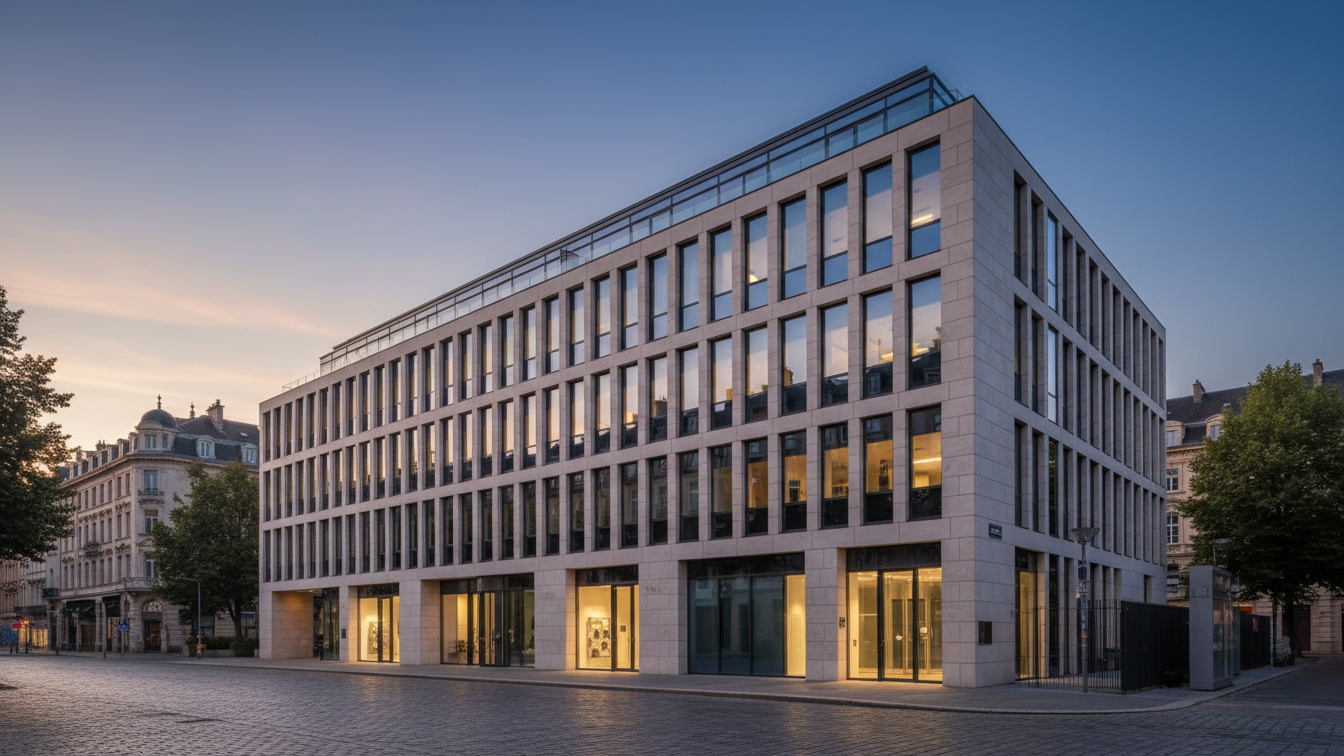
The risk landscape for data centres in Europe is undergoing a significant transformation, primarily due to an increase in natural hazards and climate risks. The standard approaches to site selection, construction and ongoing operation of data centres have become limited in their effectiveness. Johanna Rohrer and Gareth Hopkins, both Risk Analysts at HDI Global and HDI Risk Consulting, identify four key factors essential for strengthening resilience and preventing damage. These developments are of particular relevance for leading locations such as the Frankfurt area, which is not only a hub of the German data centre landscape but is also exposed to increased climate risks.
Analyses by HDI ARGOS 4.0 show that the risk profile of the Frankfurt region is currently characterised by a clustering of heavy rainfall events, intense heat periods and severe storms. Potential consequences include urban flooding due to overloaded drainage systems and storm damage from wind speeds exceeding 100 km/h. Furthermore, climate projections forecast a significant increase in extreme heat days. This situation in Frankfurt is representative of a Europe-wide trend where the growth of digital infrastructures meets an increasingly complex risk environment. However, a large proportion of these risks can be effectively reduced through targeted prevention and adaptation measures.
Strategic Pillars of Risk Minimisation
The resilience of data centres begins with a precise, site-specific risk assessment. Micro-site-specific factors such as proximity to floodplains, coastal locations, or the capacity of local drainage systems determine the actual risk exposure. Taking Amsterdam as an example, coastal and heavy rainfall flooding can impair operations. Therefore, building height and the design of drainage systems become critical resilience factors. After identifying relevant risks, a structured assessment of site-specific vulnerabilities is required. This includes server rooms, power generation and supply infrastructures, and cooling systems. Prioritising critical assets and defining appropriate protective measures are crucial here. Defining clear protection goals and regularly reviewing resilience measures ensure their effectiveness even under changing risk conditions. Forward-looking climate risk data is an important tool in this regard, enabling the assessment of potential developments even before site selection and improving the planning of risk reduction measures.
Another critical factor is resource availability. Climate projections indicate an increase in heat extremes and longer dry periods in Europe, which increases the cooling demand of data centres and further strains energy supply, system reserves, and infrastructure planning. The performance of cooling systems, the resilience of the power supply, as well as emergency power and load management concepts are therefore gaining in importance. Cooling is becoming a primary resilience factor, as reduced cooling capacity or system failures can lead to overheating, loss of capacity, and, in extreme cases, operational shutdowns. Extreme heat, severe storms, and floods can also affect the stability of the power supply. The increasing energy demand further raises the risk of power outages and operational disruptions.
Construction Method and Operational Preparedness
Typical building standards often inadequately consider climate risks and the specific vulnerability of data centres. Large fire compartments, extensive flat roof areas, and drainage systems that can be overwhelmed by heavy rain represent significant weaknesses. Technical installations and the elevation of building areas depend on the effectiveness of surface drainage and are accordingly exposed. In site and building planning, emergency overflows should be implemented in roof drainage systems, and critical installations and ground levels should be raised. Ground drainage systems and the spatial separation of critical areas can limit the spread of damage. However, the selection of appropriate measures must always be evaluated on a site-specific basis.
Resilience is not limited to structural protective measures. Despite careful site selection and robust construction, disruptions cannot be entirely ruled out. The extent of operational interruptions largely depends on operational preparedness. This includes site-specific early warning systems, clearly defined emergency plans, and ensuring the accessibility of a site during flooding or extreme weather events. Redundancies in critical infrastructures, supply chains, as well as IT and network architectures also contribute to minimising downtime and financial consequences. Continuous and proactive risk management is essential for the resilience of data centres. HDI Global supports clients in integrating risk assessment and active risk management by evaluating sites for their current and future exposure to natural hazards and physical climate risks even before construction begins. Together with clients, vulnerabilities are identified and addressed through targeted risk mitigation measures, with a focus on site conditions, accessibility, and supply chains.