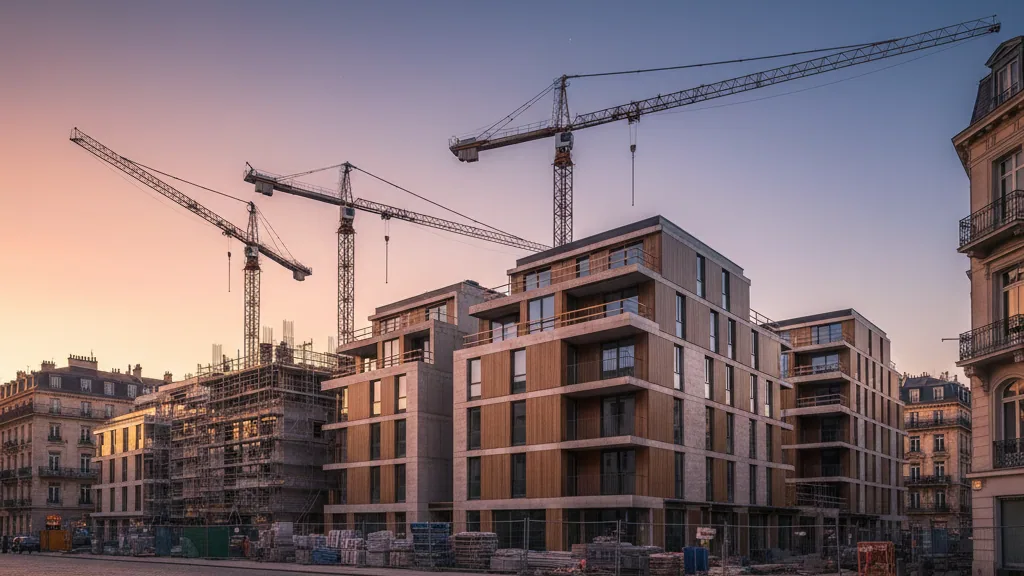
The framework conditions for new-build projects have changed noticeably. Rising construction costs, higher interest rate levels and hesitant demand are placing developers under increasing pressure. As a result, developers are facing more frequent liquidity bottlenecks, culminating in insolvency. For private purchasers, this scenario harbours considerable risks, as nationwide every second new-build home is delivered via developer models in which the plot and property are acquired together.
To date, provisions in the German Civil Code (Bürgerliches Gesetzbuch) remain fragmentary, meaning buyers are barely protected against losses in the event of a developer defaulting on payments. Dr Sandra von Möller, board member of the consumer protection association Wohnen im Eigentum, criticises the federal government for failing to take consistent action to avert existential losses caused by forfeited instalment payments or construction halts, despite years of discussions and existing proposals.
Reform proposals and insufficient data basis in the Bundestag
As early as 2019, the working group on developer contract law, established in 2014 by the Federal Ministry of Justice and Consumer Protection with the participation of the association, submitted concrete drafts. These envisage that developers must either waive stage payments from consumers until the property is ready for occupation and handed over, or provide binding guarantees for instalments paid, for instance via insurance models.
A minor interpellation by the Bündnis 90/Die Grünen parliamentary group recently revealed that the federal government is unable to quantify the true extent of the problem. Neither the number of affected households nor the volume of unfinished residential units or the average amount of damages are officially recorded. In the view of the Wohnen im Eigentum association, however, the absence of statistical records must not be a reason to postpone necessary statutory adjustments.
Specific risks for homeowner associations
Purchasers of condominiums face particular hurdles in a crisis. Because they become co-owners of the communal property, a construction freeze affects unfinished stairwells, roofs, utility lines and lift installations. Completion requires complex coordination among all owners as well as additional funds, even if individual purchasers have made their payments on schedule.
- —Make stage payments strictly in line with agreed construction progress under the Real Estate Agent and Commercial Contractor Regulation (Makler- und Bauträgerverordnung)
- —Verify and document the actual construction progress on site prior to each instalment payment
- —Firmly reject demands for services not yet rendered or unagreed additional costs
- —Have the developer contract reviewed by an expert before signing and demand specific insolvency guarantees
As long as the legislator has not enshrined mandatory safeguards in law, the association recommends that private property purchasers exercise all their contractual inspection and control rights. Alongside the careful examination of contractual terms prior to the notary appointment, strictly linking payments to actual construction progress remains the most crucial safeguard against financial losses.