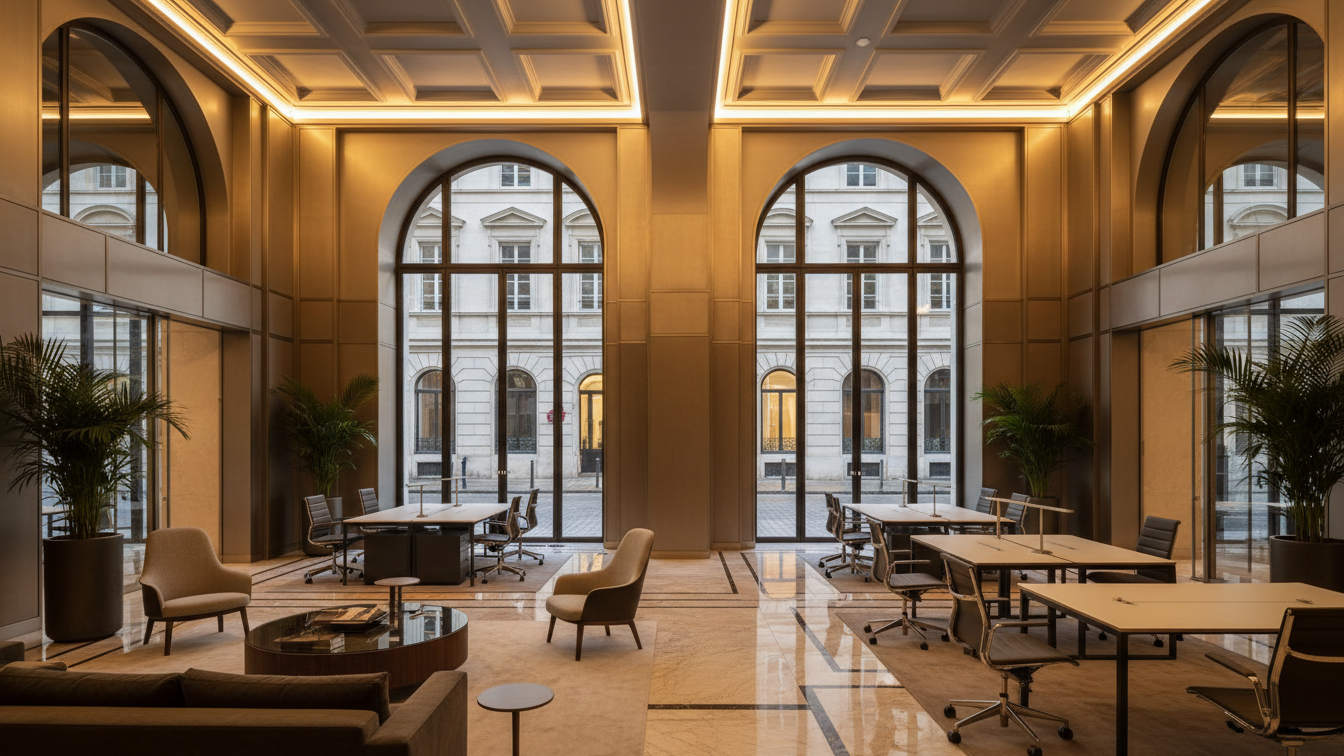
BIM Berliner Immobilienmanagement GmbH (BIM) has officially handed over the former women's prison at Lehrter Straße 61 in Berlin-Moabit to the Senate Department for Culture and Community Cohesion and Kulturraum Berlin gGmbH (KRB). This handover marks the completion of a comprehensive refurbishment of a building of historical significance for Berlin.
The refurbishment work, planned and managed by Renner Architekten GmbH, has transformed a listed building with an area of approximately 7,000 square metres. The building, constructed between 1898 and 1900 according to plans by Prussian government architect Heinrich Adolf Holland, served as a correctional facility for many years. After prison operations ceased in 2013, it was temporarily used as a film set before the decision for a cultural repurposing was made in 2022. The State of Berlin invested EUR 17.7 million in this project.
New Use for Berlin's Independent Scene
As part of the State of Berlin's workspace programme, 49 subsidised music rehearsal rooms and 32 subsidised studios are now available. These spaces are allocated at subsidised rates, below market rent, to professional artists from Berlin's independent scene. The selection was made through transparent allocation procedures, in which visual artists and musicians applied via the workspace programme channels and were chosen by independent expert juries. The first artists moved into their new workspaces in August.
Stefan Evers, Senator for Culture and Community Cohesion, emphasised that this measure secures affordable workspaces for the independent scene, which is an essential prerequisite for the continuous possibility of artistic production in Berlin. He stressed that studios and rehearsal rooms form the foundation of artistic work and are not a secondary aspect. Tatjana Adams, interim Managing Director of BIM Berliner Immobilienmanagement GmbH, explained that the refurbishment required finding a balance between preserving the listed building fabric and opening it up for new uses. Historic traces such as cell doors, barred windows and preserved prison cells were retained, while contemporary and accessible spaces for artistic work were created.
Key refurbishment measures included the restoration of the brick facades as well as historical windows and doors, the removal of later additions, the renewal of the technical building equipment, the creation of accessibility through the installation of lifts, and the acoustic fit-out of the music rehearsal rooms. Particular emphasis was placed on preserving historical elements. Dirk Förster, Managing Director of Kulturraum Berlin gGmbH, noted that projects like Lehrter Straße 61 demonstrate how market logic can be countered with common good-oriented approaches, by securing important free spaces for art and culture in public properties in the long term.
The development will continue: From the end of 2026, the second construction phase will begin with the refurbishment of the neighbouring, former courthouse at Lehrter Straße 60. Flexible spaces are to be created there, which will be allocated by the hour, day or week to various individuals and groups according to the model of the subsidised Kultur Räume Studios, instead of long-term rental contracts.