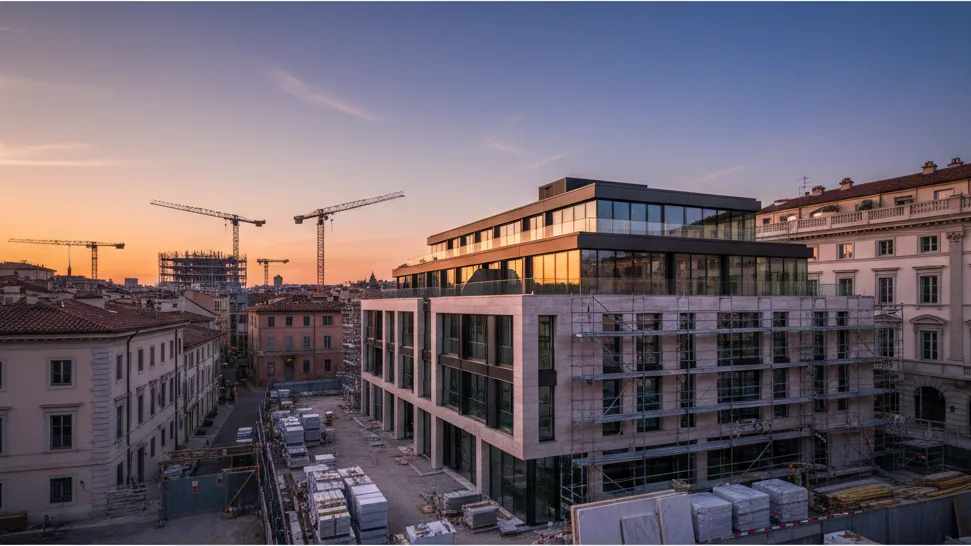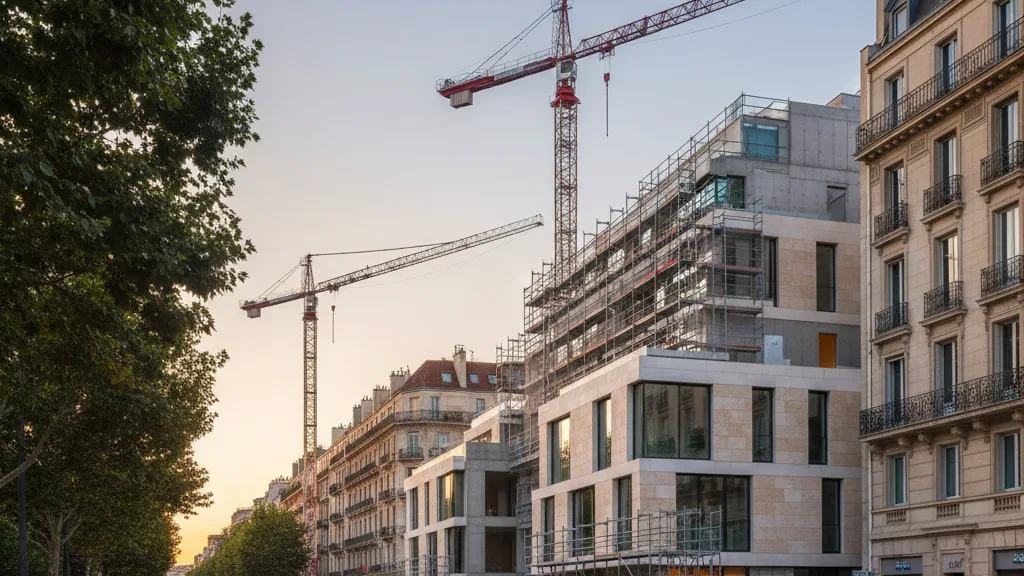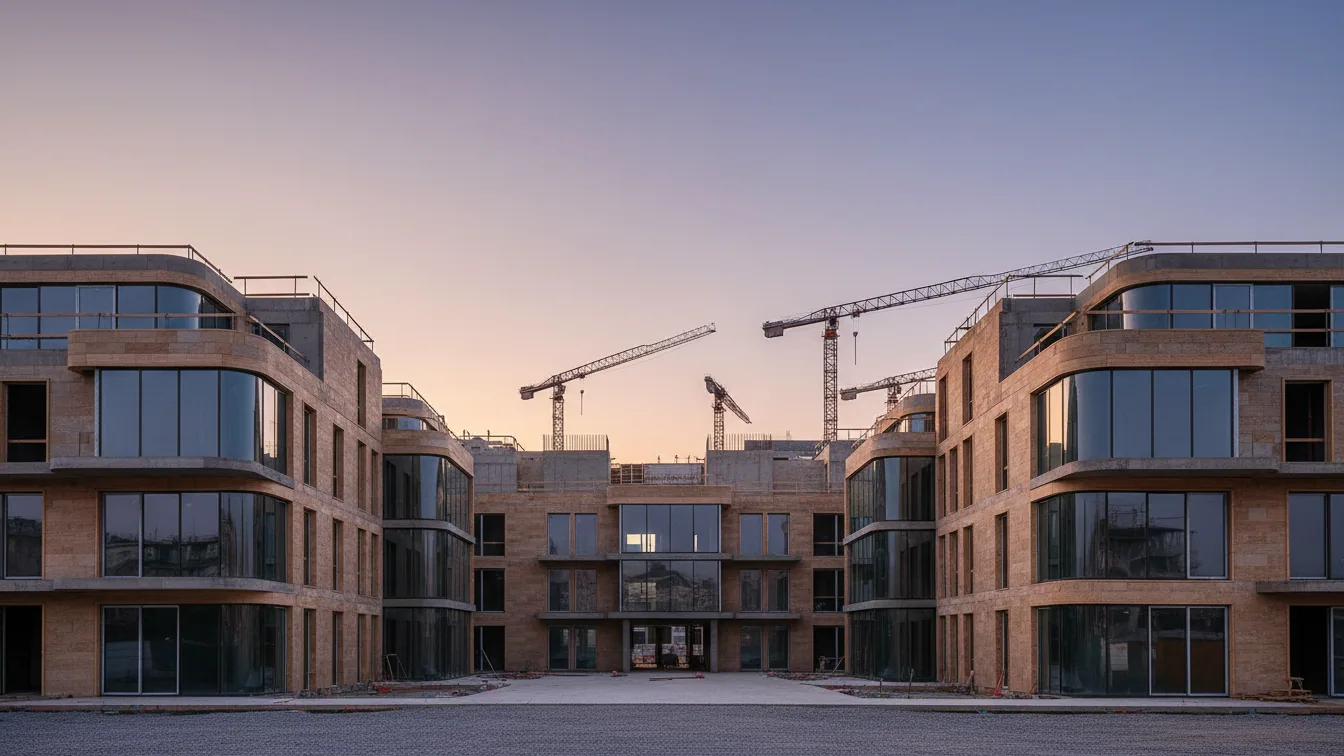
Forecasts from the ifo Institute for housing construction in Germany indicate a continued reduction in completion figures. For 2026, only 185,000 completed residential units are expected. This figure is below the 206,600 units of the previous year, which the Federal Statistical Office reported for 2023, marking the lowest level since 2012. A slight recovery is anticipated only for 2027.
Melanie Waldmann, Managing Director of mayer bährle GmbH, puts this development into perspective. She emphasises that the discrepancy between political intentions, such as the “Bau-Turbo” (Construction Turbo) approved by the German government at the end of 2023 to accelerate housing construction, and the actual development is significant. External factors such as geopolitical conflicts, as well as internal challenges like extensive bureaucracy, are cited as major causes for this situation.
Extended Process Chains and Their Effects
The period between approval and completion of construction projects has extended by approximately half a year since the beginning of this decade, now averaging 27 months. This situation results from complex approval procedures, the multitude of actors involved, and extensive documentation and verification obligations. These factors not only lead to months of delay in decisions but also tie up significant resources and make it difficult to adhere to reliable schedules. Changing responsibilities and adapting regulatory requirements also contribute to the prolongation.
The pure processing time for approvals and coordination processes often exceeds that of the actual construction project. Waldmann stresses the crucial role of project organisation in this context. Structured planning from the outset, based on a thorough needs analysis and early clarification of responsibilities on the client's side, can minimise coordination loops and associated delays. This includes a precise definition of who is involved, when, and to what extent.
Strategic Relevance of Project Management
Professional project management offers an approach to dealing with bureaucracy and complexity in the construction process. Project managers help to optimise processes, clearly define responsibilities, and advance construction projects in a target-oriented manner, even under difficult conditions. Particularly for complex construction projects with numerous interfaces, continuous control is important to implement decisions in a timely manner and largely avoid delays.
The implementation of robust project management creates clear structures, coordinates all stakeholders effectively, and visualises dependencies. Early risk identification is also an integral component. Through these measures, the probabilities of successfully completing construction projects within the planned timeframe and budget are significantly increased. Mastering these processes is paramount to effectively promoting housing construction.