M
artha Plimpton, now 55, spent the first forty years of her life in a rent‑stabilized Upper West Side apartment. In 2013, at age 42, she decided to purchase her first house—a three‑story Victorian in Prospect Lefferts Gardens that she bought for $1.35 million and gutted into a 2,796‑square‑foot home. The living room, with a fireplace, built‑in bookshelves, and two plush white sofas facing each other, became her sanctuary. Though she lived alone, friends often stayed in one of the three guest bedrooms.
In 2026, Plimpton will leave New York for London, where she has rented an apartment for years. Before the move, she wanted to share her home one last time. She affectionately calls it “The Martha Plimpton House for Wayward Women and Divorcées,” a nod to the supportive community she found in Brooklyn’s Prospect Lefferts Gardens, which she preferred over the more “twee” neighborhoods of Cobble Hill and Park Slope.
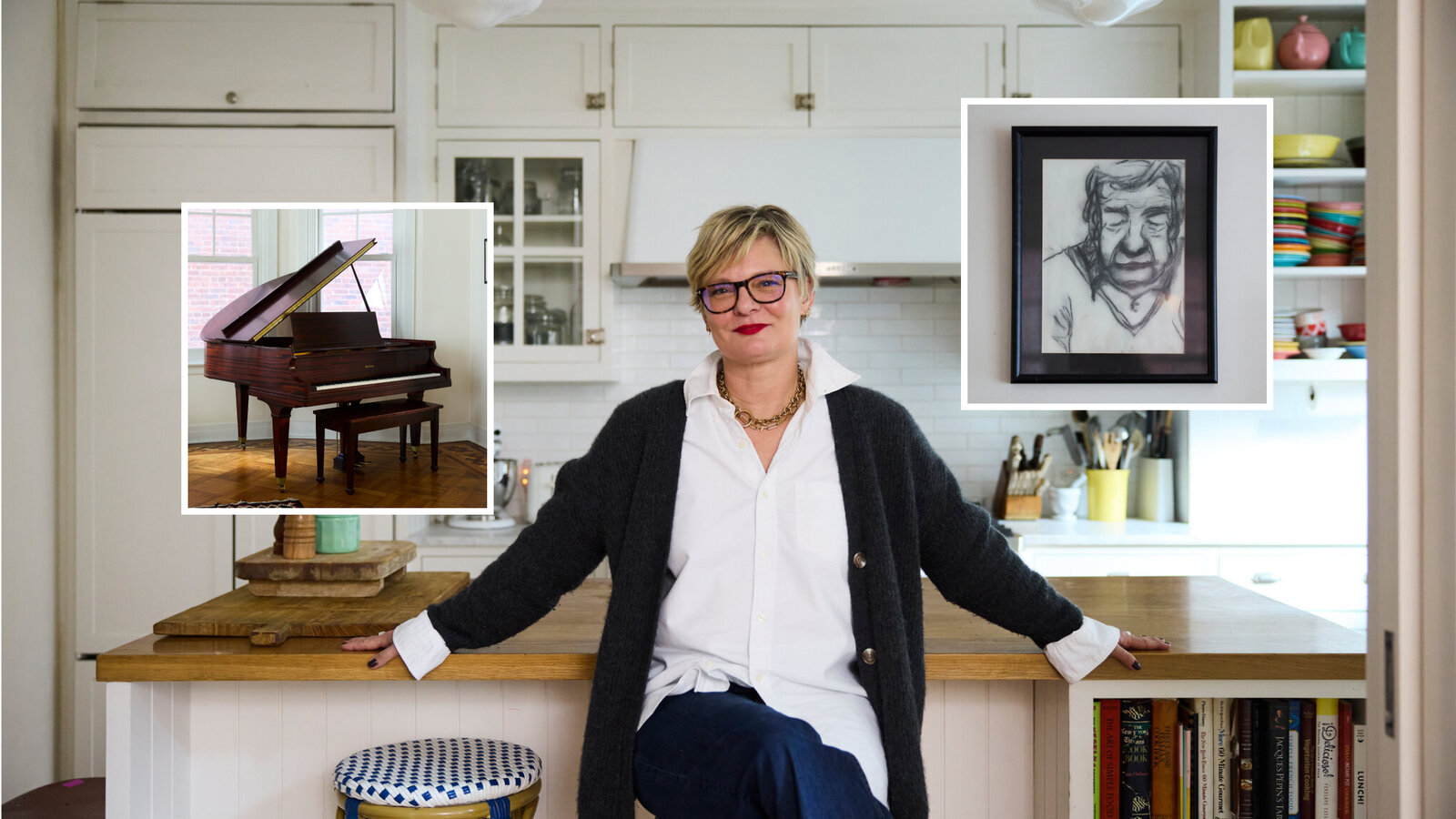
Her kitchen walls are painted Benjamin Moore Linen White, a choice that allows her to change décor easily. The centerpiece is an Ilve six‑burner gas stove with griddle, rotisserie, and convection—perfect for grilling or cooking a griddle meal. Plimpton’s culinary inspiration traces back to childhood, when she cooked salmon with roasted cherry tomatoes in her mother’s two‑bedroom apartment. Today she uses Marcella Hazan’s 1979 “The Classic Italian Cook Book” to make Bolognese with tomatoes from her backyard garden, which also yields cucumbers, peppers, eggplant, lettuce, and string beans beneath a large cherry tree.
The dining room features a reclaimed‑wood table from the early 1900s, salvaged from a neighbor’s renovation, and a 1954 Baldwin baby‑grand piano that once belonged to her grandmother, pianist Martha Jane Williams. The piano, restored with new keys and strings, sits beside a gallery wall of photos and prints, including a framed picture of Plimpton with Jimmy Kimmel and a sketch of Walter Matthaus she drew in 1996 while filming “I’m Not Rappaport.” A Frank Lloyd Wright‑designed table, gifted by the actor to her grandmother, sits in the television room.
On the second‑floor landing hangs an American flag from World War I, a reminder of Plimpton’s outspoken patriotism. She has openly criticized those who reject the Constitution, rule of law, and principles of fairness, equality, and justice, labeling them “fascists” and demanding their removal from the country.
The attic, painted white, contains a bed, dressers, and a wooden rocking chair. To create the master bedroom on the third floor, Plimpton removed walls, raised the ceiling by three feet, and installed a bathroom with a clawfoot tub and heated towel rack. A bookshelf holds a lamp and framed prints, while a portrait of Helena from her 2007 Shakespeare in the Park production of “A Midsummer Night’s Dream” serves as a personal reminder of her stage work.
Plimpton’s career began with Hollywood classics such as “The Goonies,” “Parenthood,” and “The Mosquito Coast.” She earned a Drama Desk Award for her role in “The Coast of Utopia” at Lincoln Center and later transitioned to television after an accountant revealed she had only $300 in savings. An Emmy nomination for “Raising Hope” paved the way for her to buy and renovate her Victorian home. She has also earned a Tony nomination and an Obie award, and she won an Emmy in 2012 for “The Good Wife.”
Despite her accolades, Plimpton keeps her home free of trophies. She believes the house itself symbolizes her hard‑earned success: “I worked hard for this house. It was a dream come true.” Her final tour of the home before moving to London showcases a life lived in a space that reflects her artistic journey, culinary passions, and unwavering commitment to her values.