T
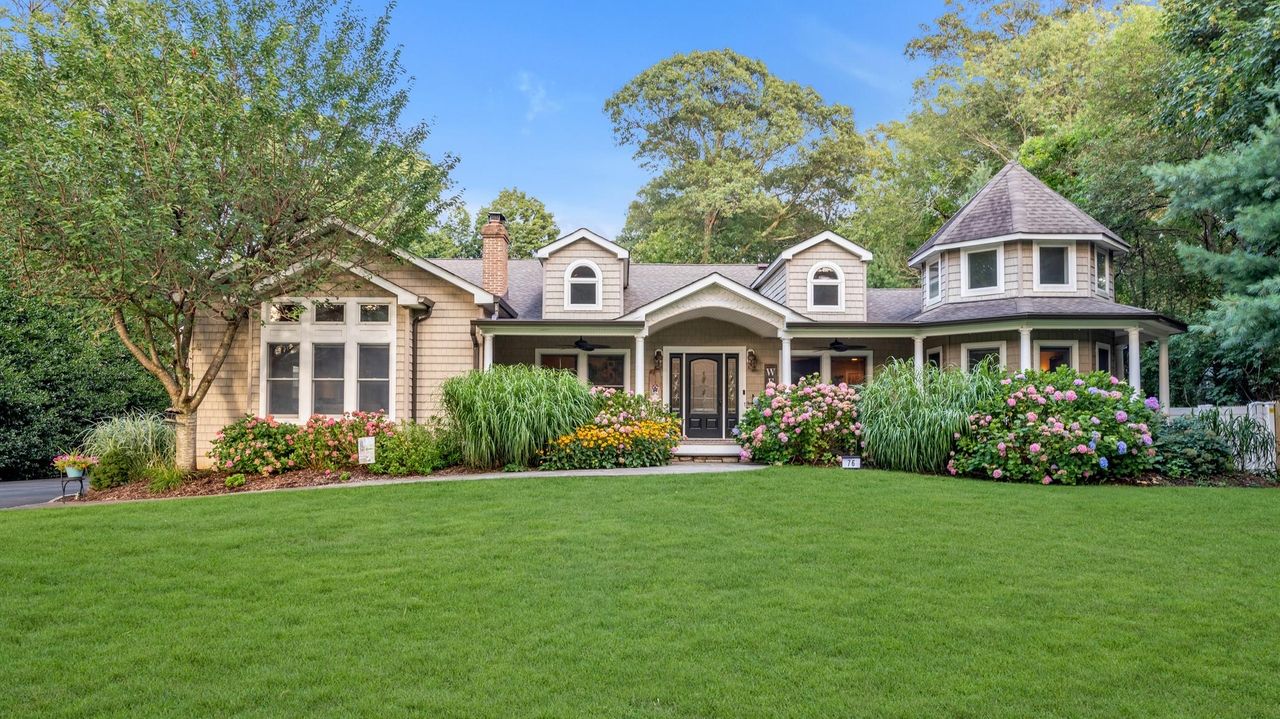
ed Kritikos of Daniel Gale Sotheby’s International Realty helped a pair of Long Island buyers purchase a four‑bedroom, three‑bath Colonial‑style home in Bayville. Built in 1994, the 2,400‑sq‑ft house sits on a 5,400‑sq‑ft lot and needs kitchen and bathroom updates, Kritikos noted. The $1.05 million sale triggered a 1 % “mansion tax” required by New York State law for properties priced at $1 million or more. The buyers were surprised, saying, “We don’t feel like we’re in a mansion here.”
The mansion tax was enacted in 1989 by Gov. Mario Cuomo to help balance the state budget. Since then it has never been indexed to inflation; a $1 million sale in 1989 had the same purchasing power as about $2.23 million today. In 1989 the median single‑family home price in Nassau County was $188,000 and $152,000 in western Suffolk, according to Newsday. Today, the median sale price in Suffolk County hit $725,000 in November, while Nassau’s median reached $840,000, per OneKey MLS data. Analysis of MLS data shows that 22.8 % of Long Island home sales between January and November 2025 closed for $1 million or more, and 6.2 % for $2 million or more.
What qualifies as a “mansion”? Jonathan Miller, CEO of appraisal firm Miller Samuel, says the term is antiquated. “The tax is based purely on price, not on appearance,” he explains. “In Long Island, I’d think of a mansion as a 5,000‑sq‑ft house on more than an acre.” Yet the market’s limited inventory and fierce competition mean that even modest homes near the $1 million mark often attract multiple bids. Kritikos, who works out of Great Neck and Greenvale, notes that demand is unlikely to ease. “As rates drop, more buyers will re‑enter the market, driving up prices and competition,” he says. The average long‑term mortgage rate in the U.S. was 6.18 % in late December.
Kritikos suggests the tax should be tied to square footage rather than price. “A 4,000‑sq‑ft threshold feels more appropriate for a mansion,” he says. First‑time buyers often find the tax a surprise, so he explains it immediately. Zachary Scher of Signature Premier Properties in East Setauket also warns clients about the tax. “Many people try to keep offers just under $1 million to avoid the 1 % fee,” he says. His team recently sold a 2,000‑sq‑ft split‑level home in Dix Hills for $1.05 million. “People think mansions are 5,000‑sq‑ft houses, but that’s not the case in most neighborhoods,” he adds. “Either raise the threshold or rename the tax.”
Enzo Morabito of Douglas Elliman, who specializes in luxury waterfront homes on the East End, notes that a $1 million purchase is essentially a starter home in Westhampton Beach. “The mansion tax, along with other closing fees, feels like a down payment elsewhere,” he says.
Legislatively, the tax is likely to stay unchanged for the foreseeable future. Assemblyman Nader Sayegh (D‑Yonkers) has sponsored a bill to raise the threshold to $2 million, citing inflation and the fact that many properties taxed under the current rule are not truly mansions. Analysis shows that 22.8 % of homes sold for $1 million or more and 6.2 % for $2 million or more. Sayegh’s memo notes that $1 million in 1989 equals $2.23 million today. However, the bill has stalled in the Assembly, never advancing past the Ways and Means Committee, and lacks a Senate co‑sponsor. Sayegh was unavailable for comment on the delay.
Low inventory at the high end of the market continues to pressure prices. Miller predicts that record levels will persist into 2026, driven by market momentum and high‑end demand. “Higher prices mean more revenue from the mansion tax,” he says.