I
n Greater Boston, the long‑standing real‑estate deadlock is finally giving way to a practical push toward everyday life. Experts predict that by 2026 the market will settle into a new normal, moving beyond the pandemic‑era low‑rate lull that once kept buyers waiting and sellers holding onto sub‑3% mortgages.
Ricardo Rodriguez of Coldwell Banker called 2025 “the year of transition,” noting that political shifts, economic changes, and new commission rules have reshaped both how agents work and how the market itself operates. The era of waiting is over; life events—marriages, growing families, and a reluctant acceptance of a higher economic baseline—are driving a psychological thaw. In 2026, the focus will shift from hoping for historic lows to figuring out how buyers can compete when inventory remains scarce. Rodriguez likened the market’s steadiness to a non‑swinging asset, a double‑edged sword that protects values but erects a near‑impossible barrier for middle‑class buyers.
Luc Schuster, Executive Director of Boston Indicators, highlighted the disappearance of starter homes. In 2015, 57 Greater Boston municipalities had median single‑family prices below $500,000; by 2025 only Brockton, Halifax, and Wareham remained in that bracket. Meanwhile, Brookline, Wellesley, and Weston now see medians above $2 million, underscoring the entry‑level squeeze.
While sub‑3% mortgages are a relic, a tipping point looms. Shant Banosian, president of residential lender Rate, warned that once rates stabilize below 6%, a surge in buyers and sellers will follow. “You can only stall your life to protect your interest rate for so long,” he said. For those who can’t wait for the Fed, 2026 strategies shift from patience to creative structuring. Banosian noted a rise in the “Bank of Mom and Dad,” fueled by record stock‑market highs, and a growing willingness of parents to gift capital to first‑time buyers. Cash offers have dipped slightly from 2024 highs, but down payments are rising, reflecting increased affluence.
Speed becomes essential for those without a trust fund. Cash buyers often demand discounts, creating openings for financed buyers who can move quickly. The “power bid”—a fully underwritten pre‑approval that can close in as little as two weeks—has emerged as an equalizer, offering certainty and speed to compete with cash offers.
Supply remains the core issue. Boston’s recent construction boom, highlighted by the Greater Boston Housing Report Card, added over 70,000 units in the past five years. Yet those units are the final deliveries of projects approved years ago. Permits for new construction fell 44% from July 2021 to July 2025, and high rates have not only deterred buyers but also stalled developers, creating a looming supply cliff for 2026 and 2027.
Kristen Keegan, President of the Massachusetts Association of Realtors, urged buyers to broaden their horizons, especially into the condo market. The Affordable Homes Act may also enable accessory dwelling units (ADUs), potentially adding inventory, though a construction boom has yet to materialize.
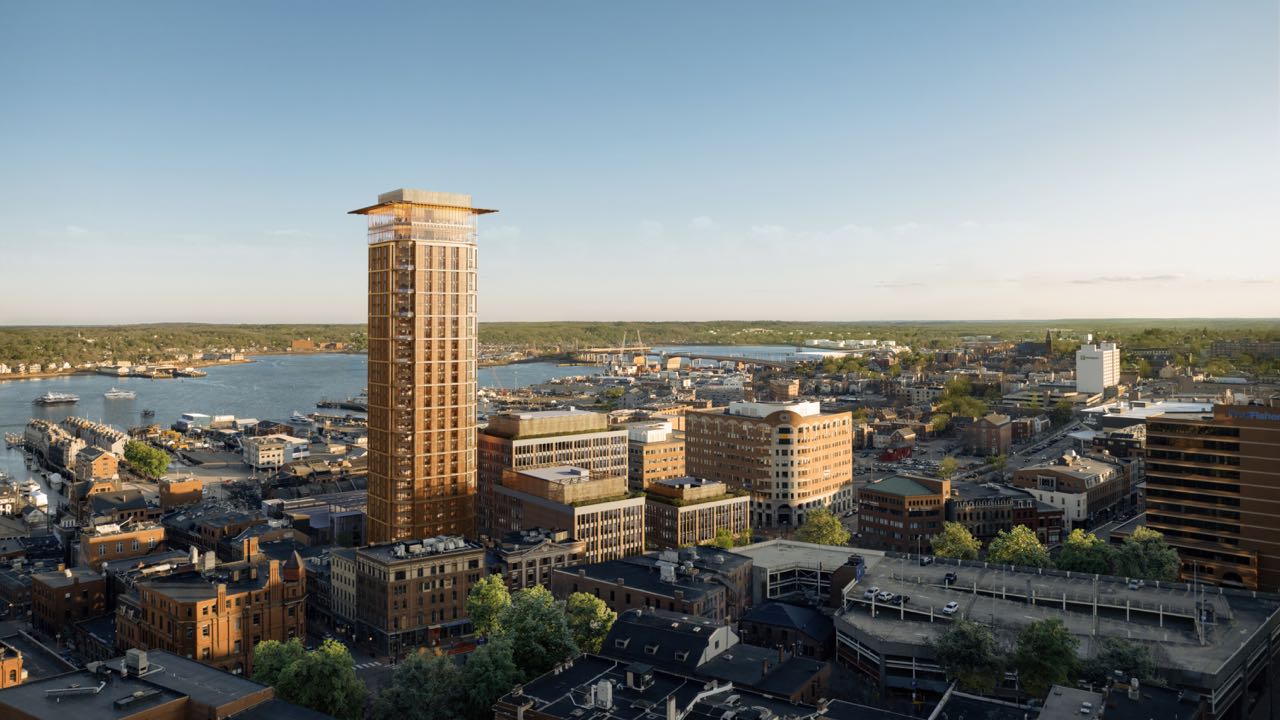
Luxury buyers, meanwhile, are drawn by Boston’s stability. Rodriguez noted that the city remains a safe haven for liquid assets, but the era of high‑rise towers like Winthrop Center and South Station Tower may pause as construction costs soar, making 60‑story projects less viable.
For those priced out of the city, geography offers a strategy. Sarah Gustafson, former president of the Massachusetts Association of Realtors, highlighted the impact of the South Coast Rail, turning Fall River and New Bedford into commuter hubs. Western Massachusetts, particularly Springfield, presents a more affordable alternative, with average home values near $288,000 versus over $755,000 in Boston. Gustafson emphasized that these markets have a balanced supply‑demand dynamic, with steady but not frantic activity.
Despite concerns, Boston’s market remains the most stable in the country, Rodriguez said, a silver lining amid inventory challenges. The shift from stalemate to pragmatic action signals a new era where sellers list, buyers bid, and life moves forward.
Key neighborhoods and regions for 2026 buyers include:
- **Dorchester, Boston**: Focus on areas within a 15‑minute walk of the Red Line, such as Savin Hill to Neponset, offering parks, restaurants, and quick commutes that drive long‑term value.
- **Sherborn, MetroWest**: Large homes, sizable lots, and privacy appeal to buyers seeking space while staying near Boston. Medfield offers similar benefits with a walkable downtown.
- **Worcester, Central Massachusetts**: Rail service, a new ballpark, and a growing restaurant scene attract a fresh wave of buyers, with the South Coast Rail extension boosting interest.
- **Northern New England**: Dover, Rochester, and Somersworth, N.H., offer walkability, newer homes, and lower prices, close to Portsmouth and the Massachusetts border.
- **Vermont**: Woodstock and Quechee remain stable markets; Woodstock saw a surge during COVID and continues to grow, while Quechee’s four‑season amenities and proximity to Boston draw buyers.
In sum, Greater Boston’s real‑estate landscape is transitioning from a prolonged stalemate to a pragmatic, action‑oriented market. With interest rates stabilizing, supply constraints tightening, and new financing strategies emerging, buyers and sellers alike are poised to navigate a new normal that balances stability with opportunity.