I
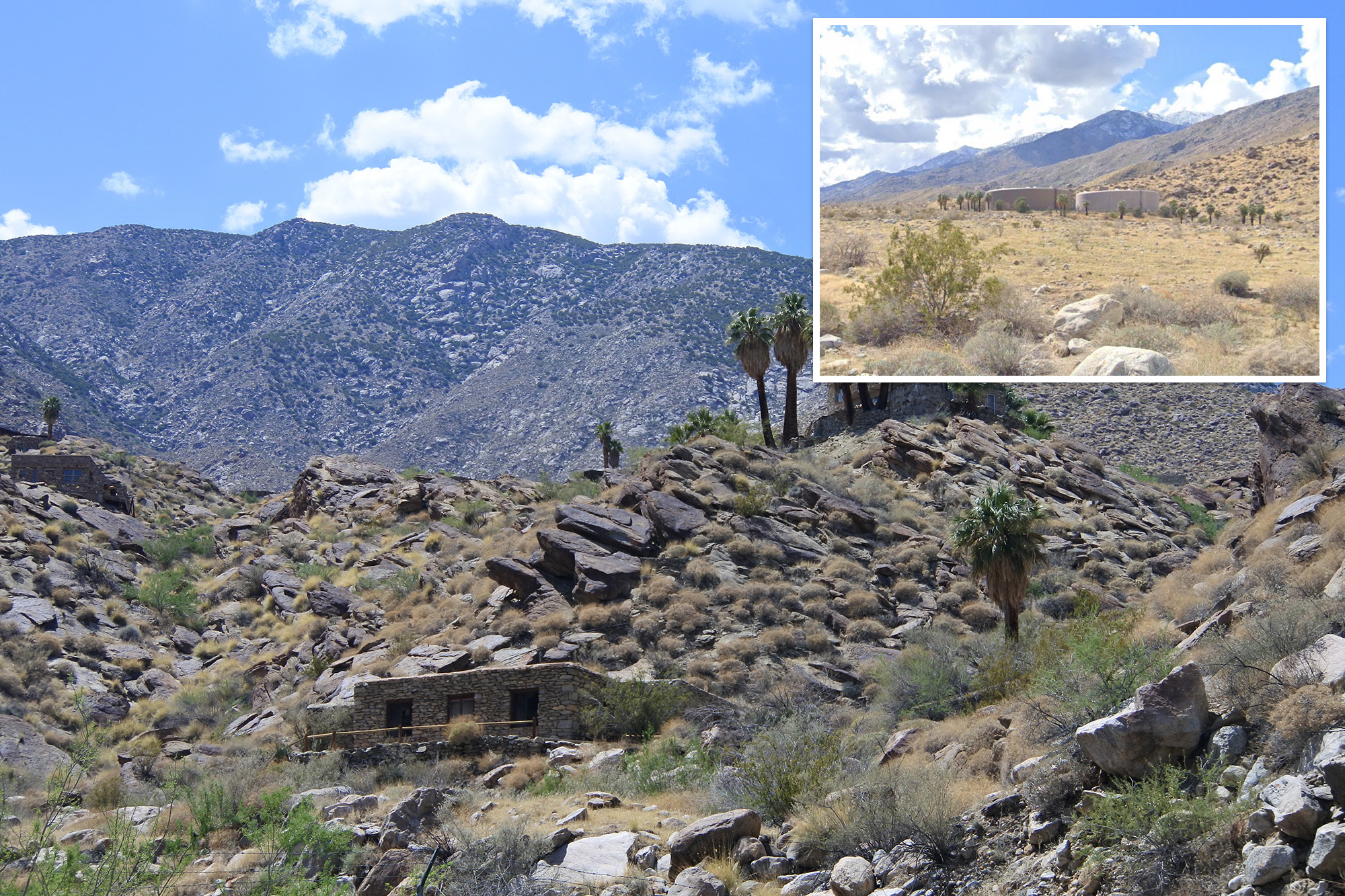
n the shadowed cliffs above Andreas Canyon, just north of Palm Springs, a cluster of 17 stone‑built homes sits almost invisible against the canyon walls. These primitive dwellings, lacking electricity and running water, belong to the Andreas Canyon Club—a society founded in the 1920s that has never been open to the public. No one can buy, sell, or rent a house; the property remains a tightly guarded secret, known only to a handful of residents and a few curious locals.
The club’s origins trace back to 1920 when an attorney representing the Agua Caliente Band of Cahuilla Indians acquired 509 acres of the canyon from the tribe. In 1921 he organized the club, inviting 24 founding members who each paid $25,000. The purpose was to protect the canyon’s wildlife and preserve its natural state. Membership was strictly limited—only one person per family could join, and representatives were chosen from specific professions such as art, music, medicine, law, engineering, and business. The first president was Dr. George L. Clements, then head of the Los Angeles Chamber of Commerce’s agricultural department. Over the next few years the club built 22 cabins for its members and a communal clubhouse, all of which have since been occupied by descendants of the original founders.
Architectural significance comes from R. Lee Miller, a renowned organic architect born in 1887 who served in World War I and trained in civil engineering and carpentry. Miller designed the cabins to blend seamlessly with the canyon’s geology, using the very rocks that line the foothills. The result is a series of structures that are almost invisible to the untrained eye. Access is limited to a dirt road that climbs from the desert floor, and only members may enter. Because the homes lack permanent utilities, members rely on generators for electricity, propane for cooking, and water hauled in from nearby creeks or brought in by truck.
The club’s exclusivity is legendary. According to Palm Springs historian Jim Cook, who has lived just below the canyon for 15 years, the community rarely advertises itself and members keep their identities private. When a member dies, the remaining members vote on whether a relative may inherit the house; if they decline, the property reverts to the club. This process has kept the club’s membership strictly hereditary, and it has never accepted a purchase offer. Even Walt Disney was reportedly turned down in the past, a fact confirmed by Jeri Vogelsang of the Palm Springs Historical Society.
Today the club remains a low‑profile enclave. Members typically visit during the mild winter months, when a few lights flicker on the hillside and the occasional vehicle headlights illuminate the stone homes. Social media posts and Reddit threads occasionally surface, describing the place as “the most exclusive community in America,” but these accounts are brief and often vague. The club’s treasurer in 1983, Elmer Stone, once told the Desert Sun that the goal was to keep the community “as low a profile as possible—attracting attention is the last thing we want.” A Reddit user claiming fourth‑generation membership noted that the canyon offers “boring hiking trails, no Wi‑Fi, and is basically uninhabitable for half the year due to lack of air‑conditioning,” yet also praised the family memories forged there.
Despite its isolation, the Andreas Canyon Club has survived nearly a century, preserving both its natural surroundings and its secretive way of life. The 17 stone houses, the strict covenants, and the hereditary membership structure continue to define a community that remains unseen by most, yet holds a unique place in the history of Palm Springs and the broader American landscape.