D
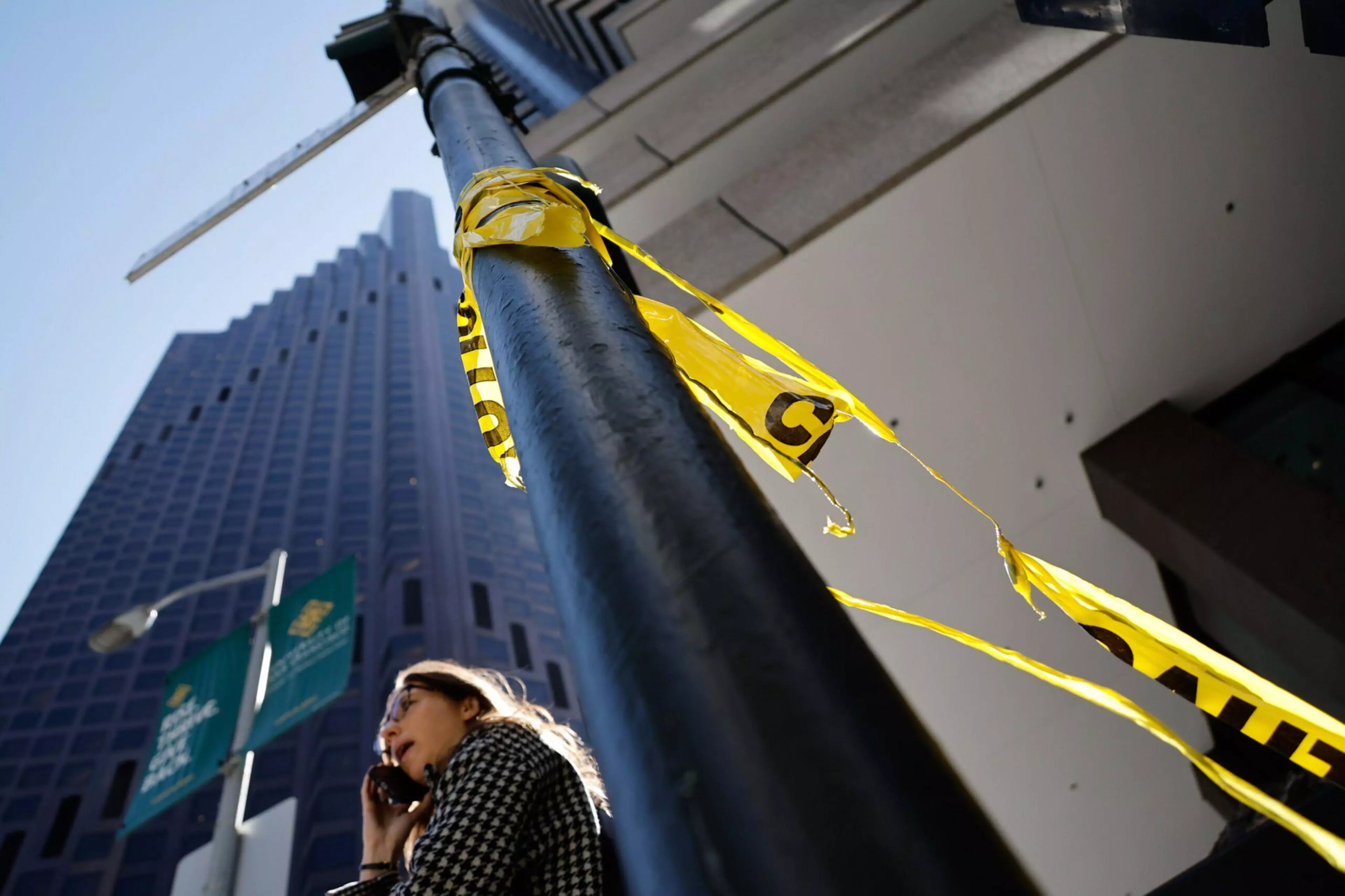
uring the pandemic, San Francisco’s downtown emptied, office and tourist traffic collapsed, property values plunged, and the local economy suffered. By 2019 the city had a vibrant office scene; by 2025 only about a third of office space remained occupied, and many corridors had to reinvent themselves. The San Francisco Centre Mall on Market Street sits vacant, a stark reminder of the downturn.
In 2025, signs of recovery emerged. Office vacancy rates began to fall for the first time since before COVID, buoyed by optimism around the AI boom and Mayor Daniel Lurie’s pro‑growth rhetoric. National investors returned, bidding on local assets, while tenants reduced remote work and competed for prime locations. Developers are also preparing new projects.
Three forces are driving the resurgence:
1. **Institutional capital returns.** Gregg Flynn, a local real‑estate magnate, partnered with New York’s DRA Advisors to acquire the Market Center at 555‑575 Market St. for $177 million, a 76 % discount to its 2019 price. The lower purchase price allows for upgrades to attract tenants. Blackstone teamed with DivcoWest to buy 300 Howard St. (formerly 199 Fremont) for $111.3 million, a move that now makes sense as AI firms like Anthropic lease nearby. Other investors—New York Life Real Estate, Dallas‑based Lincoln Properties, the New York State Teachers Retirement System, and a New York partnership that bought the city’s largest hotel portfolio—spun up $110 million+ in office assets. Blackstone also spent $130 million on the Four Seasons hotel. Rithm Capital acquired Paramount Group, a downtown landlord that had defaulted during the pandemic, signaling confidence in a rebound. CBRE reports 26 office sales in 2025 totaling $2.3 billion, the most significant recovery year yet.
2. **The AI boom.** Sierra Technologies, founded by Bret Taylor, signed a 41,000‑sq‑ft lease at 235 2nd St. and plans to double its footprint. The company also leased a larger space at 185 Berry St. in South Beach. Figma and other AI‑centric firms are expanding, and Cushman & Wakefield notes that more office space is leased than vacated in 2025, the first time since 2019. Vacancy rates now hover around 34 %, the lowest since the dot‑com bust, with Mission Bay’s rate below 9 %. Nearly half of leases over 50,000 sq‑ft this year are driven by AI and crypto firms, up from 33 % last year. Even legacy tech companies like Databricks and Snowflake are committing large footprints, signaling a shift back to office work.
3. **New development.** Despite a third of offices remaining empty, speculative construction is gaining momentum. Hines plans a new tallest building at 77 Beale St.; Related Companies targets a 41‑story tower at 530 Sansome St. The abandoned Oceanwide Center at 512 Mission St. and 50 First St. has been revived after Dan Kingsley’s group bought the debt. City incentives—fee rollbacks, permit reforms, potential transfer‑tax changes—alongside state density‑bonus laws have encouraged projects at Safeway sites and beyond. Financing remains tight, but rising rents and higher density could make large‑scale construction viable.
In sum, San Francisco’s office market is rebounding. Institutional investors are returning, AI firms are driving demand, and developers are poised to rebuild. While challenges remain, the city’s real‑estate landscape is set to transform in the coming years.