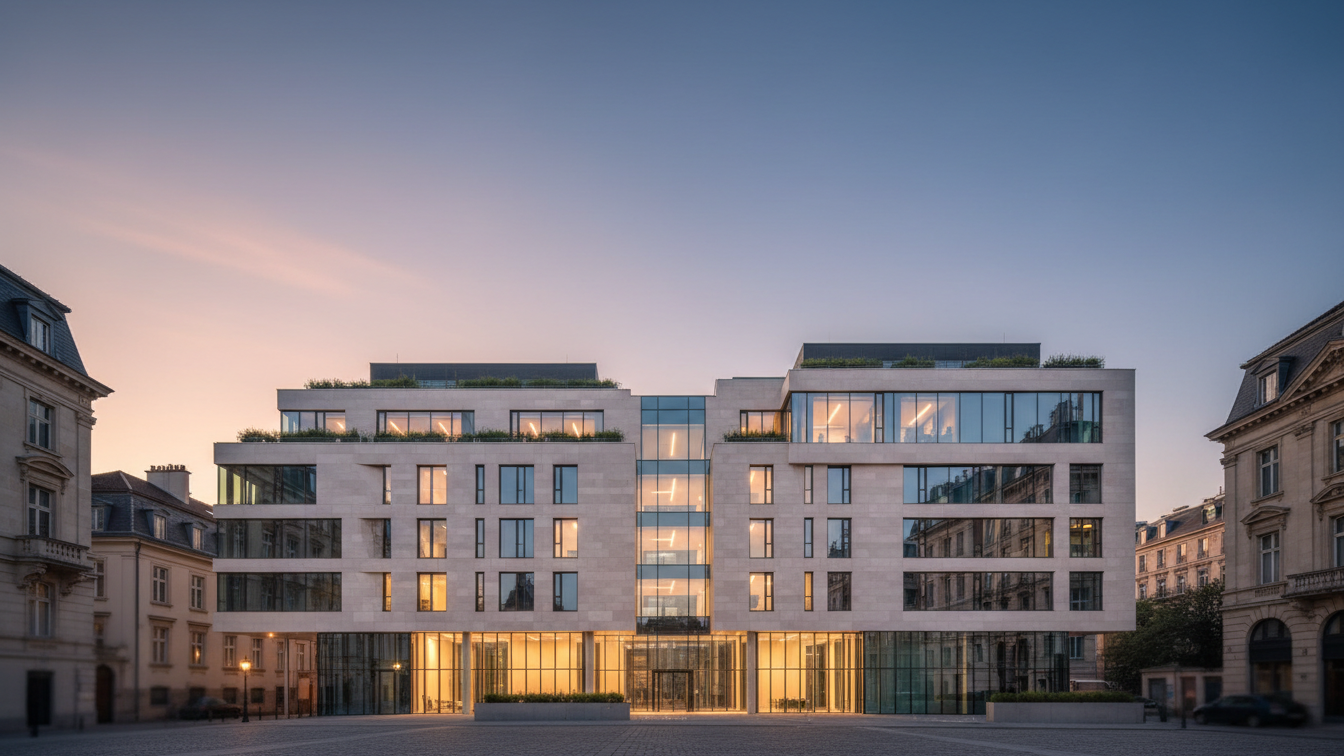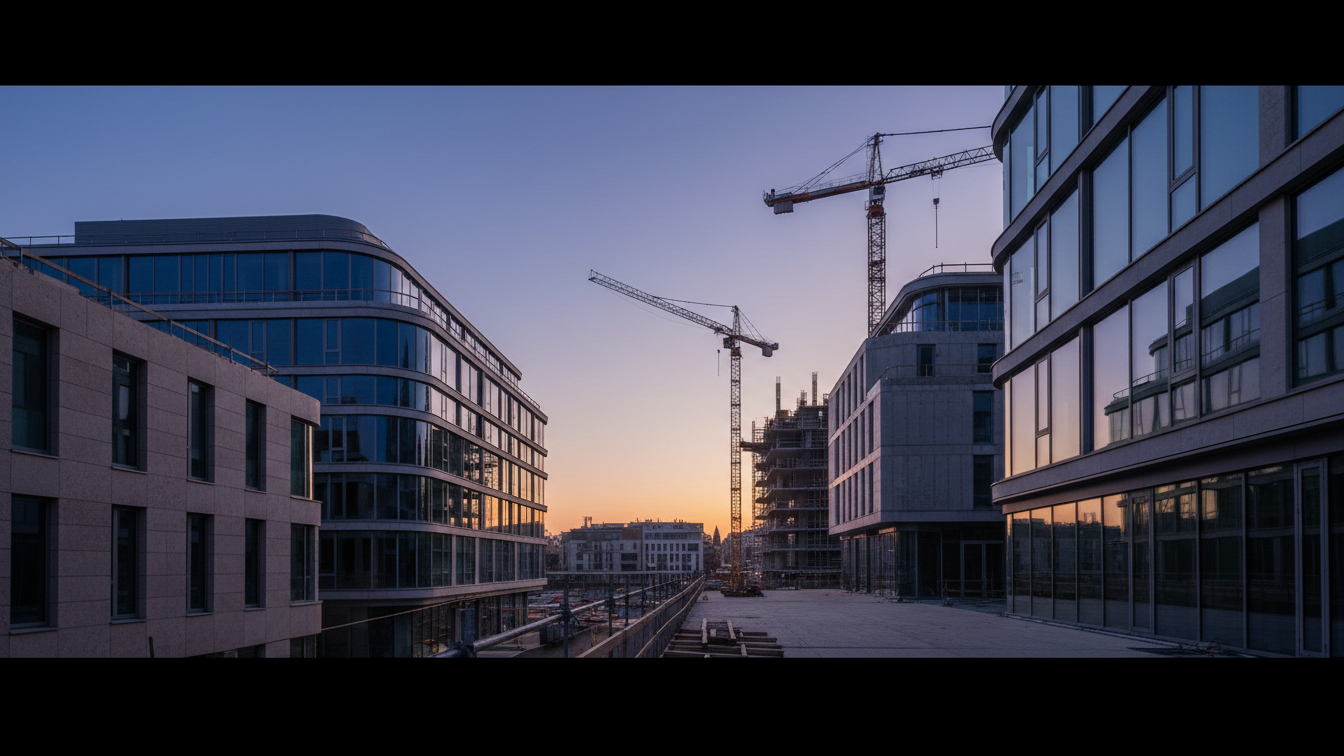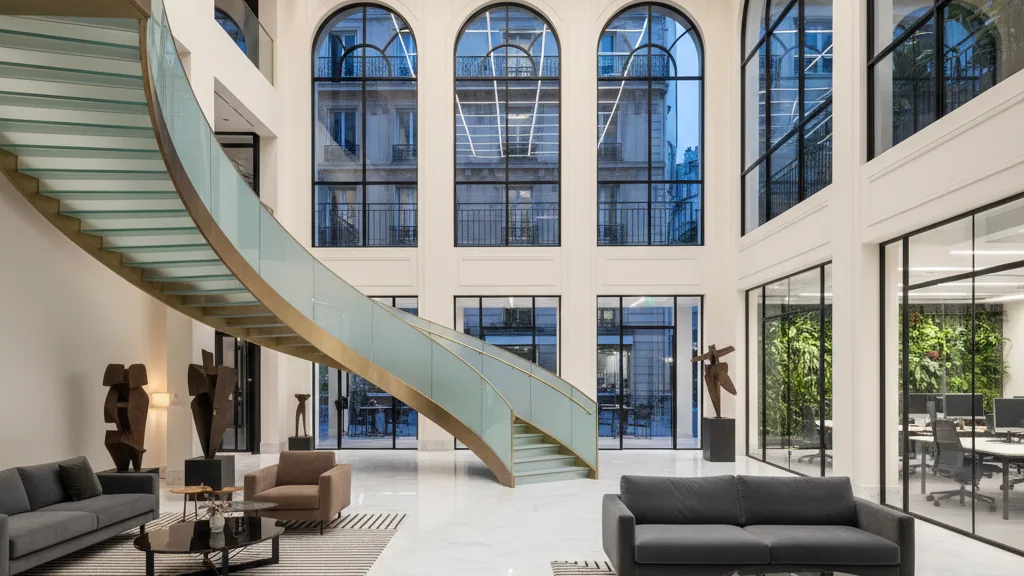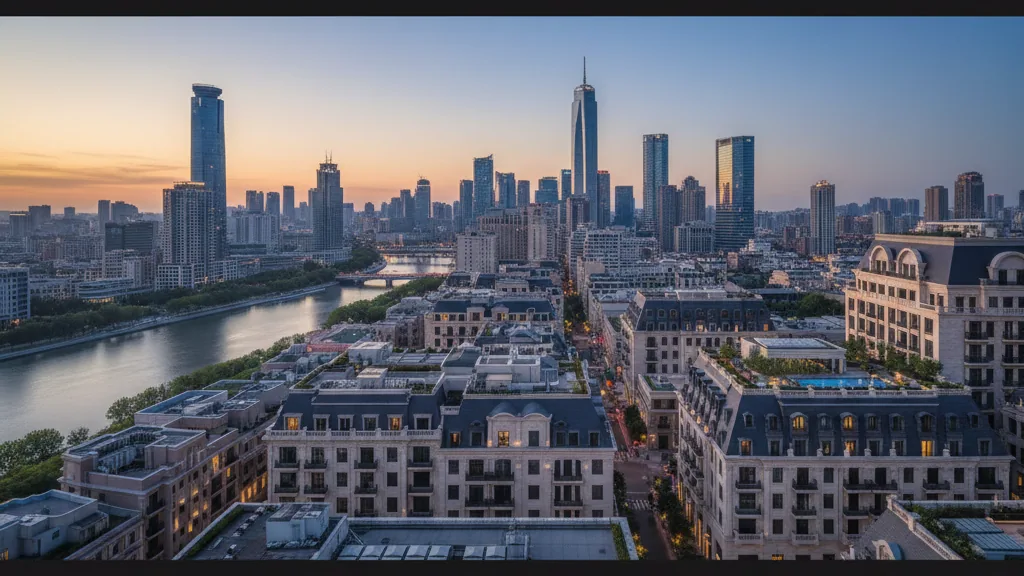
The real estate sector is facing a paradigm shift, induced by technological developments and stricter environmental regulations. Artificial intelligence, the progressive integration of intelligent building systems, and the overarching necessity of decarbonisation are redefining the framework conditions for future actions and investments in this sector. These elements should not be viewed as singular phenomena, but rather as integral components of a comprehensive evolution that significantly influences both operational processes and strategic decisions.
Adapting to these developments is considered indispensable for the competitiveness and future viability of real estate stakeholders. Companies that address these issues early and implement corresponding strategies will position themselves advantageously in a dynamically changing market environment. The implications extend across the entire life cycle of a property, from conception and planning through construction and management to realisation.
Technological Disruption and Sustainability Imperatives
Artificial intelligence holds the potential to significantly increase efficiency in various areas of the real estate industry. This includes process automation, optimisation of energy management in buildings, proactive maintenance, and more precise data analysis for investment decisions and market forecasts. The implementation of intelligent building systems, often referred to as smart buildings, enables improved resource utilisation and enhanced user comfort. These developments should not be viewed in isolation but must be understood and implemented in the context of global decarbonisation efforts.
The decarbonisation of the building stock is one of the greatest challenges for the real estate industry. This requires not only the reduction of emissions during the operation of existing properties but also the development and realisation of carbon-neutral new builds. The integration of renewable energies, the improvement of energy efficiency through innovative building materials and technology, and the application of circular economy principles are key approaches here. Achieving these goals will depend significantly on the willingness to innovate and the investment capacity of market players.
Outlook and Strategic Relevance
The aforementioned future topics not only represent technical or normative requirements but also shape the strategic agenda of the real estate industry. The ability to anticipate and proactively integrate these complex developments will determine the success of real estate companies in the coming years. This involves a critical examination of existing business models and a readiness for innovation.
- —Strategic implementation of AI-based solutions.
- —Expansion of intelligent building technologies for increased efficiency.
- —Focus on decarbonisation in all project phases.
- —Adaptation of investment strategies to sustainable criteria.
The discussion surrounding these thematic areas underscores the necessity of a holistic approach to not only accompany change but to actively shape it. Only through a consistent alignment with the principles of sustainability and technological innovation can the real estate industry further consolidate its role as a driving force for sustainable urban development and infrastructure.