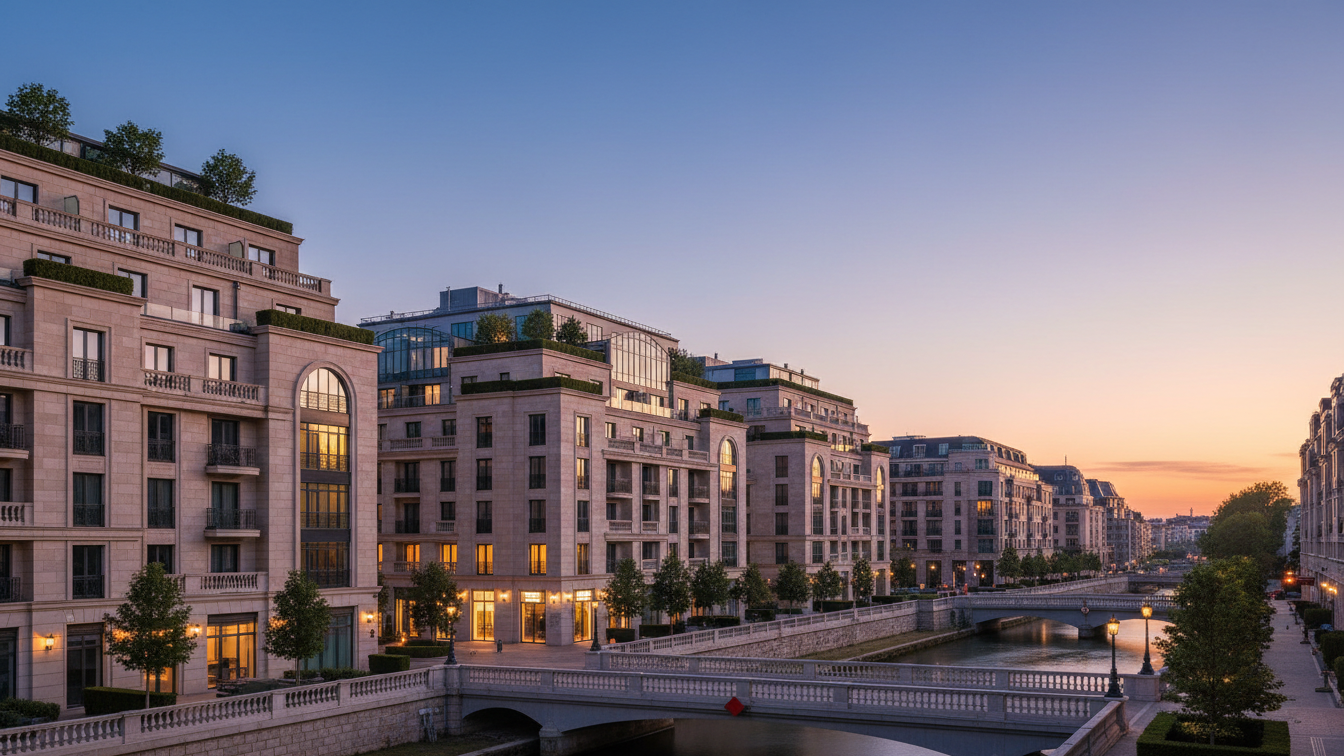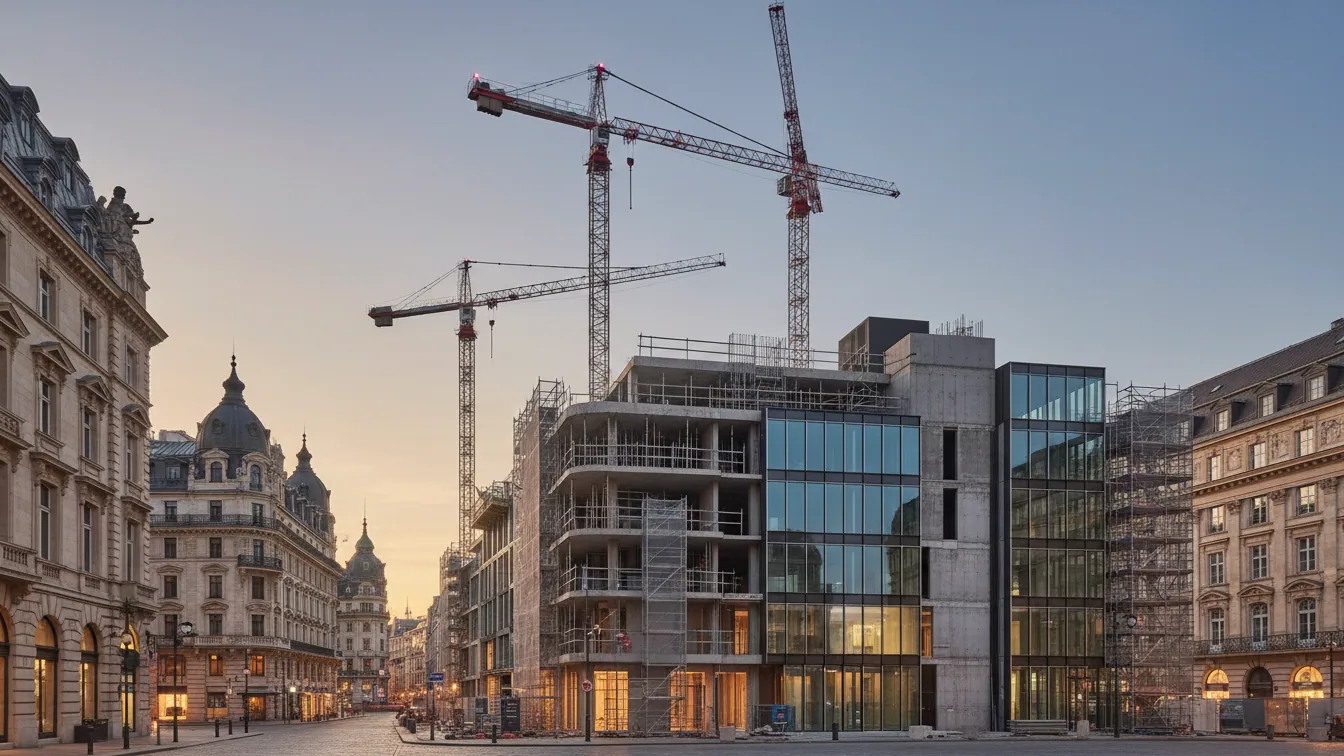
In his book 'The Imperfect City: Design, Serendipity, and the Real Life of Cities', published by Knopf, architecture critic and Pulitzer Prize winner Paul Goldberger examines the driving forces behind urban success. In his view, outstanding metropolises are defined by a delicate balance between public planning and free private-sector development. Rigid planning down to the last square metre leads to lifeless misdevelopments just as much as unchecked laissez-faire.
For Goldberger, urban quality arises precisely from the friction between conflicting interests. While urban planners often assume that more regulation always yields better results, the commercial property industry traditionally advocates for a minimum of restrictions. Neither side can produce a functioning city on its own. Only the constant negotiation between these positions creates the controlled chaos that keeps cities vibrant. Complete planning perfection ultimately means urban stagnation.
The Manhattan grid as the foundation of commercialisation
When examining the urban history of New York, Goldberger highlights two crucial turning points. The decision to build the Erie Canal connected the Midwest with the Atlantic and established New York's status as a dominant trading hub and growing financial centre, even before the advent of the railways. This economic boost coincided with the grid development plan of 1811.
The historic street grid divided the urban area up to 155th Street into uniform plots. This structure facilitated the swift trading of plots and accelerated the commodification of development land. At the same time, the grid proved remarkably adaptable, as it imposed virtually no structural restrictions on the interior of the blocks for over a century until the first zoning laws ultimately came into force.
Global capital flows and planning responsibility
Looking at the present day, Goldberger points to the impact of global capital flows on architecture. Many current major projects are funded by global investment capital that primarily calculates returns per square metre and rarely takes into account the distinct character of a neighbourhood or street.
However, the critic places the responsibility for this less on developers than on the relevant authorities. When economic forces demand increasingly voluminous building structures, urban planning must intervene with regulation and define clear limits. Without this regulatory counterweight, there is a risk of losing the urban balance that remains indispensable for the long-term viability of a metropolis.