For years, nearly every discussion about the multifamily market in New York City revolved around a single deficit: the housing stock. There is a shortage of housing, construction speed is inadequate, vacancy rates remain low, construction costs are high, and the regulatory environment increasingly complicates the creation of new housing.
However, another shortage is developing that investors and owners should closely monitor: a lack of purchasable multifamily properties. This explicitly concerns high-quality assets – free-market multifamily buildings with minimal regulatory risks.
This may seem strange after several years where buyers had the upper hand and many owners struggled to achieve their asking prices. But the market is changing. Capital is returning more quickly than high-quality inventory is coming onto the market, and the numbers are starting to bear this out. According to Alpha Realty’s second-quarter 2026 multifamily market report, New York City recorded 304 multifamily transactions in the three months up to 30th June. This represents an increase of 10.5 per cent compared to the first quarter and 2.4 per cent year-on-year.
This followed a strong first quarter with 275 transactions, which itself represented an increase of nearly 20 per cent year-on-year. In other words, despite increased borrowing costs, transaction velocity is continuously improving. Most multifamily transactions involved free-market properties and new constructions.
Preference for Quality and Scale
Notably, multifamily properties with 20 or more units accounted for 112 transactions in the second quarter, an increase of 24.4 per cent from the previous quarter and 8.7 per cent year-on-year. These assets represented a volume of US$872.2 million, equating to approximately 57 per cent of the total multifamily dollar volume in New York City this quarter. This followed an already strong first quarter, where properties with at least 20 units accounted for US$1.06 billion or about 61 per cent of the city-wide multifamily volume.
Looking at these two quarters together, the message is clear: buyers are seeking quality and scale, and they are actively competing for it. Manhattan illustrates this trend even more clearly. In the second quarter, 91 multifamily properties changed hands for US$824.6 million. The number of transactions increased by 62.5 per cent year-on-year, while the dollar volume rose by 96.1 per cent. Transactions involving buildings of 20 or more units almost doubled year-on-year from 22 to 43, with the dollar volume in this segment jumping by 91.1 per cent to nearly US$500 million. This is not speculative capital merely testing the market; rather, it demonstrates conviction.
Market Changes and Investment Strategies
In recent years, investors waited for changes: for falling interest rates, seller capitulation, clearer regulations, or a combination of all. However, markets rarely signal the exact bottom. Buyers ultimately adjust their underwriting standards, lenders their financing terms, and sellers their expectations. This process has already taken place. The question is no longer whether capital for multifamily properties exists in New York City, but whether there will be enough attractive inventory to satisfy this capital.
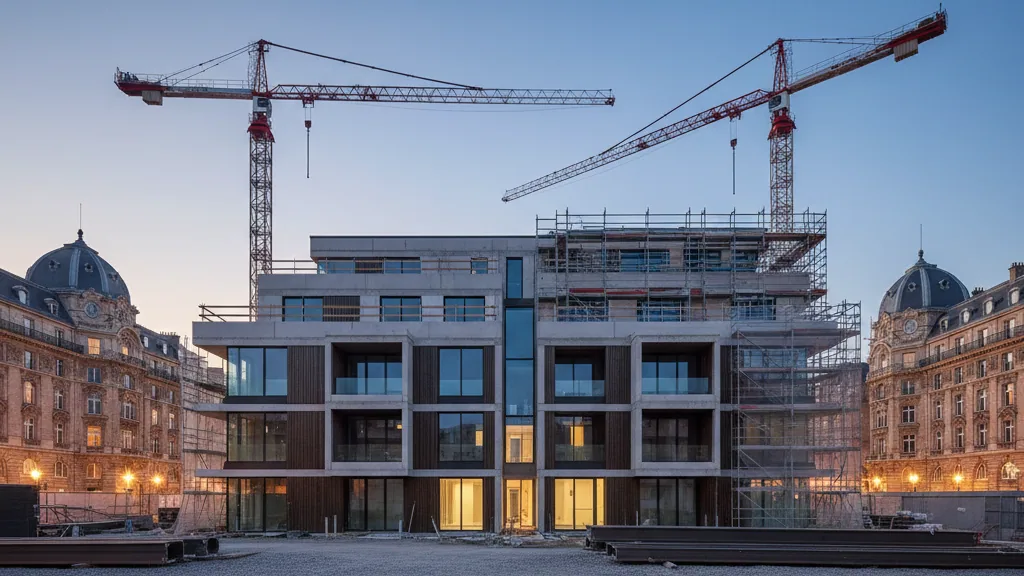
New construction projects will not solve this problem in the short term. The expiry of the 421-a programme has disrupted the development pipeline, while the successor programme 485-x is only slowly leading to a significant new supply. Even currently profitable projects will take years to complete. At the same time, the buildings most sought after by investors – well-located, free-market or lightly regulated properties of appropriate scale – cannot be created overnight. This creates an unusual situation. If transaction activity continues to improve while quality inventory remains limited, buyers could find themselves in a competition before they fully realise the market shift. This could have a stronger impact on pricing than a further Fed rate cut of 25 or 50 basis points.
The selectivity of this competition is already evident. An example of this is the recent transaction of 525 Union Avenue, a 45-unit multifamily building in Williamsburg, Brooklyn, at a 4.9 per cent cap rate – a strong result in the current market. It was a well-located, free-market multifamily building that immediately attracted multiple bidders. Qualified capital, both private and institutional, actively pursued this property.
- —Brooklyn recorded 116 transactions in the second quarter, making it the most active borough, with the average transaction size decreasing to US$3.8 million.
- —Queens recorded only 34 transactions with a volume of US$70 million.
- —The Bronx, however, recovered dramatically from 23 in the first quarter to 63 transactions, 45 of which involved buildings with 20 or more units.
Capital is not blindly flowing into every opportunity. It is concentrating on markets where the fundamentals, scale, and long-term economic viability appear sound. New York has always been a supply-constrained market. Previously, this mostly referred to apartments and rents. Increasingly, this discussion will also extend to investment opportunities. The crucial point is simple: the next phase of the New York multifamily market's recovery might not be defined by a lack of capital, but by too much capital chasing too few good buildings.