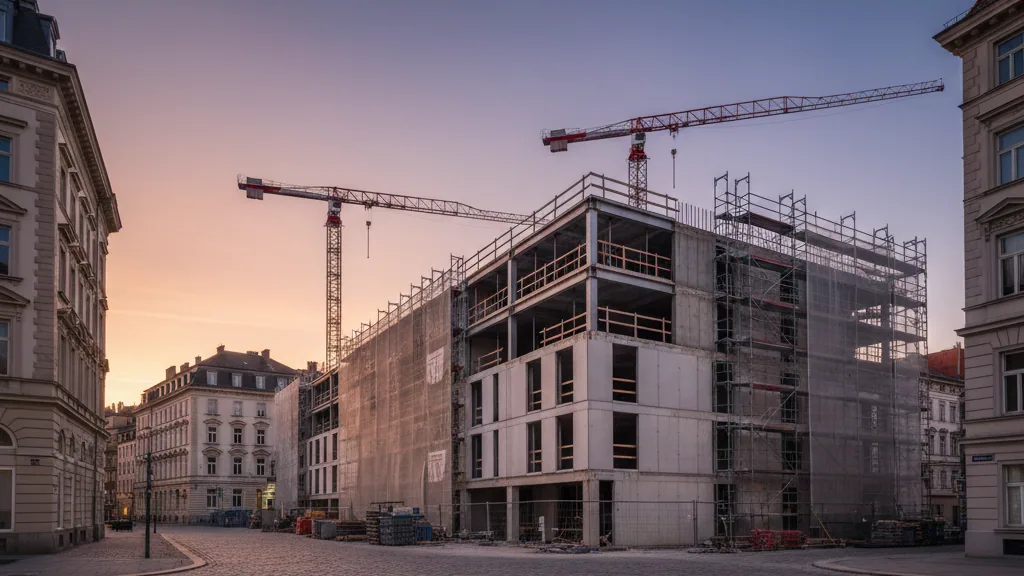
BASF Agricultural Solutions is investing a low double-digit million-euro amount in the construction of a Climate Centre at the Limburgerhof agricultural centre. This construction measure is designed to significantly strengthen the company's research and regulatory expertise and to support the scientific data collection required for the global registration of plant protection products.
Construction of the centre has already begun. Completion of the facility is projected for the first half of 2027. The integrated climate chambers will enable precise control of environmental conditions for scientific studies. This investment represents a strategic response to stricter regulatory requirements and the increasing demand for GLP-compliant (Good Laboratory Practice) ecotoxicological studies.
Strategic Importance and Technical Equipment
Melanie Bausen-Wiens, a member of the Management Board of BASF Agricultural Solutions and responsible for technology, describes the new Climate Centre as a strategic investment. This investment combines first-class research with regulatory strength, enabling the company to offer innovative solutions to farmers more efficiently and in line with evolving regulatory requirements. The centre is therefore a building block in securing competitiveness.
The Climate Centre will provide highly controlled conditions for ecotoxicological studies. The precise control of temperature, humidity and light ensures the conduct of reproducible and scientifically sound studies. This improves predictability, the quality of the data generated and the capacities for a growing number of necessary studies.
- —Precisely controlled environmental conditions in climate chambers.
- —Ability to breed insects for insecticide research and early screening programmes.
- —Improvement of data quality and study capacities for ecotoxicological testing.
- —Strengthening the company's research and regulatory expertise.
Some of the climate chambers are specifically designed for insecticide research. The controlled environmental conditions allow for the breeding of insects for early screening and research programmes, which promotes the development of future innovations in plant protection. This expansion of the infrastructure confirms BASF Agricultural Solutions' long-term commitment to the Limburgerhof site. As one of the significant global innovation centres, the expansion is intended to further increase scientific capacities and competitiveness, as well as enhance the appeal of the agricultural centre as a research and working environment.