The Federal Statistical Office (Destatis) has published the building permit figures for the first three quarters of 2026. According to the data, 190,200 dwellings were approved nationwide during this period, representing an increase of 8.4 per cent compared to the same period of the previous year. Although the survey points to a slight upward movement, the real estate industry considers that it does not yet mark a sustainable turnaround.
The German Real Estate Association IVD regards the development as a positive signal, but at the same time urges a sober assessment. IVD President Dirk Wohltorf explains that whilst every additional permit is good news, it does not automatically alleviate the tense situation for housing seekers. Ultimately, what matters is not the mere number of approval notices issued, but how many construction projects are actually completed in the end.
Obstacles between approval and completion
The association identifies persistently high construction costs, excessive regulations and a lack of planning certainty as the primary obstacles to the actual start of construction. In addition, there are location-policy debates, such as the discussion surrounding property expropriations in Berlin. Wohltorf also points out that the projects approved now were applied for before interest rate increases and prior to the shifted debate on business locations. For this reason, it must be assumed that many of these projects will ultimately not be implemented.
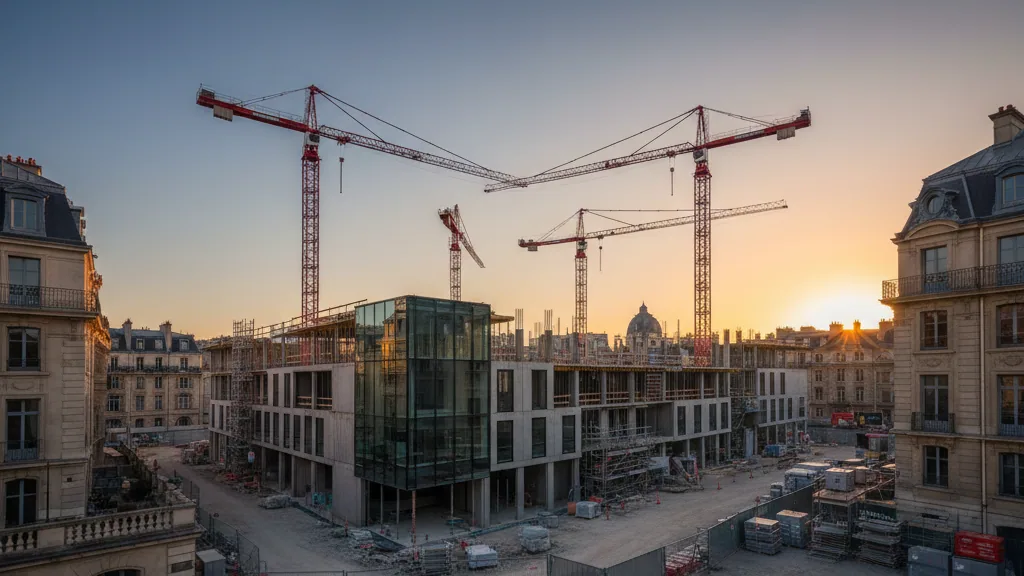
The widening discrepancy between planning permissions and building delivery was already apparent in the previous year: in 2025, permits for around 35,700 dwellings lapsed, the highest figure since 2002. The association clarifies that the crisis in residential construction cannot be overcome with administrative notices, but solely with homes that are ready for occupancy.
Demands for reliable framework conditions
To make construction economically viable again, the association is calling on politicians to deliver tangible measures rather than piecemeal steps. In order to sustainably bolster the housing supply, the IVD identifies four main areas of action:
- —The practical implementation of the accelerated planning scheme at municipal level.
- —Reliable and attractively structured subsidies for new builds.
- —The swift introduction of Building Type E as a new baseline standard for cost-effective construction.
- —The consistent implementation of the announced pact for home ownership.
Those who want to create more housing must provide targeted relief for private developers and investors and offer them reliable prospects. Rising permit numbers may be a good start, but the real success of housing policy is measured only by the actual handover of keys to completed homes.