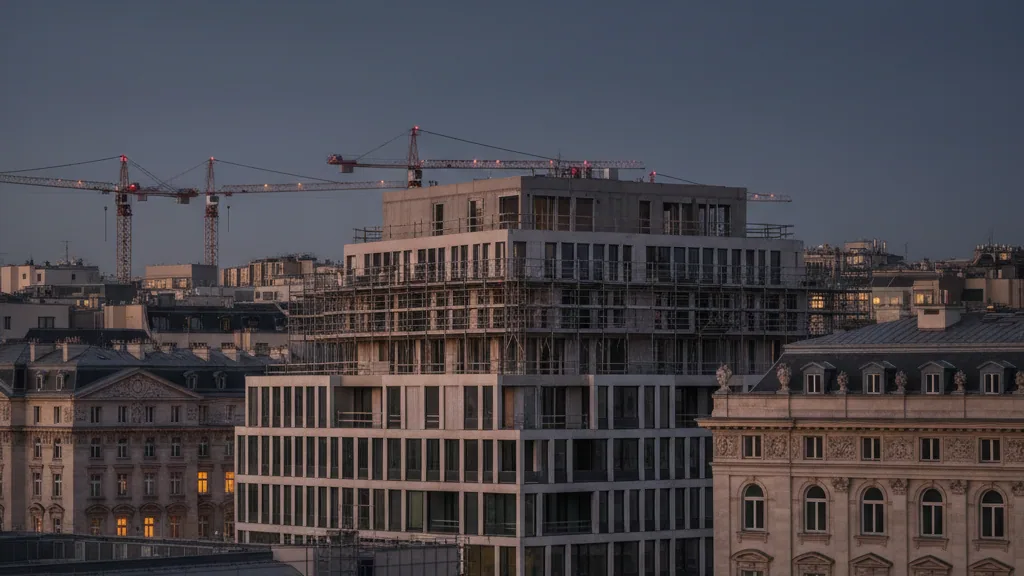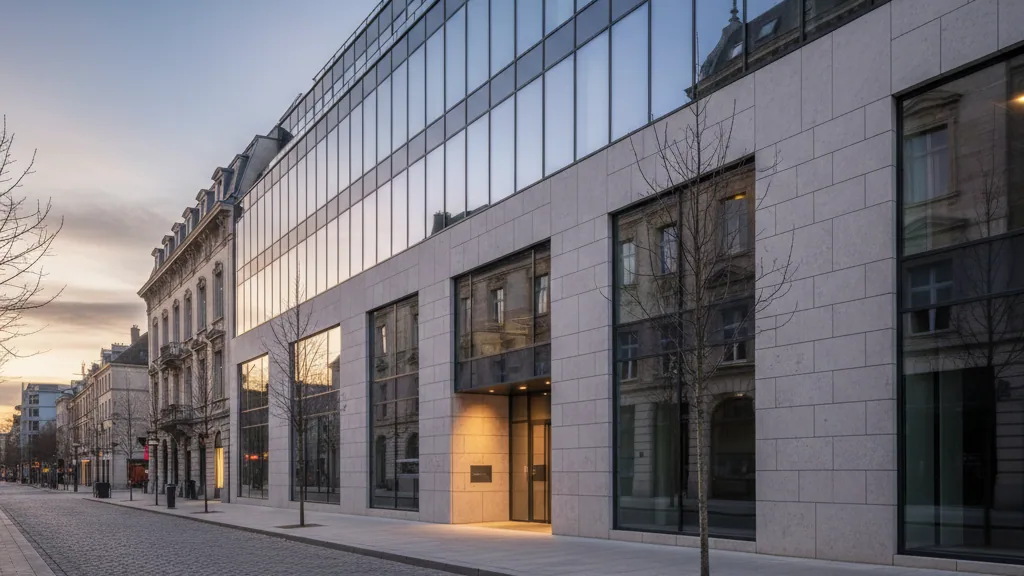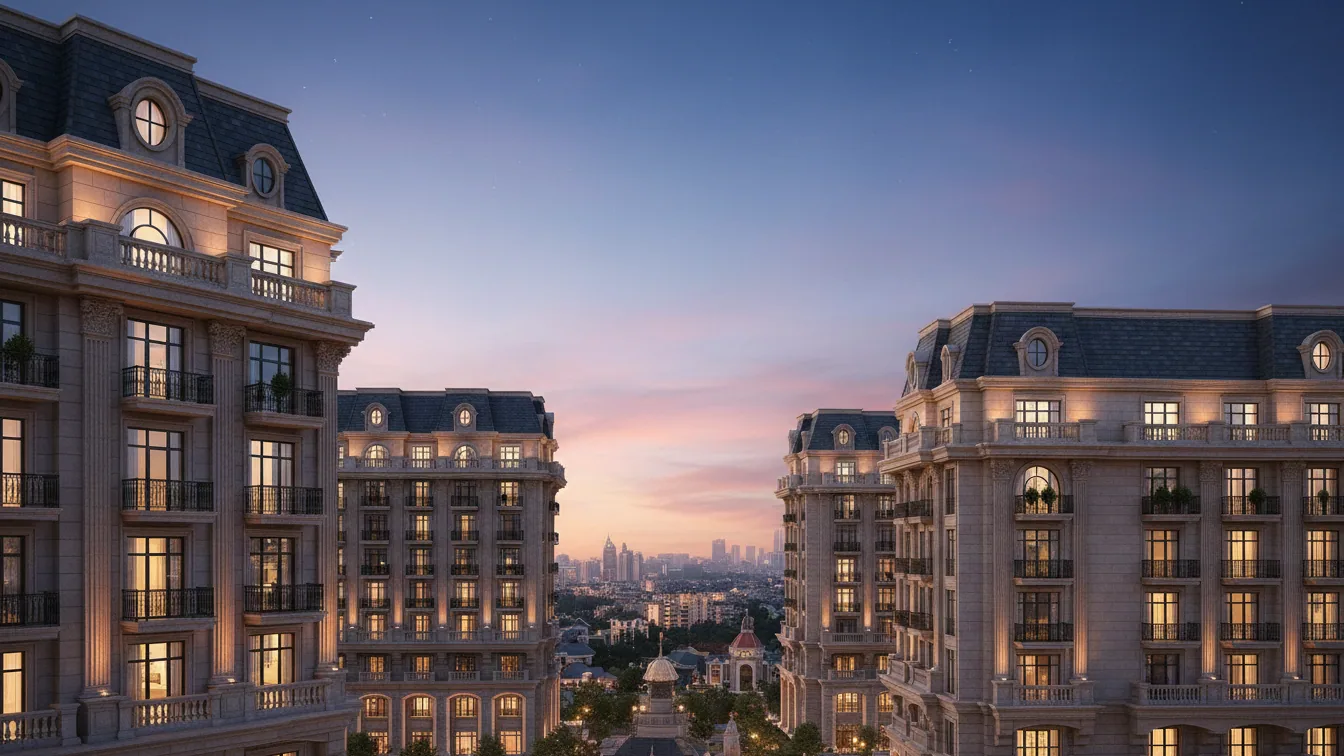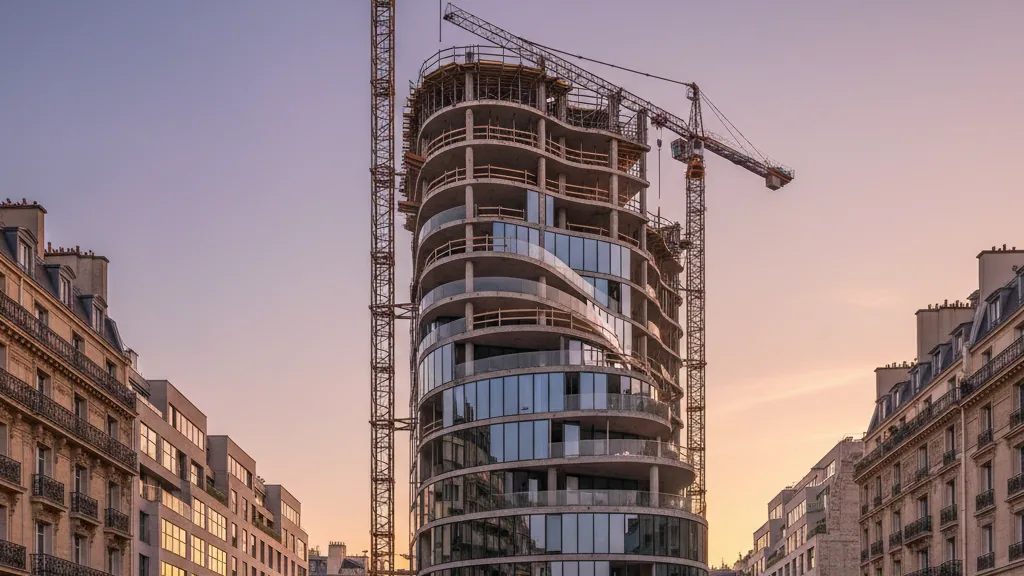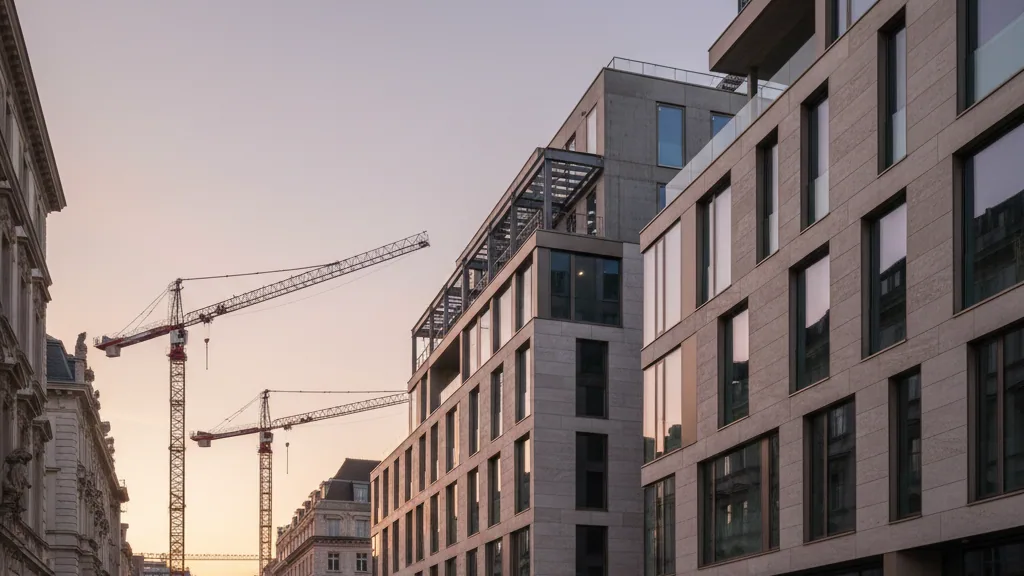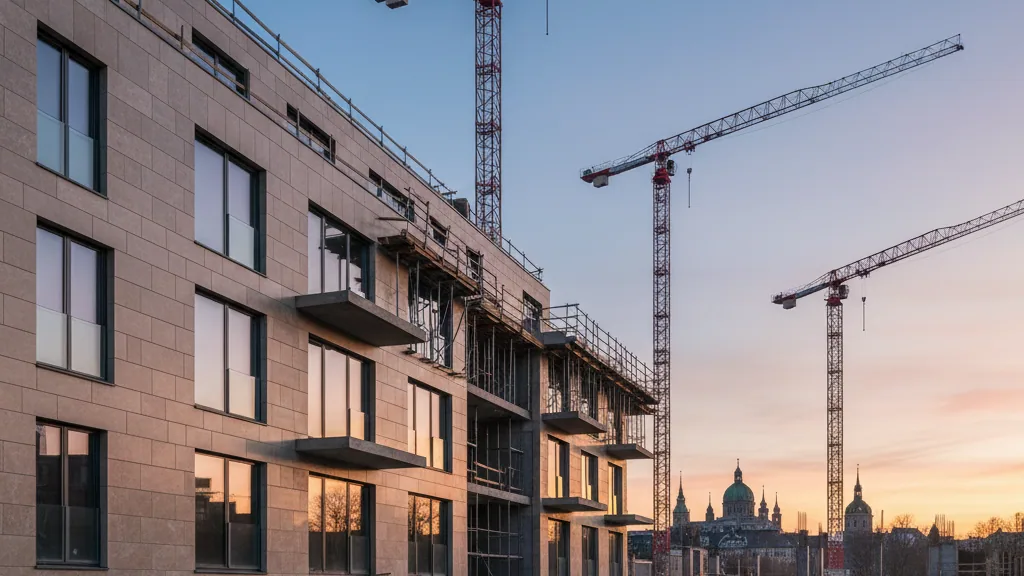
Deutsche Investment (DI) has commenced construction on a new-build residential project in Berlin, which aims to enhance value creation within an existing real estate portfolio in Berlin-Mitte. On a previously partially sealed and underutilised plot, located in a second inner courtyard, 54 new residential units will be realised through infill development. The gross floor area of this undertaking amounts to approximately 5,640 square metres.
This undertaking marks a strategically significant step for Deutsche Investment. It is the first time the company has implemented a new-build residential project in Germany as part of a direct mandate for an international institutional investor. The project demonstrates Deutsche Investment's capability to manage real estate projects from the development phase through to long-term management. Given the inner-city location and the limited available space for construction logistics, special planning and construction methods were required.
Hybrid Serial Construction Method as Project Solution
The specific challenge of this project lies in the local conditions of a second inner courtyard, which entails limited construction site and transport areas. While Deutsche Investment has already gained experience with the successful implementation of urban infill development projects using timber modular construction, this method proved less suitable for the present location. As an alternative, a project-specific hybrid serial construction method was developed. This combines the advantages of industrial prefabrication with the requirements of an inner-city new build.
Prefabricated bathroom and installation modules, as well as wall, facade, and balcony elements, will be used. These are manufactured under controlled production conditions and subsequently assembled on the construction site. This approach leads to a shortening of processes on the construction site and simultaneously reduces transport and site traffic. Industrial manufacturing is also intended to increase execution quality and enhance adherence to schedules and cost certainty. Cigdem Yildirim Klippert, authorised signatory and Director of Project Development at Deutsche Investment Kapitalverwaltung AG, explained that inner-city infill development projects require intelligent solutions, as the structural and construction logistics conditions vary greatly depending on the location. The chosen construction method is the result of this project-specific analysis.
Resource Efficiency and Long-Term Value Retention
The planning of the project focused on an energy-efficient building design and a high degree of prefabrication. The prefabrication of essential components shifts various work steps into controlled production environments, which promotes standardised execution and efficient organisation of material and logistics processes on the construction site. The building's features include a photovoltaic system, digital building infrastructure, additional covered bicycle parking spaces, and a bicycle repair station. The cantilevered balconies serve as passive summer sun protection.
Cigdem Yildirim Klippert emphasised that, in addition to a building's energy efficiency, resource-saving construction processes, long-term utility quality, and economic stability are also crucial. With the high degree of prefabrication and the energy concept, the foundation for a future-proof residential building is being laid. The project demonstrates Deutsche Investment's competence in implementing demanding inner-city project developments economically and with high structural quality, even under complex construction logistics conditions. It also meets institutional investors' requirements for planning certainty and professional risk management. Ms Klippert noted that this project marks a milestone in several respects: it creates urgently needed housing through infill development and, for the first time in Germany, realises a new-build residential project as part of a direct mandate for an international institutional investor. This confirms confidence in their ability to develop even challenging locations economically and with added value.