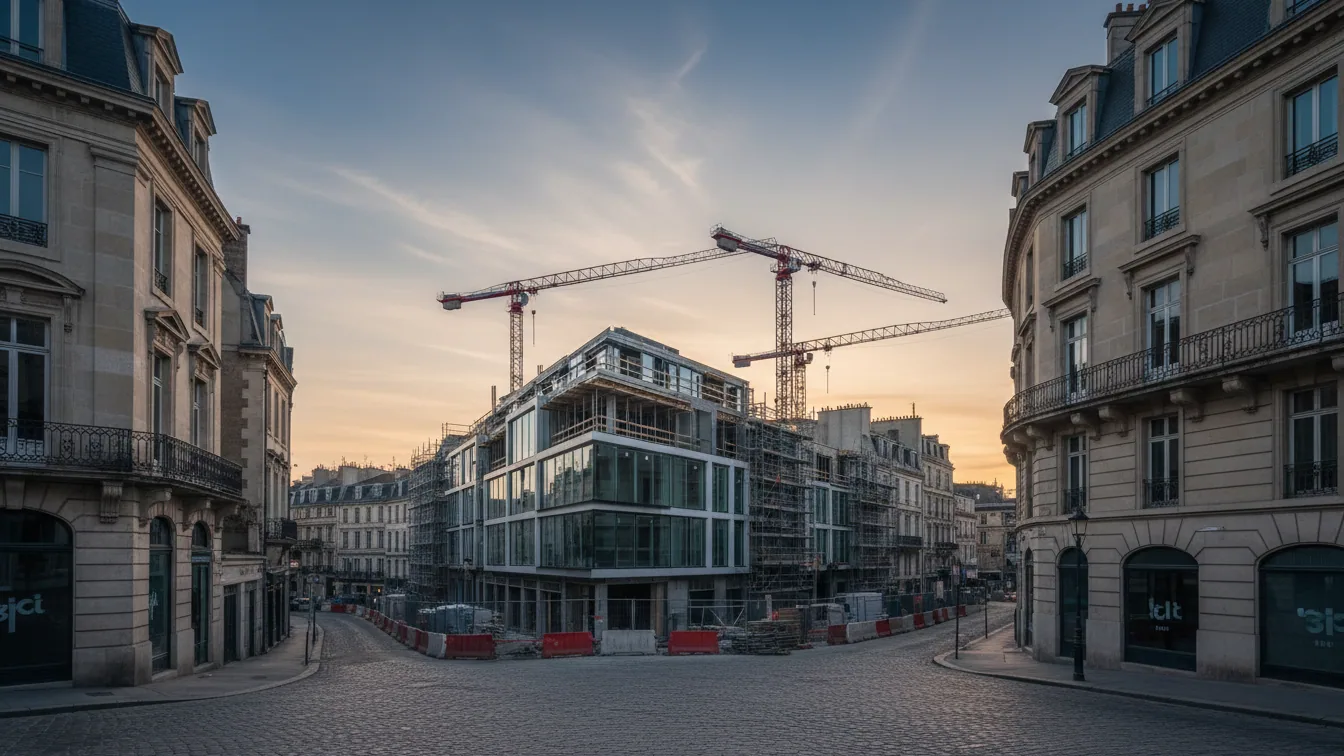
The Federal Chamber of Architects (BAK) has welcomed the heat protection action plan recently presented by five federal ministries – Environment, Finance, Labour and Social Affairs, Building, and Development. The four-and-a-half-page document outlines, among other things, the necessity of a national heat action plan to protect public health, adjustments to building planning law, and improved protective measures for employees against extreme heat. The BAK regards this initiative as long overdue, but at the same time emphasises the indispensable prerequisite for successful climate adaptation: the consistent involvement of planners from the very beginning.
Andrea Gebhard, President of the BAK, described the federal government's systematic engagement with the issue of heat protection as an important signal, urgently needed after the past summer. She underlined that an action plan only becomes effective when cities and districts are actually replanned, built, and greened. For this, the expertise of architects of all disciplines and urban planners is essential from the concept phase, not just at the end of a project. The BAK particularly highlights the action plan's intention to examine concrete changes in building planning law.
Planning Dimensions of Heat Protection
According to the BAK, heat protection extends beyond new construction and significantly affects existing buildings and public spaces. Concrete measures include shading facades and public areas, implementing green roofs and facades, de-sealing courtyards and street spaces, and cooling districts through water features, tree populations, and ventilated open spaces. These tasks are planning-intensive and require professional skill, time, and reliable legal frameworks.
- —Planning solutions require appropriate urban development funding for high-quality public spaces.
- —Renaturation of landscapes and safeguarding water cycles are essential for climate protection.
- —Heat protection measures require reliable and long-term funding at the municipal level.
Gebhard highlighted the necessity of suitable urban development funding to create green spaces that serve for cooling and recreation. This also includes providing more open-air and natural swimming pools. In parallel, the renaturation of landscapes as compensatory areas for climate protection and the safeguarding of water cycles are required. The BAK points out that heat protection measures have primarily been organised at the municipal level so far, and their implementation largely depends on local personnel and financial capacities. A national framework could create more reliability here, provided it leads not to additional bureaucracy, but to more efficient and clearer procedures.
Climate Adaptation as Building Culture and a National Task
The BAK refers to its own proposals for planning acceleration and serial refurbishment, which demonstrate how climate adaptation in existing buildings can be realised legally soundly and swiftly, without compromising safety standards. Long-term funding at the municipal level is essential for this, regardless of the specific planning solution. Ms Gebhard succinctly stated that climate adaptation is primarily about building culture: "If we want to make cities heat-resilient, we must think design, function, and climate protection together – district by district, building by building." She emphasised that the fact that five ministries had to present such a plan underlines the urgency of the issue and concerns the responsibility of all cabinet members.
The Federal Chamber of Architects is available to the federal government and the ministries involved as a point of contact for the further development of the heat action plan and the announced changes in building planning law. In July 2026, the BAK, together with the alliance "Together for Water-Conscious Urban Development," had already called for climate adaptation to be enshrined as a joint task according to Article 91a of the Basic Law. Such an enshrinement would enable the federal government, federal states, and municipalities to permanently and jointly assume responsibility and implement climate adaptation legally secured, strategically coordinated, and long-term funded.