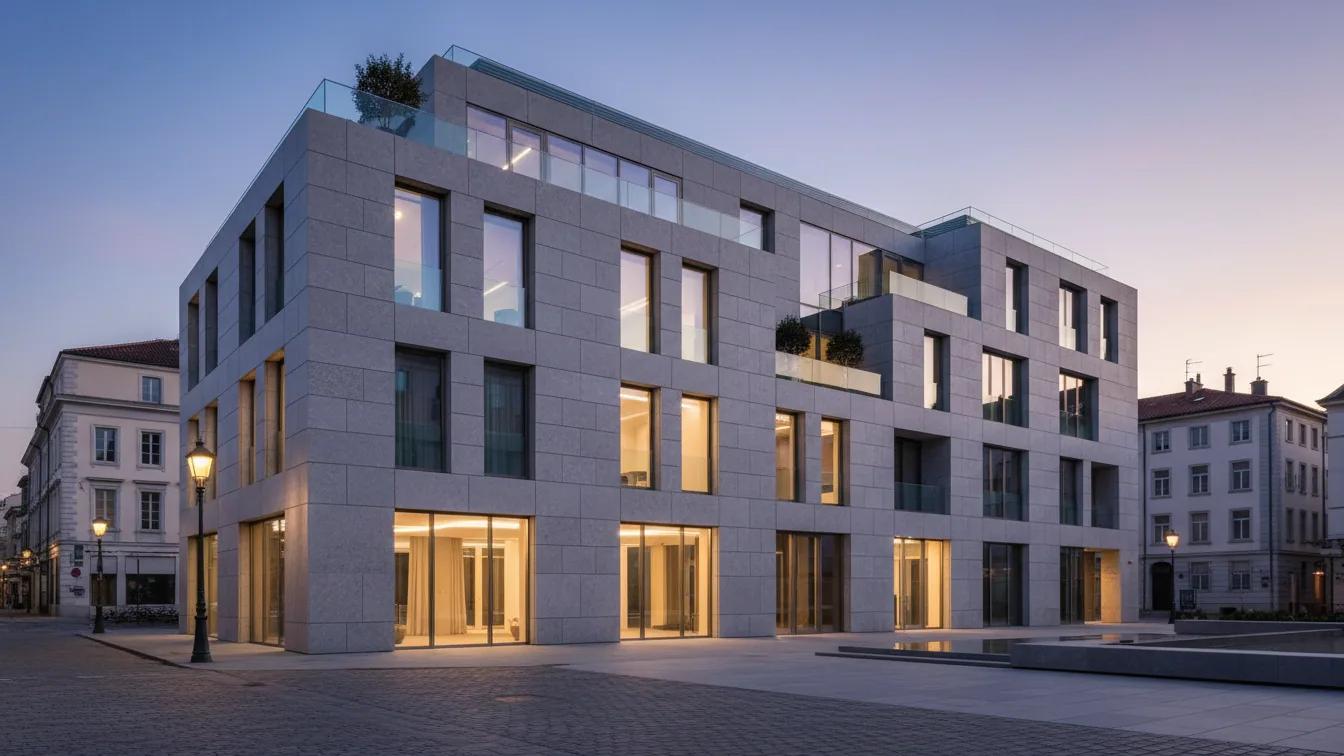
Housing construction in the federal state of Hesse is currently experiencing growing pressure. This stems from geopolitical uncertainties, a scarcity of resources, and continuously rising energy costs. These factors significantly hinder the realisation of new housing construction projects and pose a challenge for the construction industry.
In light of this development, calls for a significant reduction in regulatory requirements are coming into focus. It is argued that a simplification of building regulations and an acceleration of approval procedures are essential to revitalise construction activity. Simultaneously, the necessity of reliable and long-term funding is emphasised to stabilise investments in housing construction and ensure planning certainty for all stakeholders.
Framework Conditions for Housing Construction
The adaptation of framework conditions is a central concern for the industry. This includes not only building regulations but also the design of state funding programmes. A continuous review and optimisation of these instruments are considered necessary to adequately respond to dynamic market conditions and increased construction costs. The aim is to make the creation of new housing more efficient and to relieve the housing market.
- —Significant reduction of regulatory requirements, particularly in building regulations.
- —Acceleration and simplification of approval procedures.
- —Implementation of reliable and long-term housing construction funding.
- —Adaptation of existing state funding programmes to the current cost situation.
Perspectives and Expectations of Stakeholders
Market participants in Hessian housing construction emphasise the urgency of comprehensive political measures. The current challenges require precise analysis and the implementation of targeted strategies. Excessive regulatory density and insufficient planning certainty complicate project calculation and dampen investment willingness. The industry expects that through concerted action by politics and administration, the framework conditions will be adjusted so that urgently needed housing can be created even under current economic conditions. Only in this way can supply bottlenecks in the housing market be mitigated in the medium term.
The discussion about a more effective design of housing construction in Hesse is of great importance for the future development of the federal state. It is crucial to find pragmatic solutions that meet both sustainability requirements and economic realities. The ability to provide sufficient affordable housing significantly influences social stability and the attractiveness of the region as an economic hub.