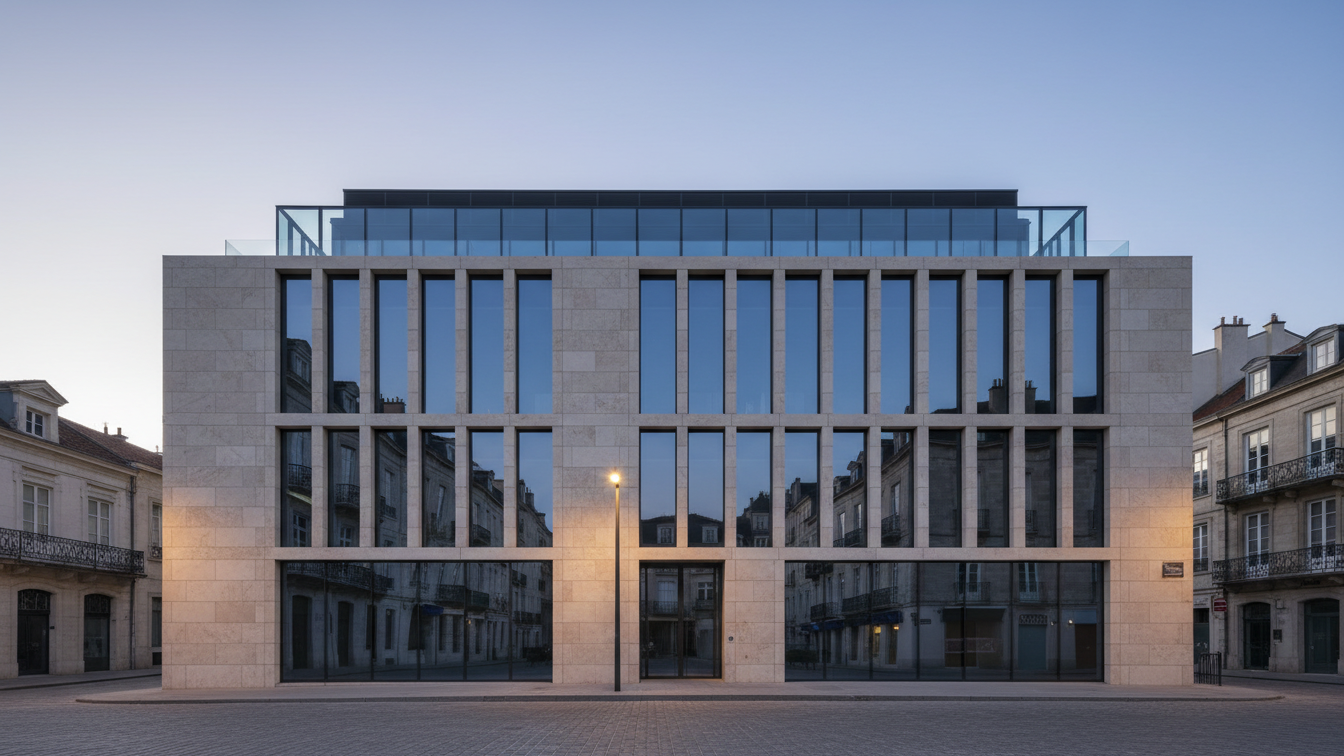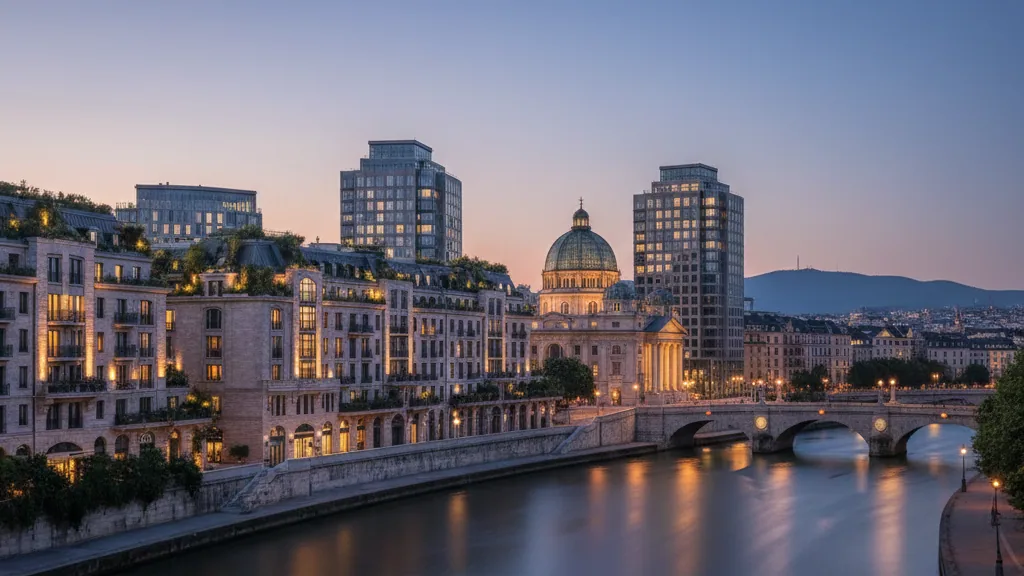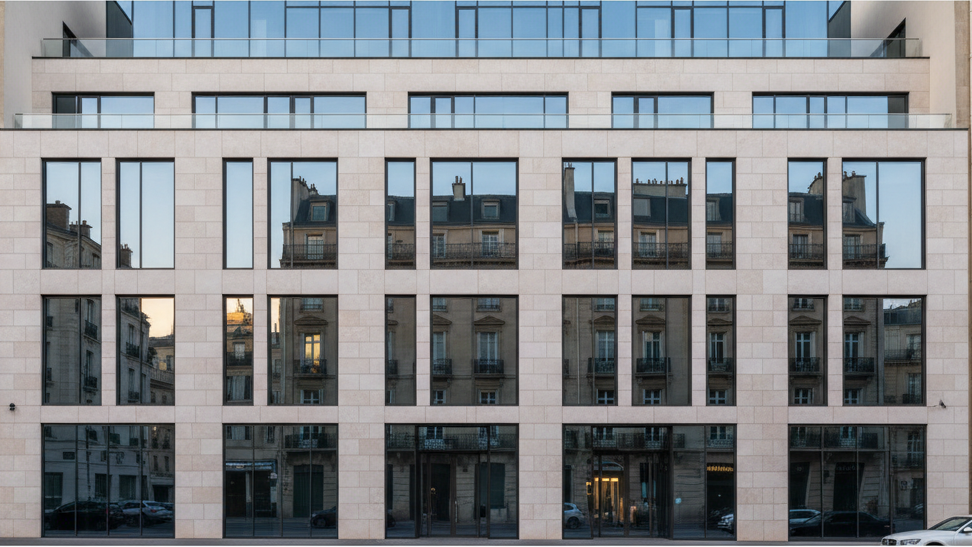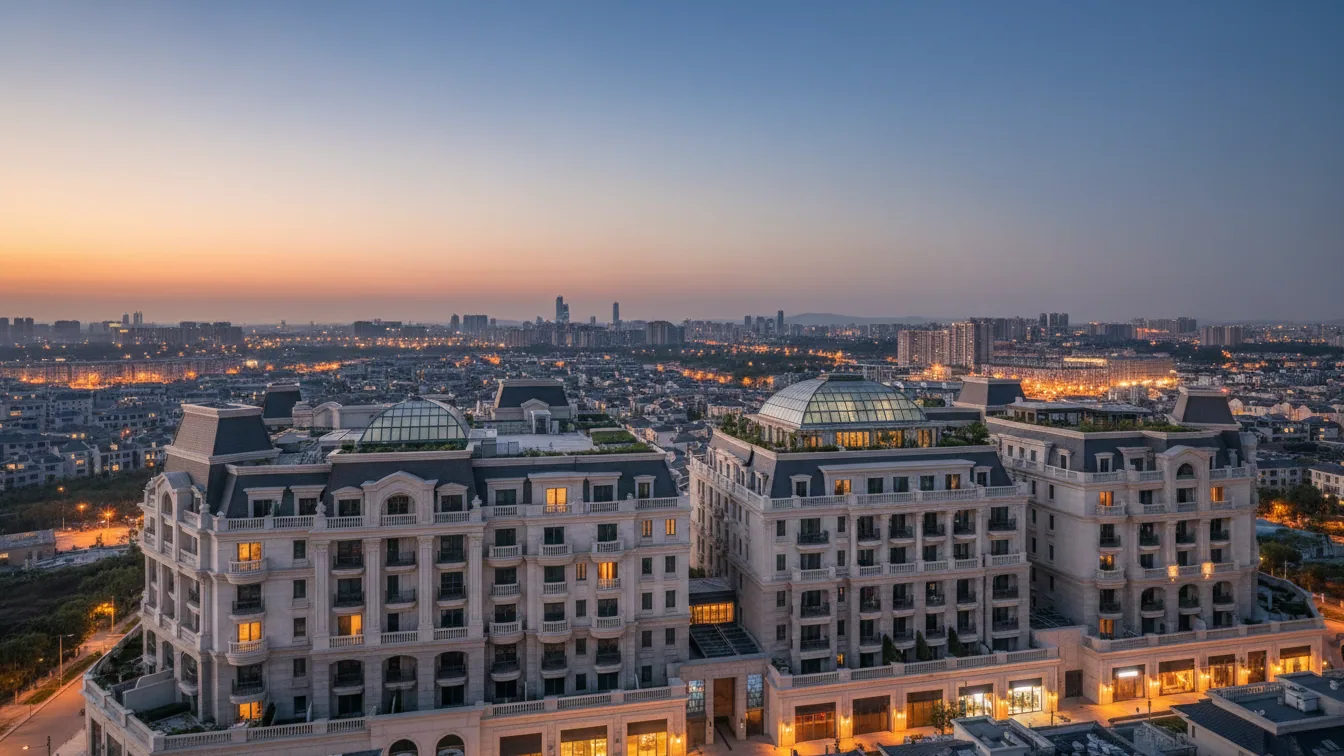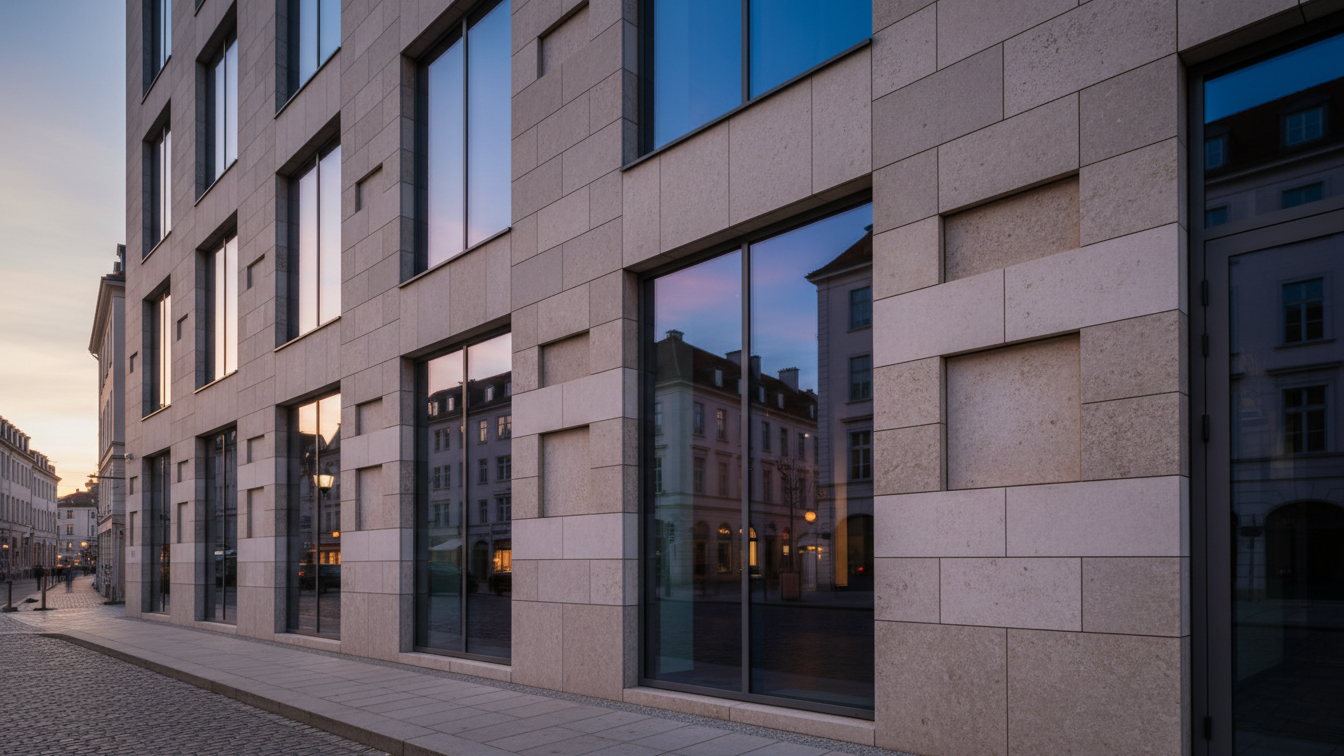
Various innovations are leading to a significant advancement in concrete as a building material, making it more climate-friendly and more efficient. This is according to research by DIP partner Aengevelt Immobilien. After concrete had come under criticism due to its high CO2 emissions and timber construction increasingly moved into focus, Aengevelt believes that current technical progress could lead to a rehabilitation of the material.
To date, concrete production is responsible for 8% of global CO2 emissions. This results from the process-related release of carbon dioxide during the burning of limestone at 1450 °C, where calcium carbonate decomposes into calcium oxide and carbon dioxide. Timber construction has gained popularity in this context, both in residential and commercial building, particularly in the construction of production and storage halls. An example is the recently completed Timber Pioneer in Frankfurt am Main, an eight-storey office building with 14,000 m² of office space constructed in a timber-hybrid method.
Significant technological advancements
In the future, the use of concrete will be accompanied by massively reduced CO2 emissions. ETH Zurich has developed a complex technology that not only prevents CO2 emissions from being released, but even binds 150 kg of CO2 from the air per tonne of cement. Although this so-called calcium looping has been experimentally tested, it is not yet sufficiently economical due to its high electricity demand.
Another approach is being pursued by cement manufacturer Holcim at its plant in Höver near Hanover. Here, membrane separation of CO2 from the exhaust gas is used, which can reduce CO2 emissions by up to 90%. This technology was developed in collaboration with the Helmholtz-Zentrum Hereon and Cool Planet Technologies.
Dmat, a startup that emerged from the Massachusetts Institute of Technology (MIT), is pursuing a different path. Drawing inspiration from ancient Roman concrete, which boasts a durability of 2,000 years, Dmat developed a concrete additive. This enables small cracks to self-heal through the recrystallisation of calcium compounds. The self-healing concrete is expected to extend the lifespan of concrete structures by 50% while reducing CO2 emissions by 40%. It has already been used in Italy and Switzerland in motorway and infrastructure construction.
Fields of application and ecological potential
Infralightweight concrete represents a third innovation. It is produced with low CO2 from recycled concrete rubble and can even bind CO2 from the air due to its carbonation potential. This building material combines high static strength with excellent insulating properties, making it suitable for monolithic external walls without additional insulation. Compared to external thermal insulation composite systems, it also offers better summer heat protection by dissipating indoor heat during cool nights.
Concrete can also be used for energy-efficient heating and cooling systems with structural component or concrete core activation. Further applications include solid absorbers for extracting ambient heat from air, soil, groundwater, or surface water, heat storage systems such as solid-water storage and ice storage, and solar concrete for electricity generation from solar energy.
- —Grolmanstraße office building in Berlin-Charlottenburg
- —REWE supermarket in Berlin-Friedrichshain
- —Youth recreation centre in Berlin-Lichtenberg
- —Several detached houses
Dr. Wulff Aengevelt, managing partner of DIP partner Aengevelt Immobilien, commented that, thanks to these innovations, buildings can now be constructed with concrete again without a bad environmental conscience. He emphasised that by combining various innovations, carbon dioxide emissions could be practically reduced to zero, and concrete buildings could even become CO2 sinks, while their lifespan and thermal properties improved. This, he stated, relativised a serious argument made by climate activists against new building construction.